A Ukrainian mother of two children
When the war started in Ukraine on February 24, 2022, we were all shocked. Perhaps the Ukrainian authorities knew about the date of its start, but ordinary people were not informed until the end. There were not even conversations about the start of the war in society, and in February, people heard about threats from Russia, perceived as attempts to destabilize the situation and shake the morale of the population. No one among my acquaintances imagined that putin could really reach such nonsense… I hope readers will understand why I write the words russia and putin in small letters. So, when everything happened and the announcements of the beginning of the russian offensive were heard, people could not perceive it as something that would last for long months or years. After all, it seems absurd to think that in today’s world, two countries would not be able to agree on a cease-fire, especially when they are located next to European states.
But the fire continued to flare up, the hostilities intensified, and after a week or a half, an understanding came to the minds of Ukrainians: this neighbour will continue the bloody slaughter throughout the territory of Ukraine, as he had already begun to do in the territory of Eastern Ukraine in 2014… And left it there: a grey area with scorched earth, people without families and without a future. I felt this very acutely when explosions began to ring out on the outskirts of our city, and I understood that in the event of the arrival of shells or rockets, especially at night, in the morning I might not be able to see my children and my husband.
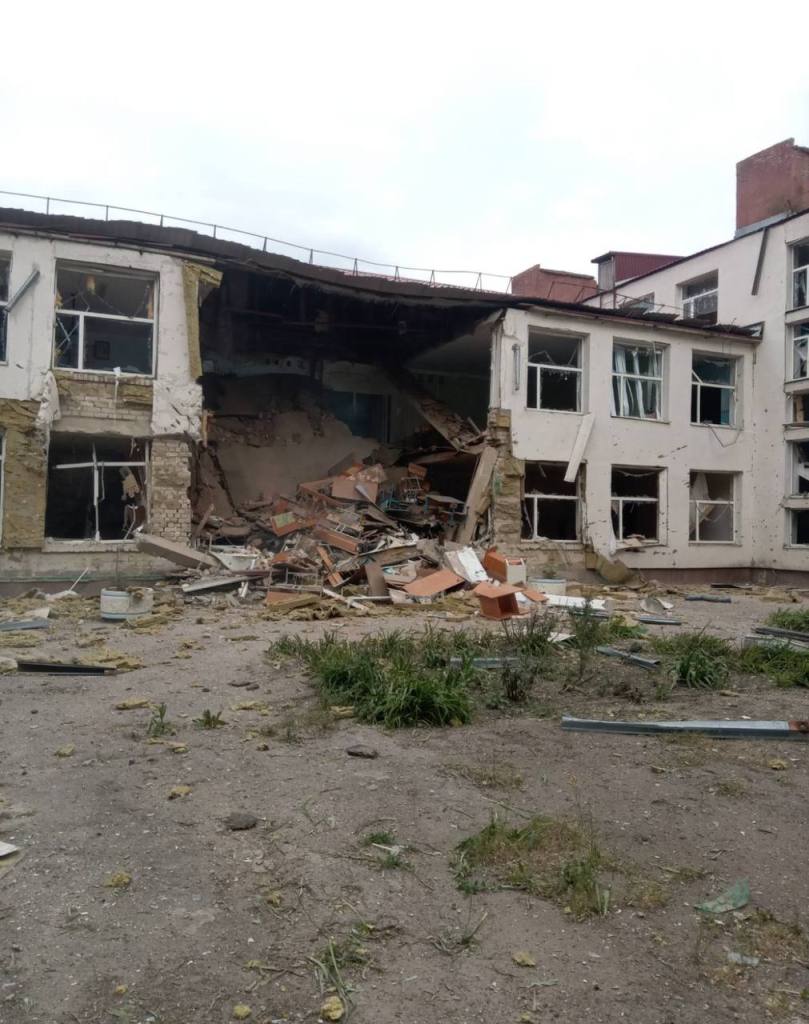
Her children once studied at this school
It was so terrible that every loud explosion outside the city shook not only the ground and walls of buildings but also our hearts. My family and I lived in the southern part of Ukraine, in a small heroic city that has been holding its defence for almost one and a half years and not allowing the enemy to reach the regional centre -the city of Zaporizhzhia.
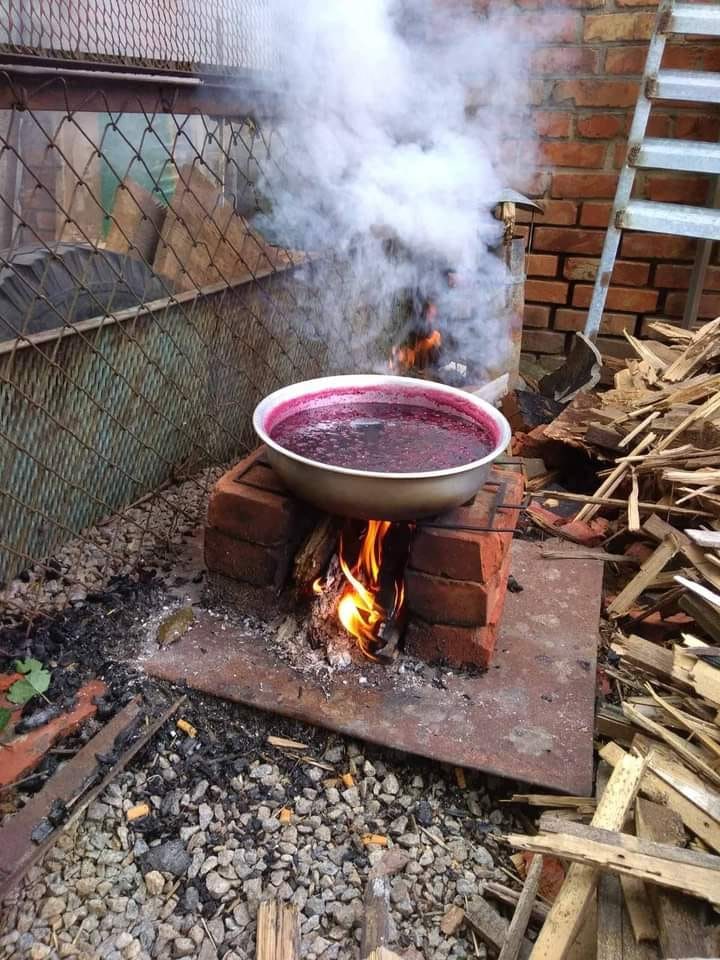
Citizens cook food on the street since there is no electricity or gas in their houses
So, when the fighting started on the outskirts of the city and I couldn’t even sleep with my children for several days in a row without fear, my husband made a decision: “You have to leave here; there are no safe places in Ukraine… You will take an evacuation train to the city of Lviv, and there the volunteers will continue; they will help you, send you to a safe region. I will stay to defend Ukraine; don’t worry, the war will end soon.” It was a very difficult decision. We hoped that the war would really end quickly and we would all meet together, alive and healthy, as we used to gather as a family with grandparents at a big festive table. And again, there will be joy and happiness, which are manifested in the fact that we can simply gather together and be infinitely grateful to the universe that we communicate and share thoughts. It turns out that people need so little for true happiness…
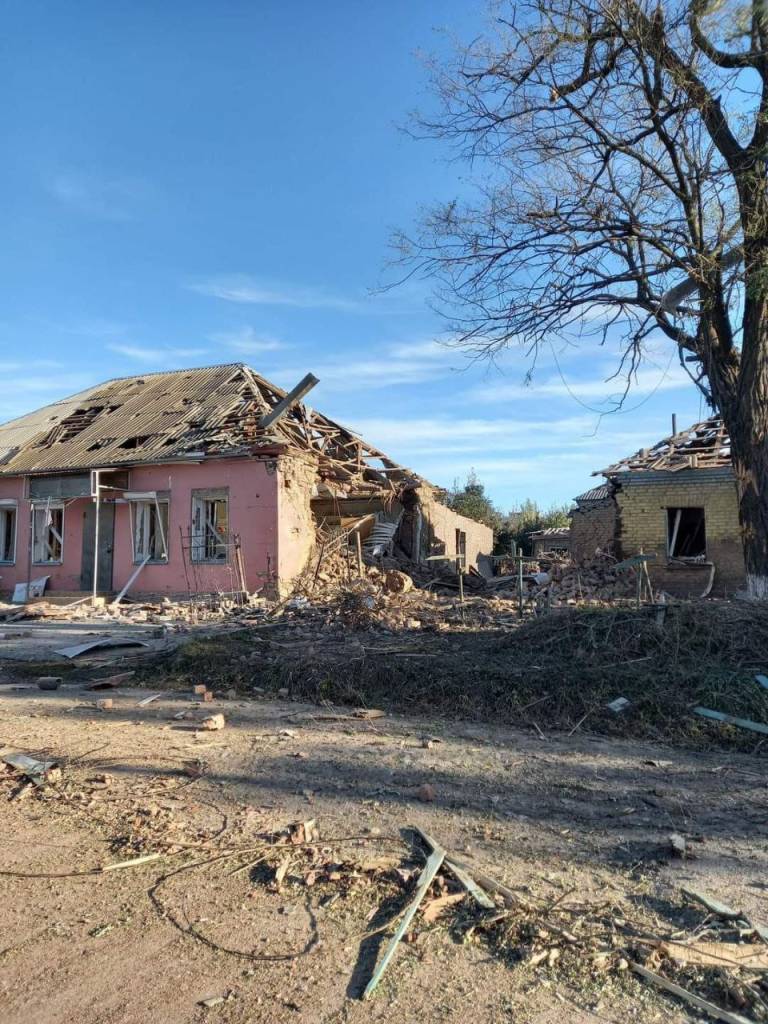
The central street of the city, where no one expected war
We had a difficult road ahead of us. We left by bus to the city of Zaporizhzhia, and on the way we did not know whether we would make it there alive or whether a rocket or projectile would hit the transport. Arriving at the railway station with my children, I was overwhelmed with stress as we encountered another horrifying situation. The station was full of people; there were so many frightened people on the platforms who were trying to get to the evacuation trains as soon as possible that some could simply lose their hastily collected bags and suitcases. In the crowd, it was difficult not to lose the children and relatives that people took with them. The city authorities and the Ukrainian government prohibited men of draft age who can fight from leaving the city and Ukraine. Therefore, women travelled alone with their children and elderly relatives. There was no room for people in the trains, so many people were lying there directly on the floor, in vestibules; everything was jammed. People were driving in an unknown direction; few could plan where to evacuate next. Only those who had relatives in Europe and knowledge of a foreign language could plan their destination. Some people drove their cars, and with savings and money, it was probably a little easier for them.
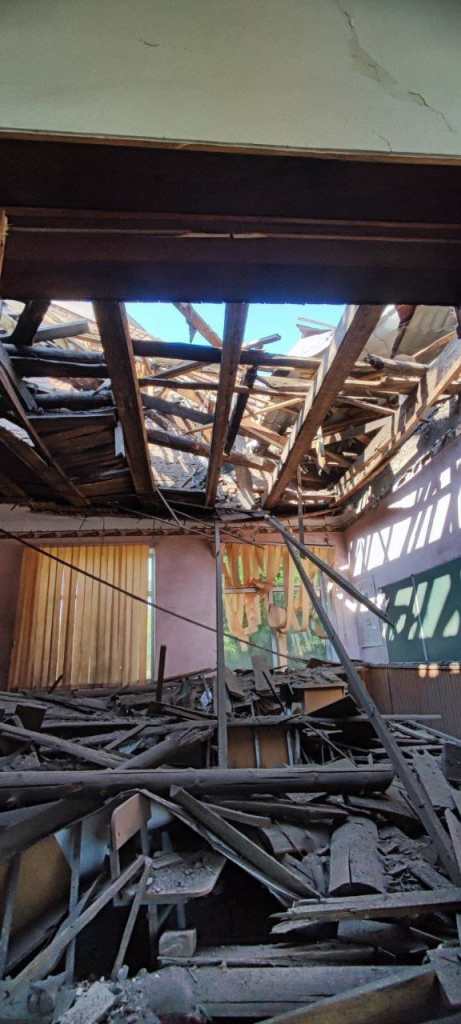
“Peace lessons” were once held in this school classroom
On the train, we met a woman who was going to Germany to visit friends and knew German. On the way, we helped each other, passed long-night queues at border crossings together, and tried to support our families morally. It was cold winter weather, and we stood on the street in queues in front of the borders for about eight hours. Then we went through the paperwork and again went on buses to unknown cities. There were temporary reception points in various large premises, such as empty shopping centres or warehouses with clamshells, where people were offered to spend the night, but there were no free places, and we stood in lines again to get on the bus that would take us further. This lasted for several days; we moved through the territory of Poland, in fact, also without sleep, and then we came to Germany.
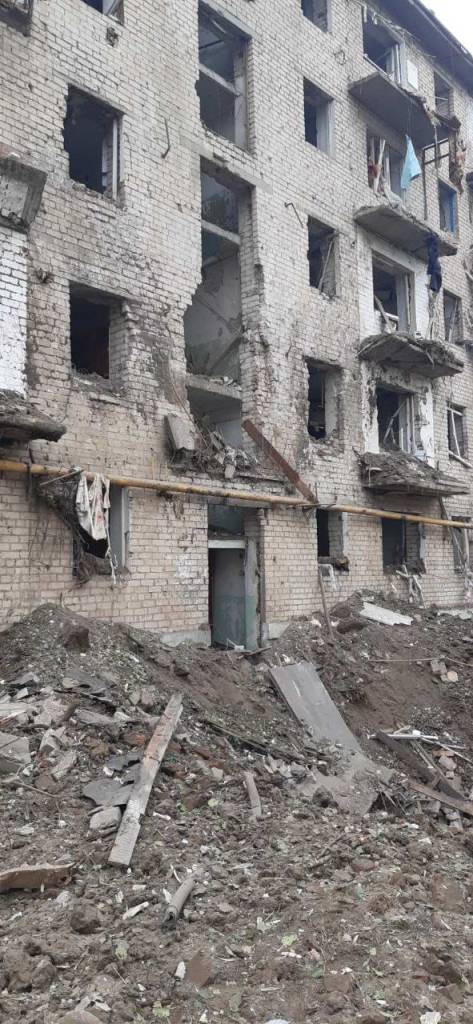
Before the war, 60 families lived in such a house. All the neighbours were family friends. There are no lives here now
Here we were helped by kind German families who were very generous in spirit. They gave us the opportunity to live for a while in their houses together with their families, and they also asked for the help of their neighbours to collect the most necessary things that are needed for living. These are bed linen, clothes, dishes, and hygiene products. And all these people readily responded and helped.
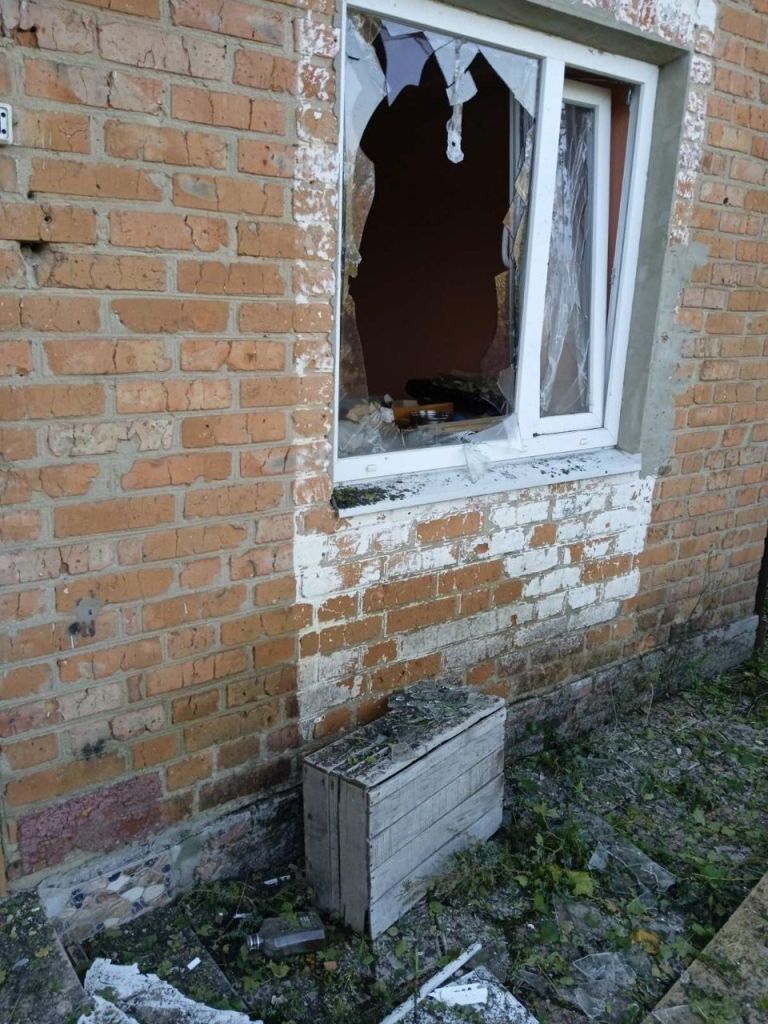
Elderly people lived here who, for a long time, did not want to leave the city and hoped that the house would survive.
The most difficult issue was overcoming the language barrier and processing documents. The fact that we could communicate in English helped us a little. And many German families and workers in government organisations can speak English. Unfortunately, many people in Ukraine have very little knowledge of foreign languages. And they are not communicated with in state institutions either. But now there is an initiative by the Ukrainian authorities to more thoroughly study foreign languages, which are necessary for communication in European countries, at the national level. By the way, a German family also helped us a lot with the preparation of documents for registration in Germany. We consider these people to be our guardian angels. Frankly, I don’t see how we would be able to sort through the documents here on our own.
The Ukrainians who came in the so-called first wave since the beginning of the war were completely unfamiliar with all the formalities here. We looked for some pieces of information on the internet, but the various federal states of Germany had their own peculiarities and specifics for registration. Everything was very complicated and unclear; we literally did not know where to go or what to do. Then those people who spoke German and Ukrainian began to organise meetings and information spaces on the ground. It was a very significant support, at least for understanding what we should do here in general and in what approximate sequence; how does this or that licencing authority function here.
Over time, we signed up for German language courses and started studying. At the beginning, many Ukrainians did not even know how to count to 10 in German. After all, most of us studied English at school, but that was 20–30 years ago, and without regular communication, we forgot English as well. Now, after the courses, we try to communicate in German. It is not an easy language, but step by step, we are moving forward.
Another difficult issue is the confirmation or recognition of Ukrainian education. It is especially difficult to solve this issue without a high level of German because it is not possible to call the appropriate authority and quickly clarify all issues. After all, answers to e-mails are not always received in a short time, and such correspondence is delayed. And then, after finishing the German courses, there is the question of determining places for employment. For this, it is also necessary to understand the specifics of employment and the necessary qualifications on the German labour market. Because a foreigner does not understand the ways of professional integration, does she, with her foreign education, need a retraining course for the German specifics of the profession or some kind of advanced training course? Is it even necessary to study for another specialty because, even with a foreign higher education, the nuances of legislation or work in various fields here are very different from Ukrainian ones? People are confused.
I believe that it would be very appropriate to organise separate support centres for refugees and asylum seekers with employees who speak the language of these citizens. So that these are centres where a person can come and find answers to any questions: from finding contacts of necessary institutions to solve household issues to help with appointments in hospitals, organising meetings for joint cultural leisure, psychological support—to help with processing documents, recognising education, finding ways to successfully integrate into the labour market, and so on. This would greatly save the time and morale of those seeking help and also speed up the process of effective integration in Germany for refugees and asylum seekers. The main thing now is to give people hope and motivation so that they can act effectively in the conditions of existence where they are.
The war left many of us without families and without the support of loved ones nearby. In such conditions, it is difficult to make the right decisions and effectively plan for the future. We believe that in the future we will be able to reunite with our families and bring benefits to the state. And now we must become strong and do everything possible for our future together.


 Weltschau
Leave a comment