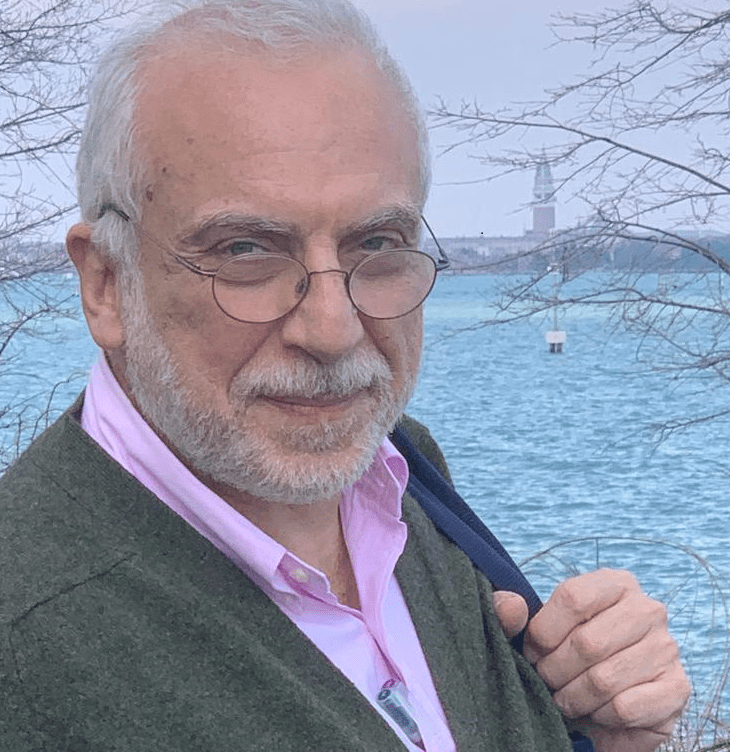
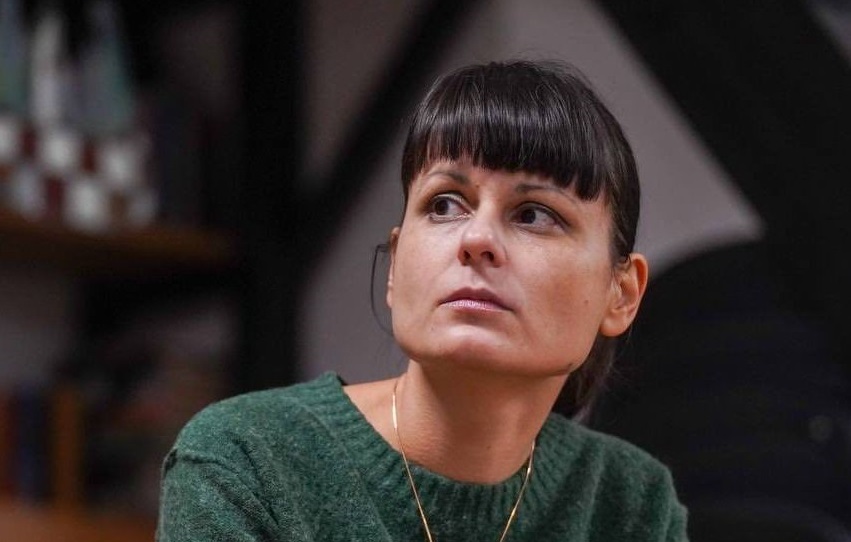
Whenever she was faced with a choice between work and visiting her parents, who lived in the north-west of the country, she decided on work. She had been healing children for two years with her highly competent colleagues at the largest children’s hospital in the country’s capital. She was also a social person; she had many friends. But even though she talked about it, something happened that she did not expect and was not prepared for. In 2022, Russia, under the leadership of Putin, began to invade Ukraine, and paediatrician Kateryna, according to data from Migration Observatory, became one of approximately 174 thousand refugees in the United Kingdom. The only thing she regrets now is that she didn’t visit her parents enough, and now she advises everyone to visit their parents whenever they get the chance. Helping Ukrainian youngsters is her current part-time job as a bilingual support worker for Doncaster Council. Her preparation for the medical English exam is ongoing as well**. To comprehend the war that has turned, according to United Nations (UN) data, more than 6.2 million Ukrainians*** worldwide into refugees, including Kateryna, I talked about the role played by the Wagner Group in Russian politics, Ukraine’s possible the North Atlantic Treaty Organisation (NATO) membership, and the possibility of peace with Soli Özel, who was my lecturer at Istanbul Bilgi University, is a lecturer at Kadir Has University and a writer for Politik Yol.

ÖZELGÜN: How do you think that the ongoing Russia-Ukraine conflict, which appears to be at a stalemate, impacts Russia’s image in the “global South”?
ÖZEL: It is difficult to tell. On the one hand, it is clear that the so-called Global South does not see the invasion of Ukraine by Russia in the same way as the Western alliance does. In a sense, this is strange because one of the most sensitive principles of the international order for the ex-colonial states, sovereignty and inviolability of borders, has obviously been violated. It is still possible that even if Russia is seen as an aggressor, most countries in the global south see this as an intra-European or, better, an intra-white world conflict and are not enthusiastic about taking the side of the Westerners. At best, they want this issue to go away as soon as possible. An additional reason why they don’t side with the West is the clear and obvious display of double standards if one compares what happened to Iraq to what happened to Ukraine. In the former case, the United States of America (USA) also violated the sacrosanct principle of the international system, whatever the reasons or excuses it may have given for the invasion. So Russia is not being judged in the same way as it is in Europe and the USA, but there is no indication that I have seen that this move has made it a hero in most of the global south either.
ÖZELGÜN: In her piece published on May 19, 2023, in Independent Türkçe, Lebanese journalist and writer H. Huseyni asserts that “deterring future Russian aggression against Ukraine would be challenging without Ukraine’s NATO membership”. Do you believe there exists another method to deter Russia from launching another assault on Ukraine? What do you think are the current impediments to Ukraine’s imminent accession to NATO?
ÖZEL: Since trust between Europe in particular, the West in general, and Russia has been broken, the repair job will take a lot of effort and time. An argument could be made that, should a negotiated settlement be reached, Ukraine can be protected with an arrangement that is short of membership in NATO but enjoys ironclad guarantees from the Atlantic Alliance. It could first have to become a member of the European Union (EU). Then NATO pledges to come to the aid of Ukraine if, after the guns fall silent, Russia attempts to restart the war or makes an attempt to invade Ukraine again. It is also reasonable to expect that any deal for the relevant future will accept the presence of Russian troops in the eastern territories of Ukraine that are currently occupied by Russia and annexed, although the annexation has not been recognised by others.
ÖZELGÜN: How could a potential Republican election victory in the USA impact the existing American war strategy in specific and tangible ways?
ÖZEL: A Republican win may very well terminate or at best reduce substantially the American commitment to Ukraine’s war against the Russian invasion.
ÖZELGÜN: Last but not least, in light of the Putin administration’s ability to endure substantial embargoes and avoid significant domestic political backlash, what alternative strategies might the international public opinion and international organizations employ to bring a stop to this conflict?
ÖZEL: At this point, the multilateral security institutions, most importantly the UN, are broken. The United Nations Security Council (UNSC) is incapable of taking decisions since Russia and its ally China block any anti-Russian resolution in that body. So in my judgement, there isn’t much that can be done to break the resilience of Russia, save for expecting time and sanctions to take their toll. One factor to wait for is the American presidential elections next November, and I think Putin will wait until then to consider any alternative course.
ÖZELGÜN: My next stop will be the domestic political dimension of the war, after covering it from an international relations perspective. What is the impact of the Russian mercenary company Wagner leader’s death in a plane accident on Putin’s paramilitary strategies in the Ukraine-Russia war?
ÖZEL: The latest news about Wagner suggests that it is disintegrating in Africa. Perhaps the loss of its leader, who had established complicated but well-functioning networks in Africa and secured the cooperation of many regimes, has dealt a mortal blow to the organization. It was already being ousted from Ukraine as the Russian military did not appreciate the position and prestige of Wagner there. And after the death of its leader, many of the troops were supposed to be integrated into the Russian military. All in all, I think Wagner’s life basically ended when Y. V. Prigojin’s did.
ÖZELGÜN: Russia obtained a score of 19 in Freedom House’s 2022 Index, placing it in the “not free” classification. Is it possible to talk about such structures (like the Wagner Group) as potential opposition channels and their leaders as opposition voices? If so, where would you place Wagner-type paramilitary structures and their leaders, such as Prigojin, in the context of the opposition in Russia?
ÖZEL: I think the answer to this question is in the previous one. Prigozhin was not part of the Russian opposition, if by that you mean the meagre liberal or democratic opposition in Russia. He was just at best a dissenter within the Russian power structure. He went too far, got killed, and this is the end of the story.
References
** While writing the introduction to the interview, I benefited from the article published by the Refugee Council, which included Kateryna’s story. Those interested can read the details of Kateryna’s story here. https://www.refugeecouncil.org.uk/latest/news/ukraine-uk-a-year-on/


 Weltschau
Leave a comment