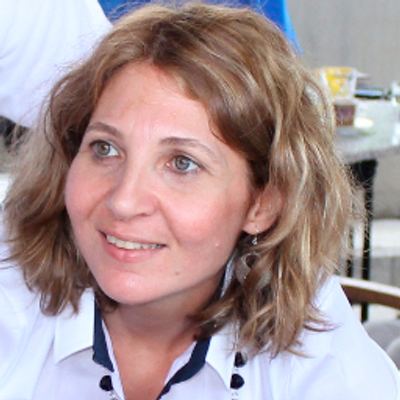
Not only do we perceive the sounds of artillery and rockets in its streets and cities. These gunshots are also accompanied by a covert war tactic that can be challenging to discern. Occasionally, data is subject to distortion and manipulation when presented to the global audience. Russia, under the leadership of V. Putin, is actively engaging in a campaign of propaganda against Ukraine. According to Geissler et al.’s data, during the invasion of Ukraine, pro-Russian posts garnered approximately 251,000 retweets and thereby reached an estimated 14.4 million users (Geissler et. al., 2023). Additionally, the scholars present data indicating that bots performed an imbalanced role in spreading pro-Russian propaganda and intensifying its spread during the initial stages. India, South Africa, and Pakistan, among the countries that refrained from voting on the United Nations Resolution ES-11/1, exhibited noticeable bot activity. To understand this propaganda war waged by Putin-led Russia, I asked questions about citizen journalism, digital activism, and self-censorship to Aslı Telli, who is an associate professor of media and communication studies and who is also the author of “The Infinite City: Politics of Speed” and who, since 2020, has contributed to projects like “Issue Mapping as Part of Critical Action Research” and “Design Process for Decolonizing Digital Rights Fields in Europe”.
ÖZELGÜN: One could contend that the present era is characterized by an abundance of information, although it is challenging to sift through this material using an editorial filter. How true do you think this claim is when it comes to the Ukraine-Russia war?
TELLİ: I find this particularly true in the context of the Ukraine-Russia War. The digital age has ushered in an unprecedented flow of information through various channels, including social media, news websites, and citizen journalism. While this abundance provides access to diverse perspectives and real-time updates, it also poses challenges in terms of navigating through the vast sea of unfiltered content. In the case of the Ukraine-Russia war, information dissemination has been rapid and widespread. Social media platforms allow for the instantaneous sharing of news, images, and videos, enabling individuals to become instant reporters. However, this proliferation of information lacks a centralized editorial filter, leading to the dissemination of unverified or biased content. Misinformation and propaganda from various sources further complicate the information landscape. Distinguishing between credible news and misinformation becomes a critical challenge, influencing public perception and potentially shaping the narrative of the conflict. In summary, while the era is indeed characterized by an abundance of information, the lack of a reliable editorial filter poses challenges in discerning the accuracy and reliability of content, especially in the complex and dynamic context of the Ukraine-Russia war.
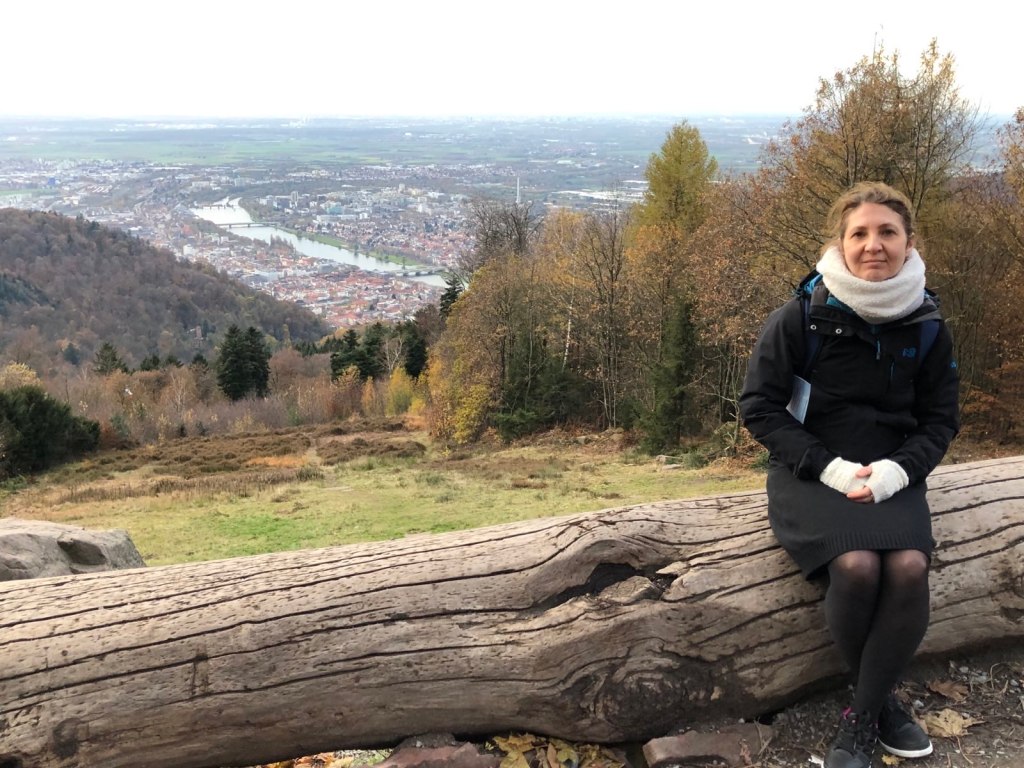
Corner pose with view from Heidelberg castle
ÖZELGÜN: You have mentioned citizen journalism. How can ethical standards of citizen journalists be further raised and better professional training offered in the context of Ukraine-Russia war?
TELLİ: As a transitional step, the media should liberate itself from outside interventions. A colleague of mine, active in the independent journalism scene, and I penned a recent article on the topic covering our suggestions for liberated media. Currently, the article is in Turkish only (English version in the making), but the abstract in English would give an idea. Citizen journalism is a significant light-post in times of crises and social movements and is also really effective for both revitalizing and winning back street-action as well as social media-facilitated mobilization of dissent. However, regarding the Ukraine-Russia war or any recent war, the secret service of the nations involved is very active in blurring the information sphere and operationalizing algorithms and AI on the go. Digital platforms are also part of this toxic game, and it is a win-win situation for other industrial giants, with advertising revenues booming. It makes things really tough for human rights defenders, right? Well, while all this is happening, fake news is an additional sauce of the fast-viral content, creating false filters and echo-chambers for communities at large. Thus, citizen journalism comes as the desert rose to dismantle this scene and fight for truth-making no matter what. Fact-checking organizations and collectives are a vital part of this scene, and some independent ones do offer training to citizen journalists for self-help. This effort needs to be more pervasive, possibly backed up by the funding and expertise of academics as well as experienced practitioners. Funding schemes as well as philanthropy have been doing a little better in the category of right to information until crises (pandemics and wars), but now checks and balances must be put in place to re-centre essential financial means for independent media and journalism.

A Minister’s throne at the Unusual Museum in Amsterdam. The throne has many parts for the secret deeds of a minister- for spitting, smoking, gambling, drinking, even pornography… Emblematic of secret lives of today’s leaders since truth may not always be as we know it.
ÖZELGÜN: Back to digital activism… What role can European digital activism play in mobilizing the masses and leading them to take political action against Putin’s invasion of Ukraine?
TELLİ: European digital activism, coupled with the engagement of the diaspora and the USA, is pivotal in mobilizing global masses against Putin’s invasion of Ukraine. While European activism serves as a regional force, the diaspora and the USA bring international dimensions to the resistance. Political action can manifest in various forms, including international sanctions imposed by nations and supranational powers. By leveraging digital platforms, activists can disseminate information to garner support for these sanctions, creating a unified front against Russian aggression. The diaspora’s involvement is crucial, as they provide a bridge between European activism and global communities, amplifying the message on a broader scale. In another thread, grassroots action, driven by digital platforms, can also focus on advocacy against arms and nuclear weapons, promoting disarmament as a means to curb Russian aggression. The interconnectedness of global issues underscores the importance of collaborative efforts. Clearly, understanding the political dynamics within Russia and the reaction of dissenting voices is essential. European digital activism must support and amplify the voices of Russian dissidents, providing a nuanced understanding of the internal struggle against Putin’s policies. In essence, a comprehensive approach involving European activism, the diaspora, and the USA is imperative. Such an approach should also encompass diverse strategies from international sanctions to grassroots advocacy, to effectively mobilize the masses against Putin’s invasion of Ukraine.
ÖZELGÜN: How can European digital activism concretely support dissident voices in Russia?
TELLİ: I actually did mention diverse strategies in the earlier question. It is not only an activist but also a professional undertaking. These strategies would be void if media actors, professionals, and grassroots organizations in Europe do not collaborate on a micro- as well as macro-level. On the micro and somewhat meso level, organizations like the International Press Institute (IPI), the International Press Association (IPA), and the Committee to Protect Journalists (CPJ) can push for integrity in the journalism and media scene for conflict-related news-making through cooperation with Russian independent media outlets in content and dissemination. An alliance among these organizations is necessary since institutional responsibilities are often neglected in our times. We also need a manifesto for outreach to the masses to be more effective… At the same time, independent media outlets and rights-seeking local and transnational collectives must push the European Union (EU) as well as neighbouring states to mobilize sanctions against the autocratic, violent measures of both governments. The violence, human rights violations, surge, and censorship are not only the reality of Russia, but also of Ukraine as well as the complicit governments that continue their arms and energy deals. They are shown and exposed in some way, but this should be done more systematically to be framed as a priority.
ÖZELGÜN: In the current era of widespread social media usage, where enforcing censorship is challenging, what is the significance of Putin’s decision to prohibit news platforms like BBC and DW?
TELLİ: This definitely holds significant implications. In an age where information flows rapidly through social media, the move to restrict established international news outlets is indicative of an effort to control the narrative and limit access to diverse perspectives. A few follow-ups in this regard: Firstly, this decision reflects an attempt to consolidate control over the information available to the Russian population. By restricting access to reputable international news sources, the government aims to shape public perception and limit exposure to alternative viewpoints. This move aligns with a broader trend of authoritarian regimes using media control to influence public opinion and maintain political stability. Secondly, it highlights the challenge that social media poses to censorship efforts. While restricting traditional news outlets, governments recognize the potential for information to still circulate through social media platforms. However, this move suggests a willingness to accept the limitations of such control in favour of restricting access to more established and widely trusted sources of information. That`s not all! The decision to prohibit certain news platforms raises concerns about the suppression of free speech and the free flow of information. It underscores the tension between the desire for centralized control and the inherent openness of the internet and social media. In a nutshell, I believe Putin’s prohibiting act signifies an attempt to control information, shape public opinion, and navigate the challenges posed by the decentralized nature of online communication. The broader implications are on the freedom of information and expression in the digital age and also the decline of trust in affected populations as well as media audiences at large. It paints a really dystopic picture for the present and years to come.
ÖZELGÜN: What do you think about the claim that self-censorship is a more deep-rooted and deeply penetrating, and therefore dangerous, execution than censorship? Can it be claimed that the Putin administration is trying to go beyond censorship and create an environment of self-censorship?
TELLİ: Well, this holds merit, and maybe even more so than merit. While explicit censorship involves the direct suppression of information by external authorities, self-censorship operates internally, influencing individuals to restrain their own expression due to perceived consequences. In the context of the Putin administration’s actions, there are indications that it is not only relying on explicit censorship but also creating an environment conducive to self-censorship. Repressive measures, such as restrictions on independent media, targeting of opposition figures, and legal constraints, send a clear message that dissenting voices face consequences. This climate of fear and intimidation can lead individuals to voluntarily limit their expression, fearing repercussions for speaking out against the government. The use of state-controlled media to shape narratives further contributes to self-censorship. When individuals are consistently exposed to a particular perspective, they may internalize these viewpoints, leading to a form of self-censorship as they align their expressions with the prevailing narrative. I must add: The threat of legal action, including vague laws that can be interpreted broadly, can make individuals wary of expressing opinions that could be deemed as critical of the government. The fear of legal consequences may lead to pre-emptive self-censorship and it often does so in repressive regimes. The Putin administration’s strategies, encompassing both explicit censorship measures and the creation of an environment fostering fear and conformity, indicate an effort to go beyond traditional censorship and induce a culture of self-censorship. This approach has the potential to stifle dissent at a more profound and pervasive level, shaping public discourse and creating a spiral of silence within diversities in society. All of this is an inherent part of neo-populist discourse through which frontline defenders are criminalized and the last remaining dissent is muted. Humanity can do far better than that! Hopefully, 2024 will be the year to exercise that potential.
References
Geissler, D., Bär, D., Pröllochs, N. et al. Russian propaganda on social media during the 2022 invasion of Ukraine. EPJ Data Sci. 12, 35 (2023). https://doi.org/10.1140/epjds/s13688-023-00414-5 https://epjdatascience.springeropen.com/articles/10.1140/epjds/s13688-023-00414-5#citeas
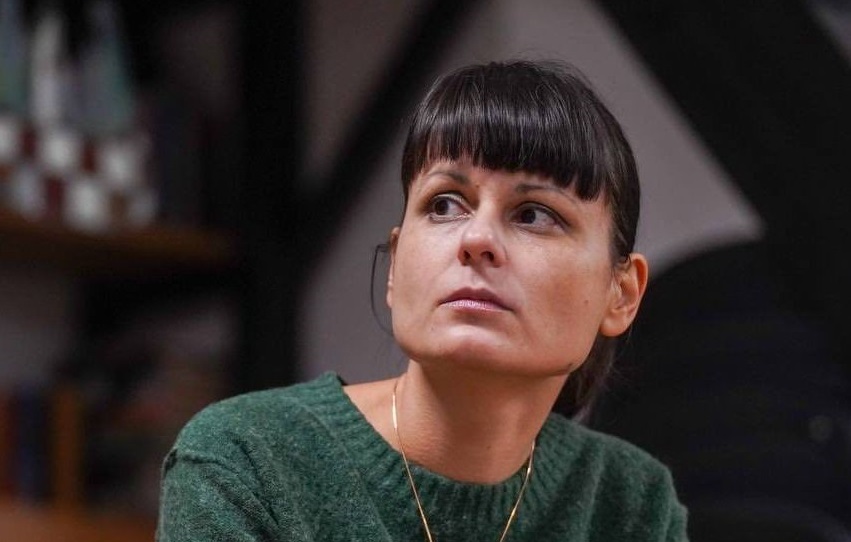
All three photos are from Telli’s personal collection.


 Weltschau
Leave a comment