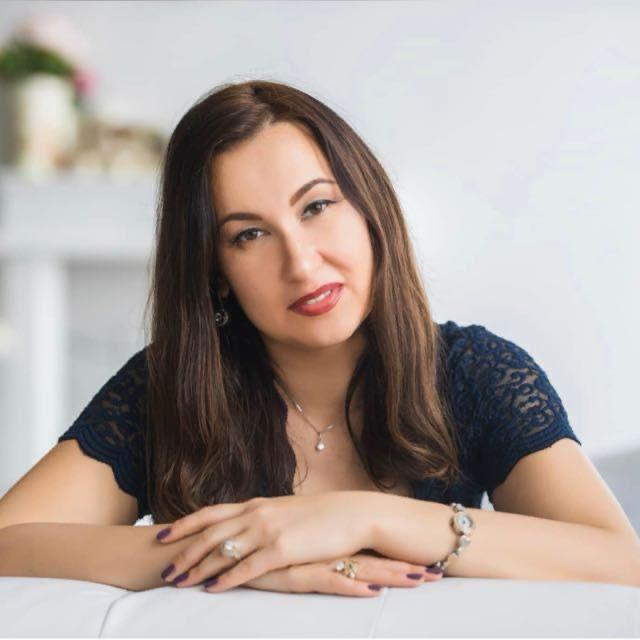
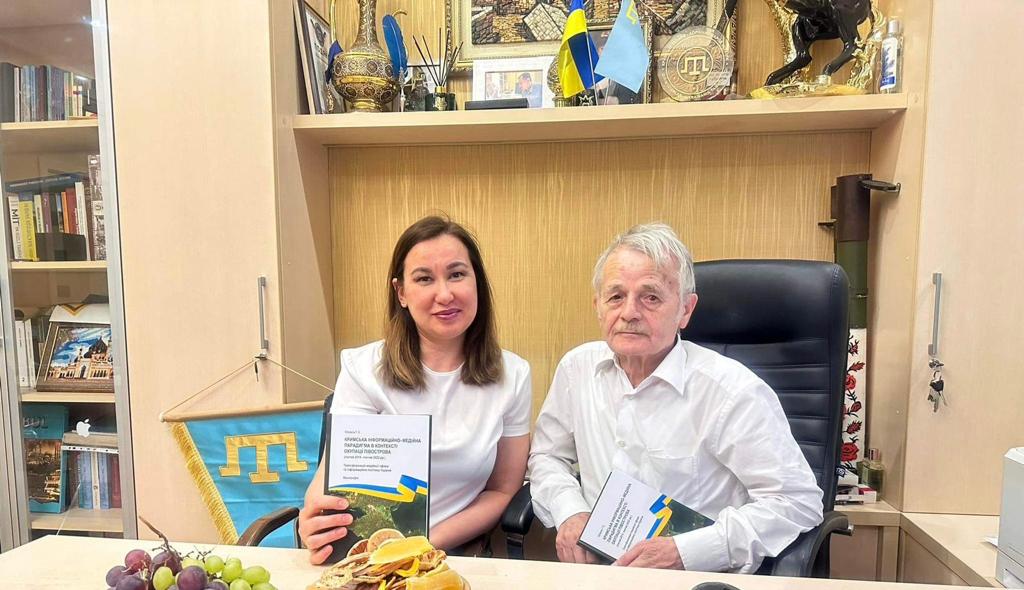
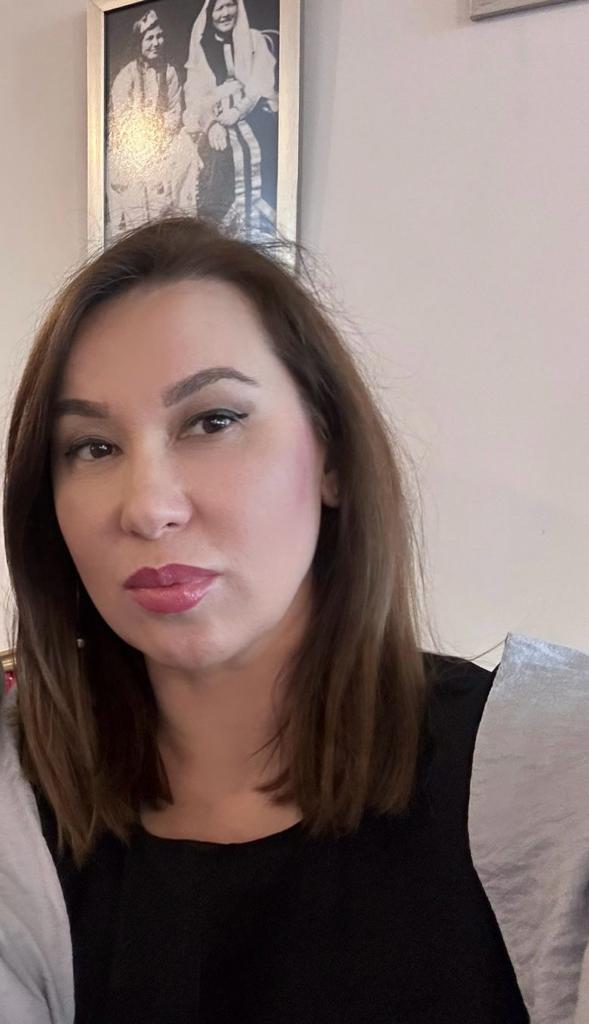
“Just as the Turkish people fought for their future with their own will in the War of Independence a century ago, they (Ukrainians) are here and now fighting for their own children and their homeland. Those that fight for this cause are perpetually right” (CNN Türk, 2022). With these words, she defines the war that started with Russia’s invasion of Crimea in 2014 and subsequently led to the biggest refugee crisis seen in Europe since the Second World War and the ecocide. In her articles – Crimean Journalistic Migration: Nature of Phenomenon and Characteristics (Survey Results), Ukraine’s Information Policy Regarding Crimea: Analysis of Normative and Regulatory Sources, and Informational and Organizational Activities of the Mejlis of the Crimean Tatars After Occupation of Crimea (2014–2021) – Crimean Tatar National Assembly (KTMM) member and Istanbul University Faculty of Communication Faculty Member Assoc. Dr. Gayana Yüksel exposes the difficulties and pressures confronted by the media and journalists in Crimea as a result of the Russian invasion. Most recently, she published her thesis titled “Communication Paradigm in Crimea with the 2014 Occupation: Change of Media Sphere and Ukraine’s Information Policy (February 2014 – February 2022)” as a book. Yüksel, who described her book by saying, “I didn’t write this book, I lived it” (QHA, 2023), provided insight regarding the impact of the Russian occupation on the demographic composition of Crimea, the conversion of Crimea into a military zone, and the challenges and difficulties faced by journalists in Crimea. Excerpts.
ÖZELGÜN: According to QHA, you state that the occupation of Crimea by V. Putin was a breaking point in world politics. Why do you think this invasion is such a unique event?
YÜKSEL: The occupation of Crimea and the onset of the war in Donbas in 2014 indeed represent a pivotal moment in the history of global politics, particularly in the civilized world at the end of the 20th century and the beginning of the 21st century. While conflicts and wars have been a recurring reality in the world, unfortunately, their frequency has not diminished. However, the war against Ukraine stands out as one of the most extensive conflicts since World War II. This war erupted right in the heart of the European continent, where countries are committed to establishing stability and maintaining a certain peaceful status quo. The occupation of Crimea was a blatant violation of international law and principles, challenging the post-World War II order that sought to prevent territorial aggression. The scale and audacity of Russia’s actions were unprecedented in the 21st century. The occupation was followed by military intervention in Eastern Ukraine, signalling a disregard for the sovereignty of neighbouring states. The conflict in Ukraine has become one of the most significant European security challenges since the Second World War. The international community’s response to the events in Crimea exposed weaknesses in the existing system of collective security and highlighted the inability to prevent such acts of aggression effectively. Lastly, the occupation of Crimea demonstrated a shift in global power dynamics, with Russia flexing its military muscle and challenging the established norms of international relations. This event raised concerns about the potential for further aggression and expansionism around the world. In essence, the uniqueness of the Crimea invasion lies in its violation of established norms, the audacity of the act, the inadequacy of the global response, and the broader implications for international security and order. Russia’s war against Ukraine in 2014 challenges the entire democratic community. Since the beginning of the war in 2014, the world has started to discuss the imperfections of the entire global security system. Essentially, it became apparent that any country possessing military power or a large population could attack a less powerful nation, and the existing global rules and security mechanisms were unable to prevent this process. This was vividly demonstrated during the war against Ukraine that began in 2014. Therefore, it marks a turning point in history after World War II.
ÖZELGÜN: How does the Russian occupation affect the demographic infrastructure of Crimea?
YÜKSEL: After the occupation of Crimea in 2014, Russia completely transformed the demographic landscape of the peninsula. Primarily, they created conditions for total repression and political pressure to force the Ukrainian-oriented population to leave Crimea and not stay there. According to various estimates, up to 60,000 Ukrainian citizens left Crimea after 2014. Additionally, the Russian authorities implemented a large-scale policy of resettling Russian citizens from the mainland to the Crimean Peninsula. Over the course of ten years, the population of Crimea has significantly increased, and currently, there are approximately 1 million resettled Russians living there. This completely alters the demographic infrastructure and political landscape of the peninsula, forming a pro-Russian population that is simply unaware of Ukraine. Before the occupation, the population of Crimea was 2.1 million people; however, the occupiers now claim it to be 2.5 million residents. According to our estimates, at present, there are about 3 million people living there. This means that nearly 1 million Russian citizens have arrived since 2014. The conditions created facilitate the resettlement of military personnel, as Crimea has been turned into a military base, and it supports the resettlement of civilians by providing plots and building housing. In general, a policy of populating the occupied territory of Crimea with the Russian population is being pursued.
ÖZELGÜN: In a news article in Kafkassam, you are also discussing the transformation of Crimea into a militarised zone…
YÜKSEL: Since the very beginning of the occupation in 2014, Crimea has been used by the Russian Federation as a military base. The main objective of the occupation of Crimea in 2014 was Sevastopol and control over the Black Sea region, posing a threat to Ukraine and Eastern Europe. Over the course of ten years, Crimea has been transformed into a military base, and after the full-scale invasion in 2022, it became a logistical center for military operations in southern Ukraine. From there, the Russian army is supplied with all the necessary manpower, equipment, and weapons. Unfortunately, what we anticipated has become a reality.
ÖZELGÜN: According to QHA, in your book, you talk about increased pressure on the media in the occupied Crimea…
YÜKSEL: Firstly, it is important to note that there are no more independent journalists left in Crimea. Out of the 1229 journalists who worked there before the occupation, almost 200 were forced to leave. These were individuals who openly opposed the Crimea occupation and objectively covered events. Their professional activities were terminated, and those who remained faced difficulties in their work, leading to a change in their profession. Accurate information about the situation in Crimea, human rights abuses, and pressure on journalists is currently disseminated by citizen journalists, including members of the “Crimean Solidarity” movement. However, their situation is also extremely challenging, with 17 journalists among them being imprisoned in the Russian Federation, while others face fines, arrests, and pressure. There is virtually no freedom of speech in Crimea. The ability to express a critical opinion freely is absent, and any attempt to criticize the Russian authorities is viewed as state treason and discredits state policy. Crimea has become a semblance of the Soviet Union in 1937, where absolute freedom of speech was lacking and there was only repression and horror.
ÖZELGÜN: Do you think Putin has a Goebbels?
YÜKSEL: He doesn’t need someone else; he is his own Goebbels. He acts as the creator and conductor of propaganda aimed at distorting facts regarding Ukraine, its history, and its people. All his followers merely emulate his example, spreading lies and manipulating information.
ÖZELGÜN: Last but not least, how close are we to a peace that respects the territorial integrity and sovereignty of Ukraine in these days when international aid to Ukraine is decreasing and the Republicans are likely to emerge victorious in the upcoming?
YÜKSEL: The world has not fully realized the extent of the threat posed by Russia. There is a naive belief that one can negotiate with a criminal and invader who initiated a bloody war against Ukraine or that the war won’t reach them. In reality, a world that respects Ukraine’s territorial integrity and sovereignty is under threat, and this becomes clearer with each passing day. It is crucial to understand that the injustice that began with the occupation of Crimea in 2014 was a warning ignored and silenced by the civilized world. After the occupation of Crimea in 2014, everyone witnessed the aggressor advancing further, occupying Donbas, and, in 2022, initiating a war against the entire Ukraine. If Ukraine falls, the aggressor will continue further. The Western world, represented by democratic values, must realize that it is not just Ukraine’s problem but a threat to the world as a whole. History shows that an aggressor, feeling impunity, will continue its path, affecting neighboring countries. The Baltic States and Poland could be the first on such a path, understanding their risks very well. The international community must acknowledge that by supporting Ukraine, it is investing in its own security. Ukraine is currently shouldering the burden of the fight for freedom and democracy, and supporting its efforts is crucial not only for Ukraine but for maintaining stability and security worldwide. And this is not just rhetoric.
References
https://kafkassam.com/gayana-yuksel-rusya-kirimi-tamamen-askeri-bir-bolge-haline-getirdi.html


 Weltschau
Leave a comment