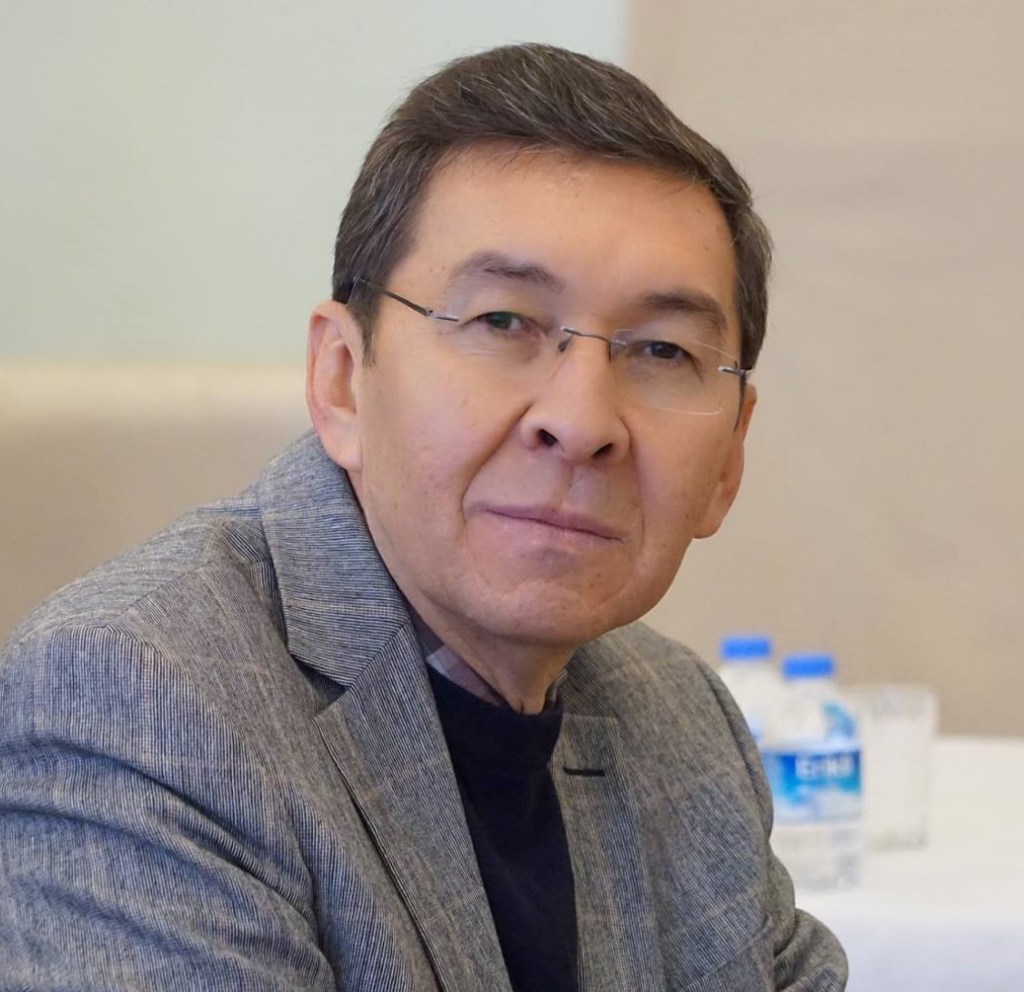
Vilen Temeryanov’s attempt to expose the workings of injustice in Crimea via social media by tracking it in the quasi courts had already brought him to the attention of the Federal Security Service. At approximately 4:00 a.m. on August 11, 2022, he was apprehended subsequent to a raid of his residence for this reason. Transferred to the prison in Rostov, Russia, 620 kilometres from Crimea, in April 2023, Temeryanov, the father of three young children, was apprehended just prior to the hospitalisation of his youngest son for heart surgery. In prison, he remains unlawfully detained. His detention persists. The Crimea Foundation President Tuncer Kalkay tells the story of journalist Temeryanov, who shed light on the situation in Crimea under Russian occupation, with these remarks. In order to enhance my comprehension of the sociopolitical landscape in occupied Crimea, I asked Kalkay, whose foundation orchestrates cultural events and history and culture conferences in order to safeguard and fortify ties with Crimea, questions about freedom of the press and freedom of religion in Crimea. Excerpts.
ÖZELGÜN: On January 10, Journalists’ Day, journalist Temeryanov was detained*. Journalist activist Asan Athemov was sentenced to 15 years**. How did the invasion of Crimea by Putin affect journalistic activities in Crimea?
KALKAY: Dissenting views regarding the occupation of Crimea by the Russian Federation, criticising the practices associated with the occupation and its aftermath in public spaces, press outlets, or social media, as well as expressing dissenting opinions regarding the policies of the Kremlin administration and the occupied Crimea and other regions of the country, are grounds for legal action and punishment with the accusations of “separatism” or “extremism”. Thus, presently, people living in Crimea are afraid of discussing their observations, let alone engaging in journalism voluntarily or expressing their opinions openly. Those who attempt to engage in free and independent journalism face penalties that are considerably harsher than those imposed on murderers. Starting from 2014, Russia has implemented a ban on 28 media organisations, such as ATR, the national television channel for Crimean Tatars, and the Crimean News Agency, which functions as the national news agency and obstructed entry to their websites. It unlawfully confiscated 503 Crimean television and radio frequencies in use for broadcasting (these figures do not include the number of printed media, including newspapers and periodicals, whose circulation was prohibited or seized).
ÖZELGÜN: Can people worship freely in occupied Crimea?
KALKAY: At present, 100 of the continuing trials in Crimea due to religious beliefs are against Muslims and 17 are against Jehovah’s Witnesses. These figures serve as tangible data that individuals are unable to freely exercise their religious beliefs. Once more, the terms of imprisonment in these instances surpass a decade. In 2014, Russia conducted raids against religious establishments on the peninsula immediately following the occupation. The police conducted ruthless raids on Crimean Tatar mosques and religious schools, seizing religious books and artwork that they discovered in contravention of Russian laws. Presently, the Muftiate in Crimea persists in its activities as a Russian institution operating under the administration of the Kremlin. Constant surveillance is directed at members of religious organisations that have cut relations with the Muftiate. In 2014, at the onset of the occupation, the Crimean Diocese was governed by 45 Orthodox communities, each led by 14 priests. However, since the commencement of 2022, this figure has diminished to seven communities, each led by four priests.
ÖZELGÜN: Is there pressure from the Kremlin to obtain Russian citizenship?
KALKAY: In addition to the duress, acquiring Russian citizenship is a necessity for survival. You will become a foreign citizen and be required to depart your country within a brief period of time if you do not comply. You may lose your property in this circumstance, and any efforts to reclaim it will be contingent on the quotas established for foreign citizens, including those pertaining to employment, residence, and property ownership.
ÖZELGÜN: If we examine the overall scene…
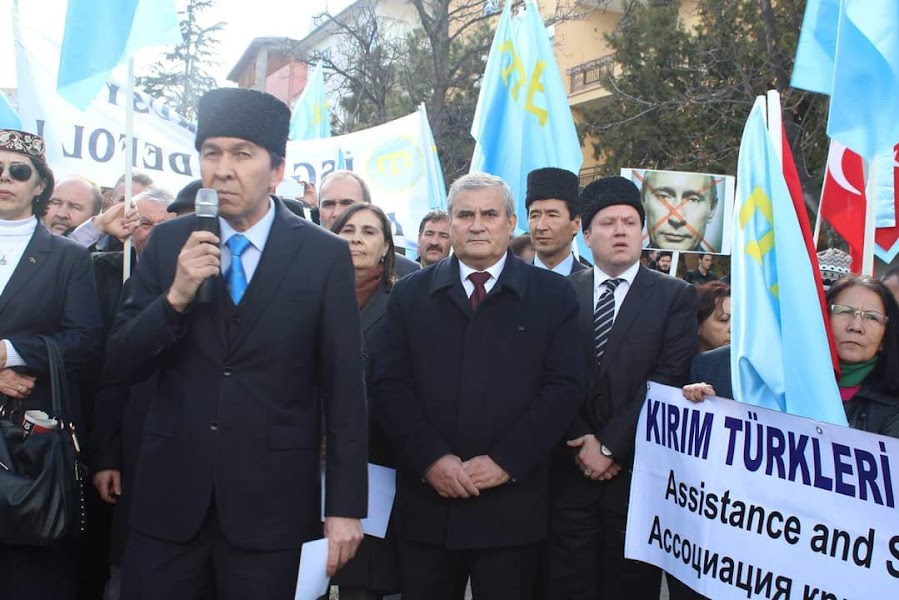
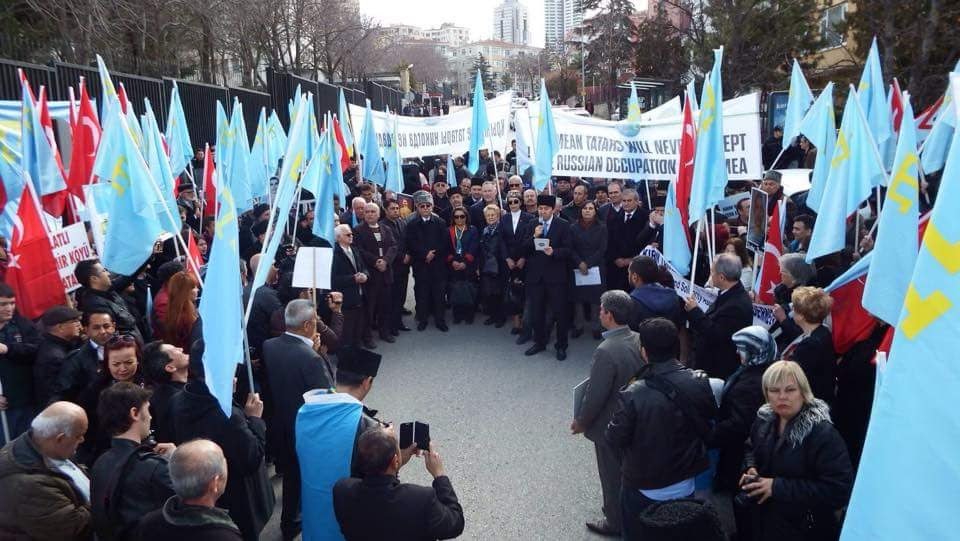
KALKAY: It is common knowledge that operations, systemic subjugation, and ethnic discrimination in Crimea are directed at the Crimean Tatars. Following its occupation of Crimea, Russia made numerous promises to justify the occupation by drawing the Crimean Tatars to its side, it also prohibited the activities of the Crimean Tatar National Assembly, the self-governing body of the Crimean Tatars, seized its property, and forbade its leaders from entering Crimea. As of today, Crimean Tatars comprise 205 of the 235 individuals against whom Russian occupiers took legal action. Put differently, Crimean Tatars constitute 88% of the prosecuted people. Day by day, as a result of both Russian migration and the forced emigration of some Crimean Tatars from Crimea, their share of the population fell. Crimea currently has a 10-13% Crimean Tatar population.
ÖZELGÜN: How close do you think we are to a peace that upholds Ukraine’s territorial integrity and sovereignty in these days, when foreign aid to Kiev is declining and there’s a chance the Republicans will win in America in the upcoming period?
KALKAY: The reduction in assistance to Ukraine is undoubtedly detrimental to the advancement of the peace process and the progression of the war. An even greater incentive for Russia’s recklessness and aggression, however, would be Kiev’s defeat. Russia, which cannot be stopped in Ukraine today, will pose an even greater and more grave threat to Europe in the future. Certainly, the United States and Europe, which are providing assistance to Ukraine, can observe this if the rest of the world can. Discourses concerning the reduction of this aid appear to be predominantly influenced by domestic political dynamics and electoral processes. Diverse developments may also have an impact on this. Nonetheless, I do not believe it is realistic to decrease Ukraine’s aid in a situation where Russia’s true intentions are known and the threat to other nations continues to escalate. Prior to the establishment of peace, Russia must vacate the occupied territories of Ukraine.
References
* https://twitter.com/nurtenc_bay/status/1745191413917098207 ** https://twitter.com/nurtenc_bay/status/1745134437908549820


 Weltschau
Leave a comment