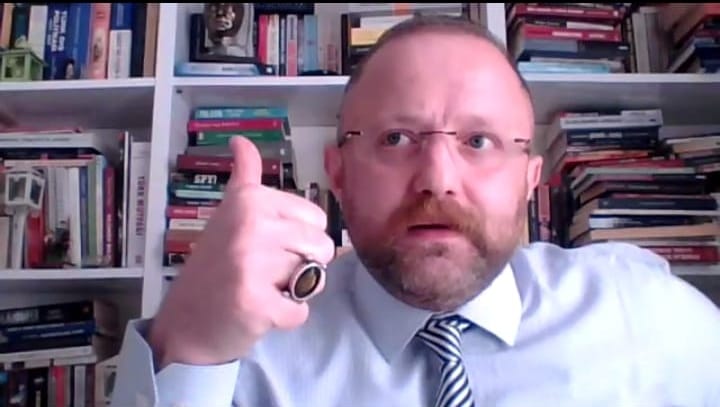
“There are two main reasons for the eventual failure of foreign policy. While right intelligence is not used in irrational decision-making processes, it is intelligence failure in rational decision-making processes” (Önder, Kodaman, 2022). The author of these statements is Dr. Hasan Mesut Önder, a specialist in national security, intelligence, intelligence analysis, and terrorism. However, his scope of interest extends beyond these particular matters. He diligently monitors the Russia-Ukraine war, which significantly impacts Europe, and reports on it. For instance, Önder interviewed Prof. Dr. Timuçin Kodaman for the Karar newspaper. “The United States’ plan aims to undermine support for President Putin within Russia” interview addressed the process leading to the invasion of Ukraine and how this occupation affected intra-NATO relations (Karar.com, 22.03.2022). The roles are now reversed, and Önder, who is now an interviewee, has offered valuable information about the security agreement between London and Kiev and the potential trajectory of European Union (EU)-Russia relations after the end of the Russian occupation in Ukraine. Excerpts.
ÖZELGÜN: In what ways might the security agreement that UK and Ukraine have signed impact the progression of the war?
ÖNDER: In order to answer this question, it is necessary to evaluate the process from a global geopolitical perspective. During the Cold War, there was a bipolar order between the US-dominated West and the Soviet-dominated Eastern Bloc countries. The bipolar order provided some predictability for the international system. After the end of the Cold War, the Western bloc no longer had an enemy to present as another. For a while, Islam was declared the enemy of the Western bloc with the clash of civilizations thesis. But this project was not viable. Then the strategy of liberal interventionism was implemented to spread liberal values all over the world. However, all these policies were not enough to consolidate the Western bloc. Because the others, who were defined as enemies, were not strong enough to rival the West. In this respect, we can say that there was a global geopolitical imbalance after the Cold War. When we look at the global system, we roughly see an order in which the US, Russia, China, the EU and the UK are active. In my view, Russia’s invasion of Ukraine was triggered to build a new global geopolitical bloc. The US and Russia want to prevent China from becoming the hegemonic power in the international system by creating a new balance of geopolitical opposition led by the US and Russia, as in the Cold War. In other words, as in the Cold War, the US will control the West and Russia will control the East. Britain, on the other hand, wants to remove Putin from power in Russia and put in place a pro-Western government. When a pro-Western government comes to power in Russia, it seeks to establish a bilateral geopolitical balance based on the rivalry between China and the US… I think that the policies of the US and the UK differ here. With the invasion of Ukraine, the US increased its influence on the defense and security issues of the EU, and the plans to establish a European army were put aside for a while and the European countries were united around NATO. When the UK’s security agreement with Ukraine is read in this context, it can be said that they calculated that this agreement would increase Russia’s costs in the Ukrainian war and thus shake Putin’s power. Second, in the event of a partition of Ukraine, the UK may want to be more effective than other Western countries in restructuring the regions that remain in the Western sphere of influence. This deal may increase Russia’s costs in the war, but it is highly likely that by the end of 2024, Ukraine will be divided into Russian and Western spheres of influence. Ukraine is likely to be a place where the psychological and physical borders of the new geopolitical order will be established, as was the case with the division between East and West Germany in the Cold War.

ÖZELGÜN: What do the war warnings made by Civil Defense Minister C. O. Bohlin and military commander-in-chief Gen. M. Byden in Sweden mean?
ÖNDER: These speeches can be seen as statements aimed at mobilizing domestic public opinion and creating psychological grounds for taking the necessary political and juridical steps for Sweden’s integration into the NATO system. We can say that there are underground organizations, non-governmental organizations, economic structures, and political parties directed by Russia in Sweden. In this respect, the threat of war may be an attempt to consolidate Swedish society in order to eliminate the existing polarization in Swedish society. It is known that Russian intelligence funds far-right and left-wing parties in all European countries through their companies in Southern Cyprus. It is widely acknowledged that the Russians are trying to support almost all organizations against the European Union (EU) and the Western system in some way. In this context, it can be said that this statement is an attempt to warn about Russian influence in Swedish society and state institutions and to unite domestic public opinion with the threat of war. War is not only fought with soldiers, and intelligence organizations play an active role in preparing the war environment and breaking the social resistance in a target country. No army can resist an external enemy if the society, which is one of the national power elements of a country, is divided.
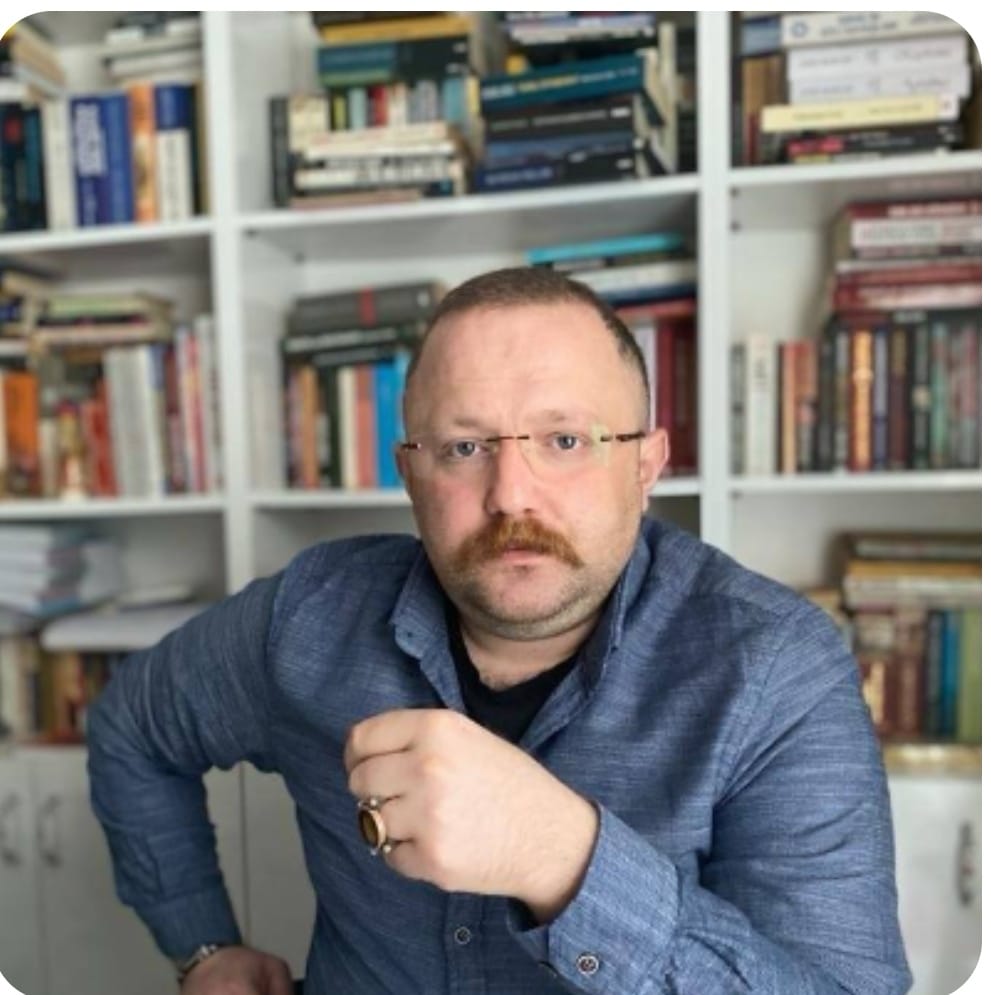
ÖZELGÜN: Following the Russian invasion, Finland joined NATO, and in the near future, Sweden will also join NATO. Is it possible to argue that the occupation had a negative impact on Russia position and aspirations in the medium and long run?
ÖNDER: Before answering this question, it is necessary to briefly touch upon the decision-making processes of states. How do states make decisions? It is often claimed that states act rationally or read processes from a theoretical perspective when dealing with the international system. Although the decision-making style of states varies according to the country’s system, decisions are made by the leader of that country, and small groups cluster around the leader. If the leader does not feel that his/her power is threatened within the domestic political equation and there are no existential threats emanating from the international system, leaders tend to make ideological decisions. Leaders who make decisions with an ideological bias make decisions based on the set of concepts they have constructed in their minds, their personal ambitions, and mental shortcuts rather than reality. If a leader has decided on an issue before the decision-making processes have begun, he or she directs all decision-making processes to support his or her decision. He/she politicizes intelligence, purges the bureaucracy that resists, and accuses opposition political structures of being traitors. This is a typical Eastern style of decision-making. If these processes are taking place, it means that the leader has reached a decision long before the process and is making a mess to impose this decision on the state system. The main justification for Russia’s invasion of Ukraine is that Putin does not see Ukraine as a real state and sees Western influence over Ukraine as a strategic threat. In this respect, NATO enlargement will not cause the Russians to back down. On the contrary, as I tried to answer in the first question, it would pave the way for the construction of a new bipolar system through the NATO-Russia balance and prevent China’s expansionist ambitions. In other words, intra-paradigm hostilities are being built. Just like good and bad actors in a movie are the product of a screenwriter’s pen.
ÖZELGÜN: What might be the potential trajectory of EU-Moscow relations after the end of the Russian occupation in Ukraine?
ÖNDER: For the Russian occupation to end, Putin needs to be able to explain to the public and to his own government that he has achieved his goals in Ukraine. I believe that this can only be possible with a divided Ukraine with a US-Western and Russian sphere of influence. Russia is very well organized in European countries. Nearly 400 Russian intelligence officers were deported after the war started. The Russian threat allows the US to rally Western countries around NATO and to suspend projects like the United European Army. We can say that Russia will continue its aggressive activities in order to destabilize the EU countries and to help far-right and left-wing parties gain power in the European political system. There were also reports in Germany about the involvement of Russian intelligence in Prince Heinrich’s coup attempt. It can be said that relations between Moscow and the West will be tense in the context of the intra-paradigm enemy approach. Because politics is about managing opposites and working with an “artificial enemy” to achieve a goal. In my view, Russia is an enemy that serves the purpose of breaking China’s influence over European countries and keeping Western countries under American influence in defense and security matters.
References
Önder, Hasan Mesut ve Timuçin Kodaman. “İstihbarat ve Dış Politika İlişkisi”. International Journal of Politics and Security (IJPS), Vol. 4, No. 2, 2022, pp. 39-64, DOI: 10.53451/ijps.981761 https://dergipark.org.tr/tr/download/article-file/1920560
https://www.karar.com/gorusler/abdnin-stratejisi-rusyada-putine-destegi-kirmak-1657205


 Weltschau
Leave a comment