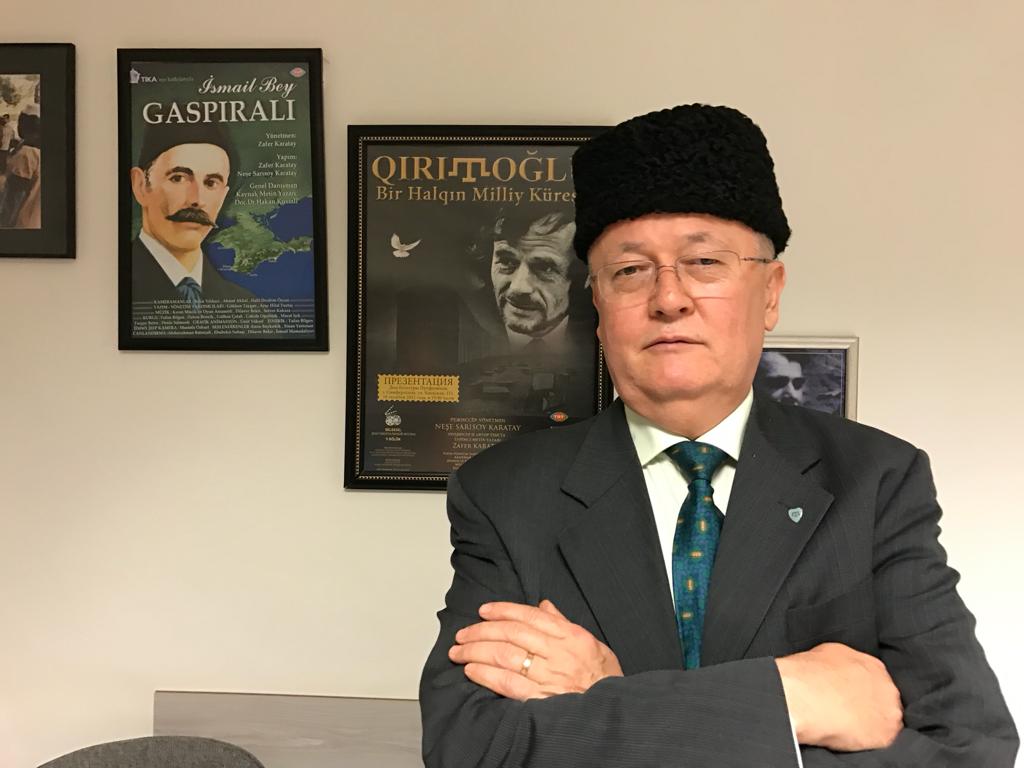
He and his foundation have been pioneering scientific and popular research on the culture, history, language, literature, art, and folklore of the Crimean Tatars for years. Regarding this matter, he authors literary works such as “Kırımoğlu Bir Halkın Mücadelesi” (“The Struggle of a Crimean People”) and produces documentaries such as “Kırım Belgeseli” (“Crimea Documentary”). Awards such as the Istanbul Crimean Turks Cultural Solidarity Association Award (2004) and the Radio and TV Journalists Association Documentary of the Year (2000) Award crown Emel Crimean Foundation President Zafer Karatay’s success. Karatay, who articulates that “the Crimean Tatars, our ethnic group, are aware that Russia does not offer a promising future for them; our aspiration is to live in a country that is democratic, free, upholds universal values, and safeguards both human and national rights,” provided insight about Russian propaganda and how cinema and literature can counter Russian propaganda. Excerpts.
ÖZELGÜN: How may cinema and literature contribute to opposing the Russian occupation?
KARATAY: Undoubtedly, cinema, literature, and artistic expression held significant value for the Crimean Tatars, a people who wanted to be destroyed by Russian imperialism. Çelebi Cihan, the pioneer of the Crimean People’s Republic, founded in 1917, also put pen to paper poems, and his poem “And Etkenmen” (“I have promised”) came to be the lyrics of the Crimean Tatar national anthem after his martyrdom by the Bolsheviks. On May 18, 1944, Stalin sent the Crimean Tatars into complete exile. The songs performed by our artists at weddings and Crimean Tatar folk songs served to recall the Crimean Tatars of their identity and prevented them from forgetting Crimea. Intellectuals, human rights advocates, and patriots endeavoured to inform the world about the Crimean Tatars’ plight during exile and their arduous quest to reuniSte with their native land. Jamala’s victory at the Eurovision contest with her song “1944”, however, exposed hundreds of millions of non-political ordinary people to the voice of the Crimean Tatars. The song 1944 continues to be performed on the streets of numerous nations across the globe.
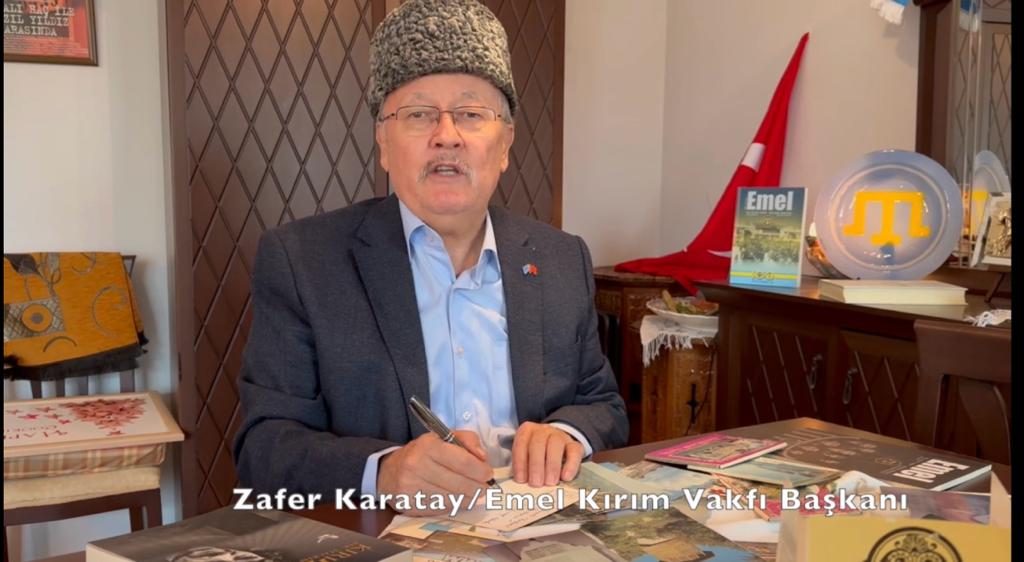
ÖZELGÜN: If we talk about the Crimean Tatars who migrated…
KARATAY: Immigrating Crimean Tatars also executed their struggle by pursuing the path and methods of Crimean Tatar intellectual, educator, and writer-publisher İsmail Gaspiralı. Emel Magazine, established in 1930, disseminated the history, culture, and poetry of the Crimean Tatars to a vast audience of emigrants from Crimea. The books of Cengiz Dağcı, a Crimean Tatar novelist, were first published in Turkey during the 1960s. These works not only exposed Crimea to a large audience but also fostered a deep affection for Crimea while shedding light on the persecution faced by its inhabitants. The performances of Nesrin Sipahi, Yıldız Ayhan, and Remziye Alper, singing Crimean folk music on radio and television during the 1970s and 1980s, significantly contributed to the promotion and popularisation of Crimea.
ÖZELGÜN: You also play a significant role in safeguarding the identity and culture of Crimean Tatars…
KARATAY: Following the collapse of the USSR, the six-episode documentary about Crimea that I produced for state television in 1993 gained significant re-airtime, leading to widespread awareness of the tragic events experienced by Crimean exiles. Recognising the significance of this matter, my spouse, N. S. Karatay, and I have produced numerous documentaries to date. As the Emel Kırım Foundation and Emel magazine, we recognise the power of art, cinema, and literature and actively promote the engagement of young people in these fields. Following the occupation, approximately 200 individuals from our community were imprisoned in Crimea, including 17 journalists and authors. On September 4, 2021, the house of N. Celal, father of four children, journalist, and speaker of the Crimean Tatar National Assembly, was raided. The answer Celal received when he asked an FSS officer, “What is my crime?” tells a lot: “It is your offence that your words and writings are more powerful than weapons!”
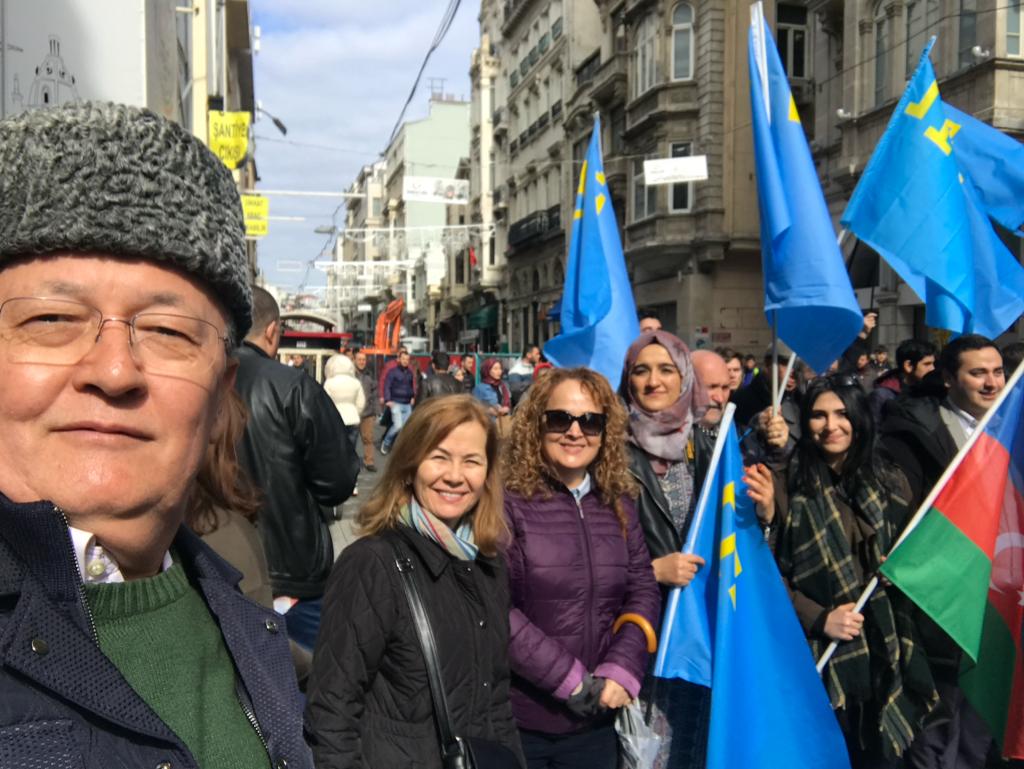
26 February 2017-Protest march against the occupation of Crimea by Russia
ÖZELGÜN: Why is Putin so well-liked in certain circles of Turkey despite the fact that he is an invader?
KARATAY: Although it is valid all over the world, there is a real abdication of reason in Turkey. Due to social media, individuals read less and think less. With the exception of a few bare facts, everyone is an expert on everything. Regrettably, this phenomenon extends to the mainstream media as well. Numerous social democrats, Marxists, and socialists in Turkey believe that Putin and his regime are the continuation of the socialist policy established by the USSR. He is regarded by numerous conservative and religious individuals as a friend of Islam. A considerable number of Turkish nationalists hold the view that Putin is a friend of Turkey. Indeed, these individuals, who hold divergent perspectives and are unable to reach a consensus, unite in their sympathy for Putin. Russia’s increased support in Turkey was significantly influenced by Western nations, which engaged in large-scale economic partnerships and cooperation with Russian firms after the Soviet Union collapsed, believing that the Cold War had ended. Believing that Turkey and its military capabilities were no longer necessary, they implemented wrong and inaccurate policies towards Ankara.
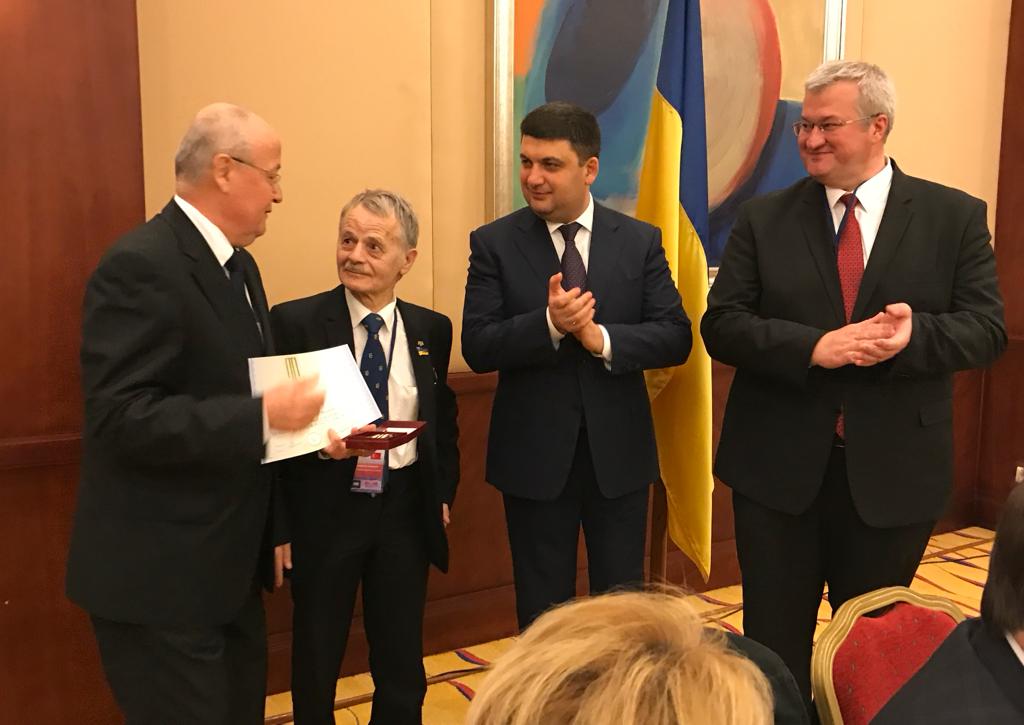
15 March 2017- M. A. Kırımoğlu, Ukrainian politician V. Groysman and Deputy Head of the Office of the President of Ukraine A. Sibiga
ÖZELGÜN: According to CNN Turk, Putin responded by saying aleykümselam (“peace be upon you”) to the President of the Spiritual Assembly of Russian Muslims, who said selamünaleyküm (“peace be with you”) to him in his meeting with the members of the Public Chamber of the Russian Federation. What role do religious elements play in Russian propaganda?
KARATAY: Such a “fabricated” greeting promptly elicits a response from the Turkish media and public opinion. There are a significant number of individuals who hold the belief that Putin is a secret Muslim. The same religious people forget how Putin destroyed Chechnya, killed thousands of people by bombing Syrian cities, schools, and hospitals, made millions of refugees come to Turkey, which is now a big problem, and bombed 33 soldiers in Syria. Indeed, they do not realize how Russia uses Orthodox churches and how he sentences our religious people to prison in Crimea, the Caucasus, Tatarstan, and Bashkortostan.
ÖZELGÜN: Do you think Putin has a Goebbels or are we confronted with a more organised and systematic form of propaganda?
KARATAY: Putin is, in my opinion, employing structured propaganda. This propaganda is allocated substantial resources by a regime that recognises its superior effectiveness compared to conventional warfare. There are many studies on its impact on the American elections, its backing for radical right parties and groups in Europe, the methods it uses to attract and control politicians, journalists, etc., and the structures it creates to use around the globe, like social media. The primary weakness exhibited by individuals residing in the West and Turkey is their tendency to examine matters through the lens of their individual comforts and interests. Their eyes are blind to the impending peril that lies ahead. But Putin erred and unwittingly benefited Western nations by launching an all-out assault on Ukraine. Russia’s expansionist mentality was realized, notably with the efforts of the former Warsaw Pact countries and their neighbours, who knew very well what Russia was. Putin regarded every compromise and agreement as a sign of the other side’s weakness.
References


 Weltschau
Leave a comment