
In a pivotal moment for Europe, the continent grapples with multifaceted crises that span from its eastern borders to the Middle East. The ongoing conflict in Ukraine, persisting for nearly two years, underscores the resilience of the Ukrainian people with European support, yet victory over Russia remains elusive.

Simultaneously, the tragic events unfolding in the Middle East, particularly the humanitarian tragedy in Gaza, present a challenge for the European Union. Having demonstrated unity in the face of the Ukrainian conflict, Europe now faces difficulties reconciling its stance on the Israeli-Palestinian issue, raising questions about the consistency of its defence of universal principles and values.

The interconnectedness of these conflicts prompts accusations of double standards in the application of international law, casting doubt on Europe’s commitment to upholding universal values. The rise of protective nationalism within Europe adds complexity to its traditional role as a defender of humanitarian values.
The perception of a failure in the implementation of democracy in Europe by the Middle Eastern world, coupled with the rise of nationalism and protective sentiments on both sides, marks a notable shift in global politics. Advocacy for dignity, human rights, and resistance against perceived Israeli actions amplifies the growing divide between the Middle East and Europe.
As Europe faces internal divisions and heightened protective nationalism, its role in the Israeli-Palestinian conflict becomes pivotal. The continent must reaffirm its commitment to achieving lasting peace, not only for regional stability but also to uphold its global role and relations with the so-called Global South. Urgency is emphasized by the potential for violence to perpetuate across generations.
In navigating these crossroads, addressing immediate humanitarian concerns is crucial, but so is addressing broader geopolitical implications. The challenge lies in fostering understanding, dialogue, and collaboration, even as nationalist sentiments threaten to deepen divides.
The recent outbreak of war between Israel and Hamas further complicates the geopolitical landscape. President Joe Biden’s strong statement in support of Israel, coupled with the United States’ renewed arms shipments, highlights the international dimensions of the conflict. Concerns about civilian safety and the potential involvement of Iranian-backed groups raise alarms within the global community.
A 2023 effort by the United States to broker a normalization accord between Israel and Saudi Arabia faces uncertainty due to the October conflict. The precarious situation in Gaza jeopardizes progress made towards a common understanding between Israelis and Saudis, emphasizing the need for sustained diplomatic efforts.
As war rages on in Gaza, with devastating consequences for its population, Europe must play a pivotal role in shaping a sustainable solution to the Israeli-Palestinian conflict. The continent’s actions will not only impact regional dynamics but will also influence global perceptions of its commitment to humanitarian values and peace.
The struggle for dignity and human rights is emerging as a central theme, contributing to the widening gap between the Middle East and Europe. As nationalism and protectionism gain momentum, the potential for increased fragmentation and tension on the global stage becomes apparent.
The continent must reinforce its commitment to achieving lasting peace, not only for regional stability but also to uphold its global role and relations with the so-called Global South. The potential spiral of violence perpetuated from generation to generation underscores the urgency of finding a sustainable solution to the Israeli-Palestinian conflict.
In this evolving landscape, navigating the crossroads requires addressing both immediate humanitarian concerns and the broader geopolitical implications. The challenge lies in fostering understanding, dialogue, and collaboration, even as nationalist sentiments threaten to deepen divides.
As Europe grapples with its changing role amidst these crises, the need for sustained diplomatic efforts and international collaboration becomes paramount. The region’s actions will not only impact the immediate conflicts but will also shape global perceptions of its commitment to peace, human rights, and international cooperation.
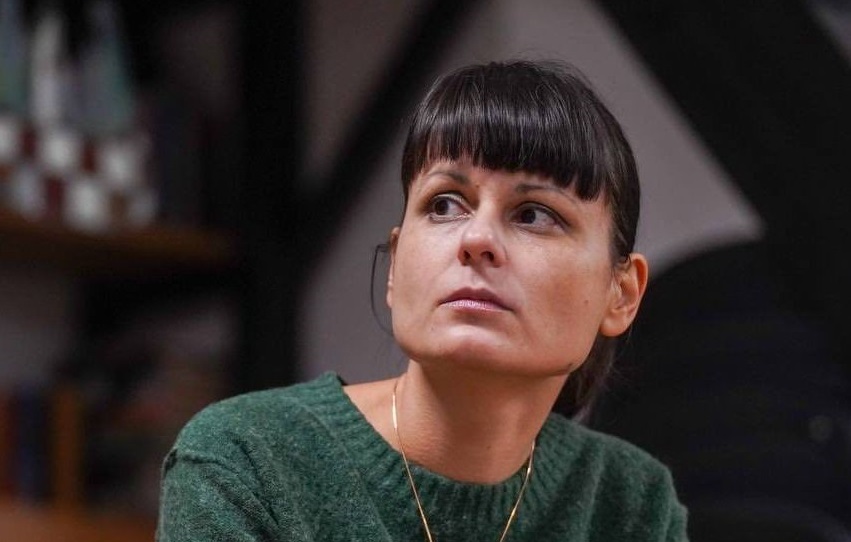
Rim Maruf
Rim Maruf, an astute and visionary Director at BiLMARUF, is a distinguished figure in the intersection of politics, media, and international relations with a focus on Middle Eastern studies. Renowned for masterfully shaping dynamic narratives, Rim’s journey is distinguished by a rich background in technical operations and a profound flair for storytelling, elevating the realms of events, politics, and international relations through compelling content.
Educationally, Rim holds a BSc. in International Relations and Political Science from Istanbul Bilgi University, supplemented by an MBA in Business Administration and Finance from Istanbul Beykent University. This academic foundation underscores Rim’s commitment to a comprehensive understanding of global affairs, particularly in the Middle East.
Rim’s dedication to excellence is further underscored by certifications in Six Sigma, Green Belt, and Internal Auditor 9001, showcasing a commitment to quality and operational efficiency. This technical prowess is seamlessly integrated with a strategic mindset and an innate ability to navigate the complexities of international political landscapes, particularly those relevant to the Middle East.
In a distinguished career, Rim has served as the Media Manager at the Turkish Trade Center, where strategic content strategies were crafted for renowned brands. As the Chief Media and Content Manager at TRT Turkish Radio and Television, Rim optimized global content strategies, showcasing a keen understanding of the pivotal role media plays in shaping political discourse.
Notably, as the Communications Manager at the United Nations Industrial Development Organization (UNIDO), Rim adeptly navigated media coverage, strategically enhanced online presence, and significantly contributed to the organization’s global impact in the realm of international relations, with a focus on the Middle East.
Rim’s skills paint a portrait of a political expert and newsmaker—a maestro of creative communication, a strategic architect of marketing narratives with a distinct political edge, a visionary leader in digital landscapes with keen insights into international relations, particularly in the Middle East, a budget management virtuoso capable of navigating fiscal complexities, and a crisis communications whisperer adept at managing the intricacies of political narratives during challenging times.
Pinnacle experiences include technical virtuosity in TV gallery workflows, visionary direction for visual style and news output, and expertise in live broadcasting and on-air management, showcasing Rim’s multifaceted expertise as a political communications expert and influencer in the realm of international relations and Middle Eastern studies.


 Weltschau
Leave a comment