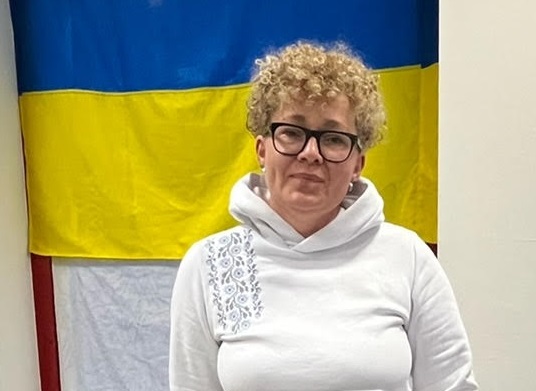
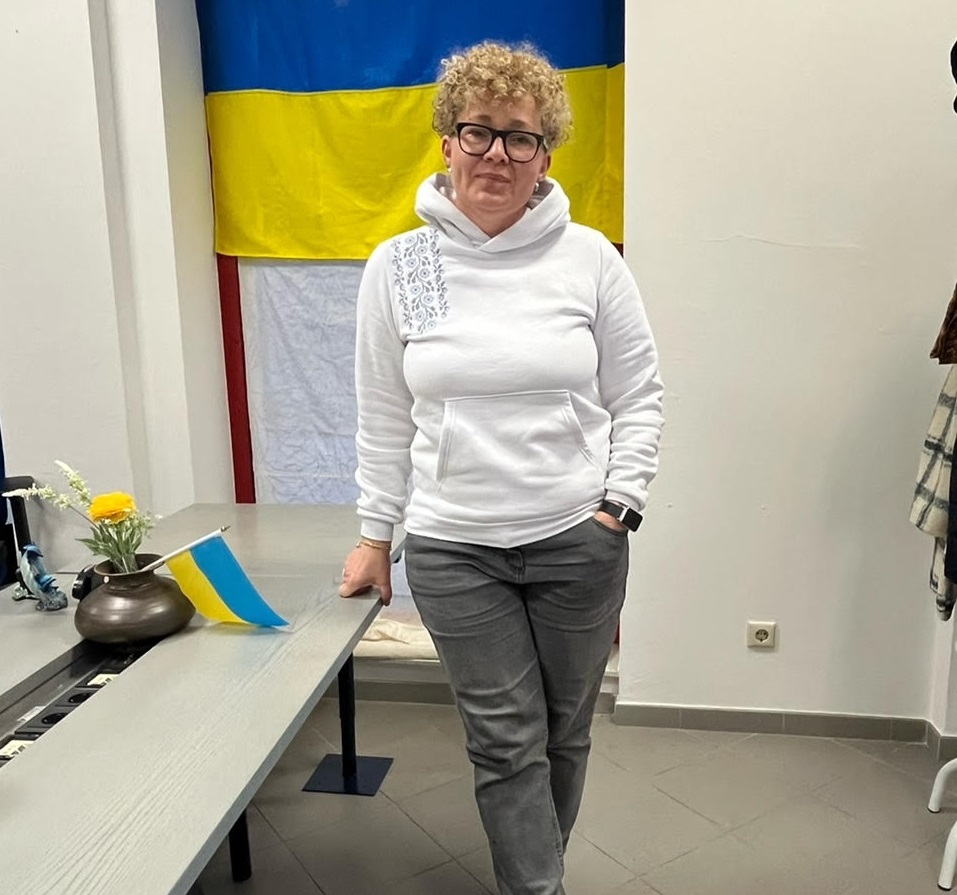
I come from the capital, Kyiv. I am 44 years old. I am a psychologist by profession. I also studied law and worked for 10 years. Then I studied psychology at university and have been working as a psychologist ever since.
There was great confusion in the first few days. We had no plans to leave Ukraine. We moved from the centre of Kiev to my father’s village. We made Molotov cocktails and learned how to throw them in case the Russians came to our village with tanks. My husband joined the army in the first days of the Russian attack. The whole village united, and people went to work. When the Russians began shelling the nuclear power plant, I was very afraid for my daughter. And we decided to go to my brother in the USA. I went, along with my daughter, my mother, the dog, and my husband’s sister and daughter. Given the panic, we didn’t particularly think through the route. It was very scary for us to stay, but it was also scary to leave. There was a lot of information indicating that the Russians were shelling the escape routes. Cars with women and children—they don’t care. Unfortunately, this was later confirmed. But luckily, we chose a different path. We joined forces with another family in which there was a man. He took his wife and daughter to the border. He knew the way, and we followed him. My father didn’t want to go. Before I left, I cried a lot for the first time since the war began.
I thought we would never see each other again. On the way, we stopped at kindergartens. In all cities in Ukraine, people have organised places where evacuees can stay overnight, warm up, and eat. To be honest, I took an empty bottle with me so that we could use it to protect ourselves if we met Russians on the way and were in danger. Now I understand that it was very naive, because we are at war with non-humans. We also stuck the “children” sign in Russian on the car because we hoped that the Russians would feel sorry for us when they saw the sign. Now I also understand that this is naive, because cars with such inscriptions were also shot at. We drove through Poland. There we met a wonderful Pole; he helped us put a Polish card in our phones and even invited us to breakfast. He asked me what my profession was. I said that I have two degrees, a law degree and a psychology degree, and that I have been working as a psychologist for 10 years. And then I burst into tears for the second time because I felt that I was, above all, a nobody at the moment. We also stayed in various hostels there. And then sometime on the 6th or 7th day, we came to my childhood friend’s house. We thought about taking some rest and flying to the US.
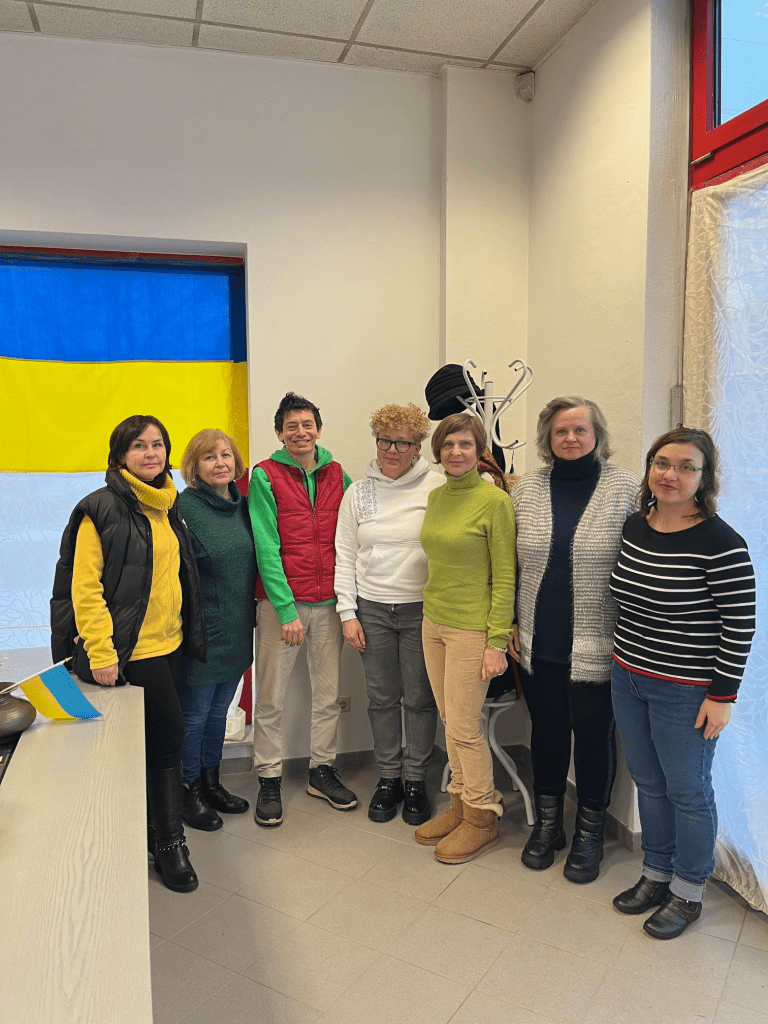
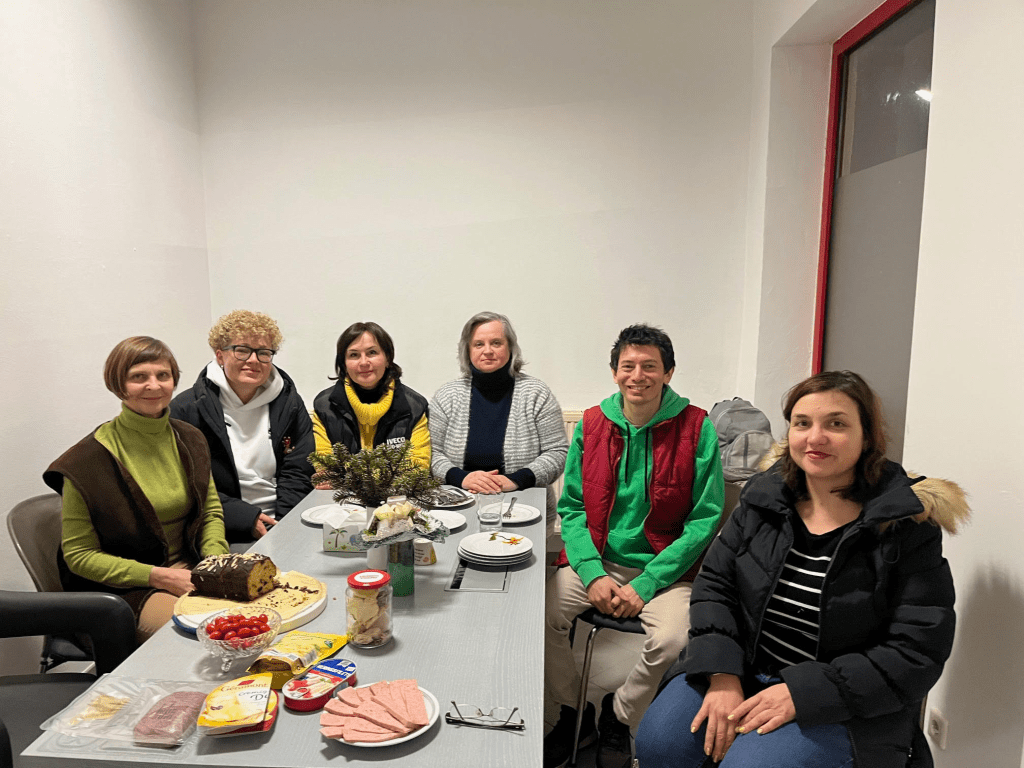
I have integration problems because I have not accepted that this war will last a long time. My depressive state and constant worry about my husband did not allow me to concentrate on learning German; I learned it from scratch. In addition, there was a lot of worry for my daughter, who is now a teenager, and in a new team, it is generally difficult for her, and here it is generally very difficult. There was great helplessness because I cannot stop the war and drive the Russians out of my country. In fact, volunteering in this field was the only way to fight against impotence. We found it almost immediately and headed there. There, among my people, among Ukrainians who also care about Ukraine and are doing something to help, I felt a little lighter.


 Weltschau
Leave a comment