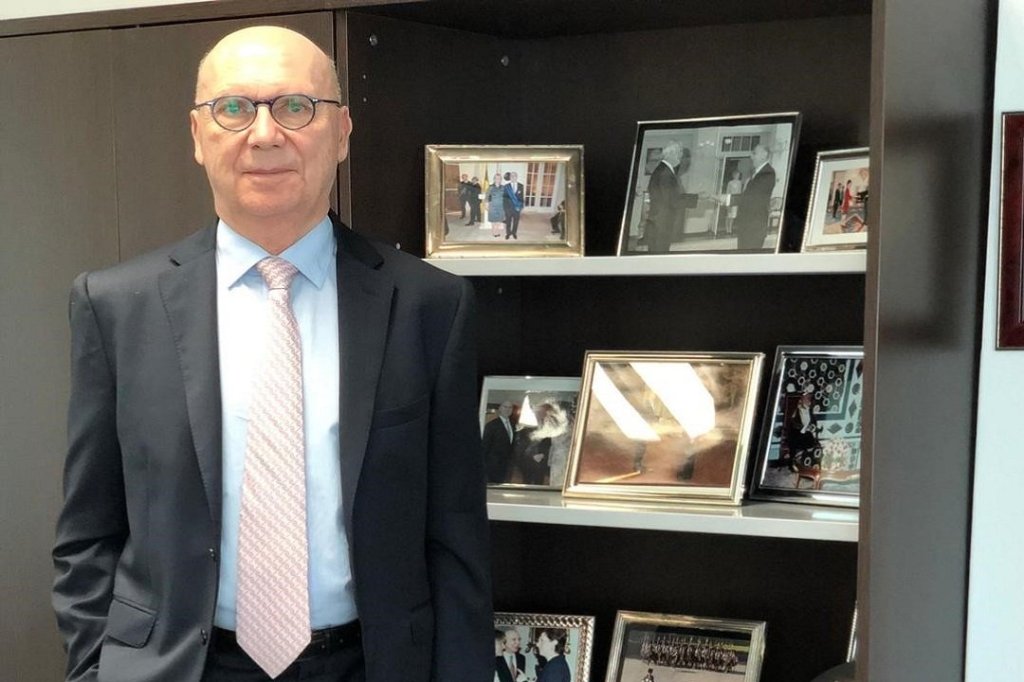
“Evidently, his primary objective in assaulting a neighbouring country is to alter the existing state of affairs in Europe. He likely believed that by limiting NATO’s presence in the region, he could effectively deter interventions like those in Libya and Afghanistan”. Murat Ersavcı, who represented the Republic of Turkey as ambassador in the Kingdom of Belgium, Australia, the Sultanate of Oman, and the Republic of Ireland, describes Russia’s invasion of Ukraine under Putin’s administration with these remarks. Putin’s anticipations regarding the war are also elaborated upon in his blog article for the Economic Policy Research Foundation of Turkey (TEPAV). “It is likely that Putin anticipated that the significant influx of migrants resulting from the war, along with the impact of his widespread cyberattacks, would bolster anti-Ukrainian sentiments and populist governments, particularly within Western European public sentiment”. To gain a more comprehensive comprehension of the current state of affairs in the war, I inquired with Ersavcı, who has received the prestigious “Grand Cross of Leopold II” from Belgium and the esteemed “Verdienst Cross” from Germany, regarding President V. Zelensky’s most recent declarations and the dual citizenship bill he introduced in the parliament to elucidate Ukrainian domestic politics.
ÖZELGÜN: In his article on Medyascope, journalist A. Sencel states that Russian President V. Putin’s visit to Turkey will be his first visit to a NATO country since the invasion of Ukraine in 2022. What is your assessment of Ankara’s foreign policy in relation to the Ukraine-Russia war?
ERSAVCI: Putin’s visit has recently been postponed. However, Ankara, being a major regional player and a neighbor of both Russia and Ukraine, will continue its efforts towards a peaceful solution to the war. In this context, Türkiye maintains ties with both Moscow and Kyiv. With regard to Moscow, Ankara did not participate in the Western sanctions mainly out of commercial concerns and its own economic difficulties. On the other hand, it was instrumental in the establishment of the so-called “grain corridor” in the Black Sea. Türkiye continues to provide strong political and military support to Ukraine for the protection of its territorial integrity. Indeed, the foundations of this support were laid in 2014, when Russia illegally occupied Crimea and conflicts began in the Donbas region. Even though Ankara plays a mediating role between two parties, it has at the same time repeatedly condemned Russia’s attack on Ukraine and its recognition of self-proclaimed republics. Türkiye calls for a rapid cessation of hostilities. It has immediately applied the relevant rules of the Montreux Convention at the beginning of hostilities. Overall, Türkiye is playing a subtle but proactive role in resolving the conflict by putting a primary focus on diplomacy.
ÖZELGÜN: According to journalist D. Berktay, Ukraine is fighting a two-front struggle. While there is a struggle against Russia in the east, countries such as Hungary and Slovakia take a stance against Ukraine’s European Union (EU) membership. What is your analysis of the reasons for these countries’ opposition to Kiev’s EU membership?
ERSAVCI: This could be based on concerns regarding ethnic minority, political ideology, economic reasons, and fears of instability. With regard to Hungary, this situation is now resolved, with a compromise being reached at the last EU summit and the assistance package for Ukraine being approved. On the other hand, countries such as Slovakia with divergent political orientations may not be supportive of an aspiring EU member. The newly appointed Prime Minister, Robert Fico, is said to be pro-Russian and opposes the EU’s sanctions against Russia. It should be remembered that Slovakia also cut off military aid to Ukraine, as well as being against Ukraine’s NATO membership. Differences in views on EU integration policies can also be a source of opposition. Countries may have varying opinions on the direction and pace of EU integration. Economic interests, such as the competition for resources or markets, may also be at play. If a neighbor joins the EU, altered economic dynamics or heightened rivalry may cause concern. Neighboring countries may resist Ukraine’s EU membership because of fears of instability. Concerns over political unrest, economic hardships, or immigration-related issues may be contributing reasons.
ÖZELGÜN: How would you assess the dual citizenship legislation that Zelensky presented to the parliament?
ERSAVCI: Presently, Ukrainians are not permitted to hold dual citizenship due to constitutional restrictions. As a result, many citizens of Ukrainian origin who live abroad are unable to obtain Ukrainian passports. President Zelensky’s proposal might certainly want to consolidate national unity and social cohesion among Ukrainians. The inclusion of the Ukrainian diaspora, which has reached significant numbers abroad, would be very important for the support of the war effort.
ÖZELGÜN: According to Rai News, Zelensky said that “As far as the war on the ground is concerned, there is a stalemate; that’s a fact because there have been delays in equipment, and delays mean mistakes,” Do you anticipate the possibility of future advancements that can resolve this impasse?
ERSAVCI: Zelensky certainly has a valid point. Unfortunately, it is a protracted war. In the final analysis, diplomacy will solve the issue. This is why Türkiye is actively encouraging a peaceful solution while at the same time continuing its support of Ukraine. After all, they are victims of Russia’s attack.
References
https://www.tepav.org.tr/tr/blog/s/7138
https://www.tepav.org.tr/tr/ekibimiz/s/1408/N.+Murat+Ersavci
https://youtube.com/results?search_query=deniz+berktay
Medyascope. Aydın Selcen yazdı: Kuruluşunun 97. yılında MİT’in başkanı Kalın’la hasbıhal. https://medyascope.tv/


 Weltschau
Leave a comment