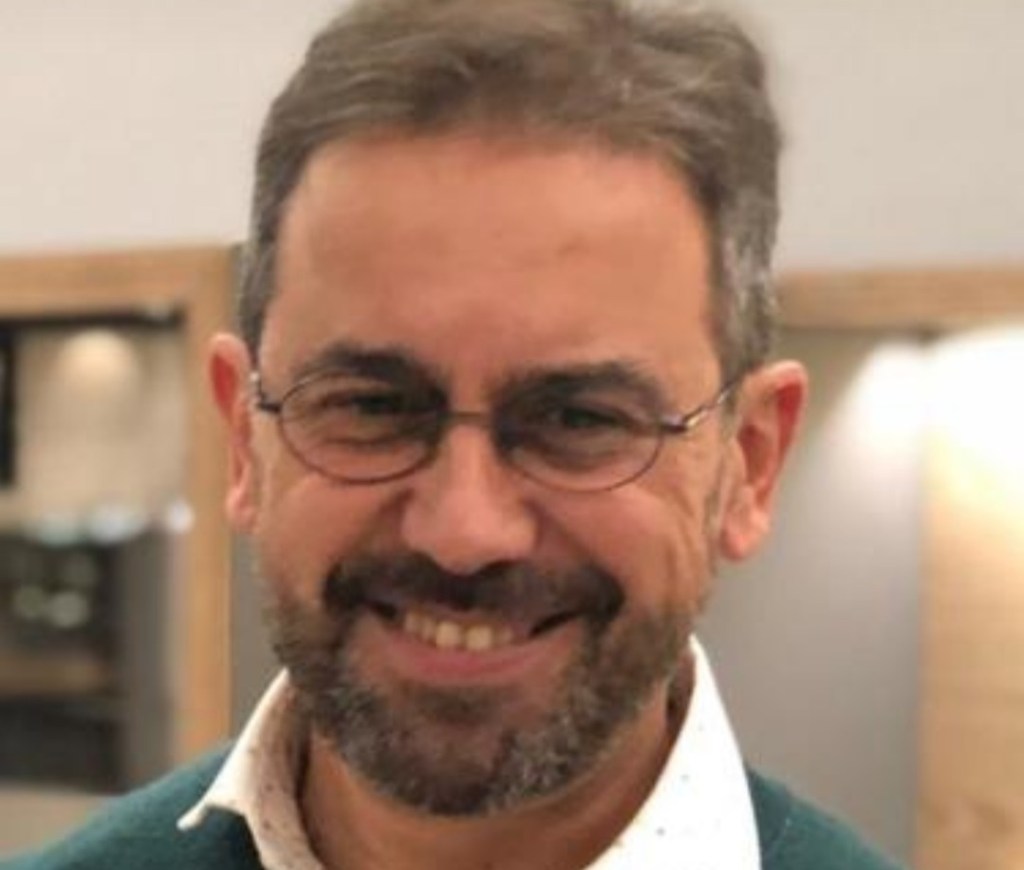
“Despite Russia no longer occupying the position of the Union of Soviet Socialist Republics (USSR) in global politics, it remains an actor that will not readily disregard its geopolitical and strategic ambitions through its foreign policy, in accordance with its own distinctive political interests and discourses” (Büyükakıncı, 2004; 1). Russian President V. Putin’s 2014 invasion of Crimea as well as his subsequent full-scale occupation of Ukraine in February 2022 might be interpreted as manifestations of these geopolitical and geostrategic ambitions. However, as Putin is actively pursuing his geopolitical and geostrategic goals, the aftermath is that children are left fatherless and cities are being subjected to destruction. Thus, the related current refugee crisis in Europe is already the largest since the Balkan wars of the 1990s (El Pais International, 2022). To have a deeper comprehension of this war, which is nearing the end of its second year, I asked questions about the parallelities between the Melian Dialogue and the current occupation and the importance of propaganda and disinformation to Russia’s current military strategy to Prof. Dr. Erhan Büyükakıncı, who is the compiler of the book titled “Russia and Ukraine in a Changing World” and who wrote the articles titled “Ukraine-Russia Relations in the Independence Process” and “Overview of Russian Foreign Policy in the Era of Vladimir Putin, Discourses, Quests, and Opportunities”.
ÖZELGÜN: You also worked as a translator. Does this war reflect French Romantic writer and politician Victor Hugo’s book, Le dernier jour d’un condamné (The Last Day of a Condemned Man), on a larger scale? Do you feel like you’re reading Hugo’s book again while following it?
BÜYÜKAKINCI: We witness the tragedy of humanity in all the wars around the world. In today’s world, wars no longer occur solely between states or national armies; unfortunately, they directly threaten all civilians and natural elements as well. Since the end of the Cold War, we have entered a new era of conflicts driven by micro-nationalism, geo-economic interests, underdevelopment and inequality problems, and political issues related to democracy and authoritarianism. At this stage, civilians are involved in conflicting processes not only as targets/victims but also as parties/shareholders beyond the interests and strategies of states and armies. The concept of human security, from the Ukraine-Russia War to the Israel-Gaza Conflict, unfortunately is not anymore among the priorities of states. In a process where the goodness and interests of humanity, along with universal human rights and values, have been discussed since Victor Hugo, the relationship between war and humans has sadly transformed into a direct form with political violence. For the sake of the interests of states or leaders, people’s living spaces, freedoms, and economic needs are being restricted or turned into others’ intervention areas. Unfortunately, in today’s world, neither international law nor human rights are truly or effectively functional. We are in an era where powerful actors are directly involved in justifying their actions.
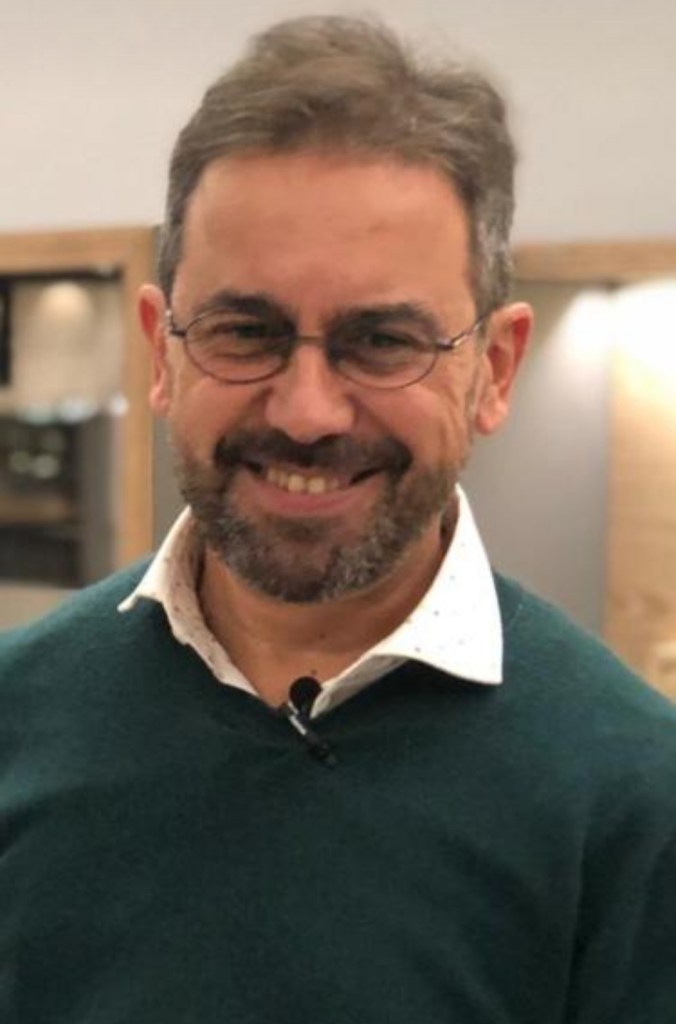
ÖZELGÜN: According to BBC Turkish, the Putin administration finances pro-war theatrical productions and encourages scriptwriters to exalt the Russian army and justify the occupation of Ukraine. What is the significance of disinformation and propaganda in Russia’s present war strategy, and what countermeasures are available?
BÜYÜKAKINCI: In the current wars, psychological elements are playing crucial roles. Within this framework, media (print and visual) and social media channels are manipulated by all the conflicting parties according to their own interests. The relationship between war and the media, which began with the Crimean War in the 1850s, became more politicized in the beginning of the 20th century, especially with the 1917 Bolshevik Revolution, and turned into a political instrument. Topics such as the justification and glorification of wars and conflicts, from all forms of art to the media channels, have been big domains where political authorities have aimed to apply propaganda and counter-propaganda on civilian populations. In today’s world, whether democratic or authoritarian, all political authorities direct media and social media channels within their own strategic “framings”, adopting specific policies to maintain and strengthen their own political legitimacy in the eyes of the public opinion. Public diplomacy institutions exist in all countries now for these goals. From the Ukraine War to Israel’s occupation of Gaza, the propaganda and counter-propaganda activities of occupying parties to emphasize their justification to their own public opinion and the international community are now quite evident. While Putin, on his side, uses arguments related to the Ukraine War to maintain his power in his own country today, we witness on the other side Western media and social media channels blindly provoking anti-Russia sentiment and promoting the continuation of the war. Instead of discussing peace processes more, there is actually a stronger preference for encouraging war. In fact, in today’s world, all media tools have become instruments of the “security dilemma” as psychological warfare elements. It should be emphasized here that social media channels originating from the United States particularly encourage anti-Russia sentiments into the international community.
ÖZELGÜN: While I follow the Ukraine-Russia war, Athenian historian Thucydides’ Melian Dialogue comes to my mind. Could Putin also think that Russia was justified in invading Ukraine because it was powerful, just like the Athenians in the Melian Dialogue?
BÜYÜKAKINCI: The “Melian Dialogue” approach mentioned in Thucydides’ famous work (Peloponnesian Wars) discusses the imposition of the justification of the stronger side in conflict processes outside the ethical and moral norms. This concept justifies managing the system with “realpolitik” approaches based on power elements rather than humane values, starting from the Hobbesian notion of “state of nature”. Looking at the last 20 years of transition from a unipolar system to multipolarity, from the Arab Spring incidents to the Ukraine-Russia War and the Gaza Conflict, leaders and political authorities, who perceive themselves as powerful, resort to political and physical violence methods at the cost of violating international and national legal rules. The problem of the violation of international law is not only occurring in Russia or Ukraine today, but also in Yemen, Palestine, and Iraq. Thucydides’ approach of the “justification of the stronger” is based on the view that law or morality will follow the imposition of power into politics. Today, as Putin seeks to change the borders with Ukraine through war, we see similar behaviors from Israel using the same methods. Unfortunately, the United Nations (UN) is not in a leading and promoting position in peace diplomacy and international law today. Similarly, the accountability of the powerful is very limited. How can a permanent member of the UN Security Council be tried in the International Criminal Court? When we look at world history, the trial of leaders of great powers is very rare. History opens this up for debate, but great powers never seem to draw moral lessons from such situations.
References


 Weltschau
Leave a comment