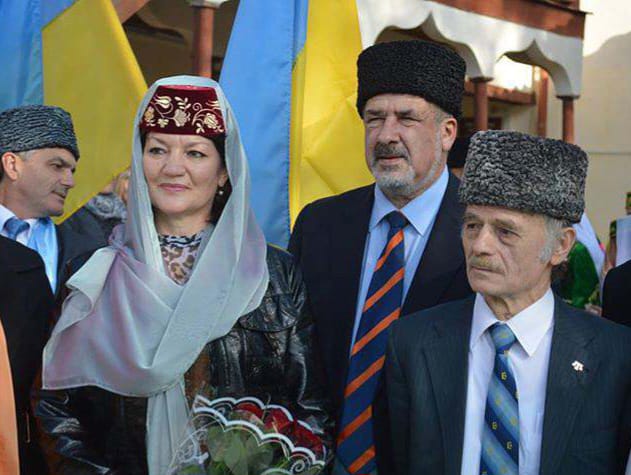
I, Gülnara Bekirova, am a Crimean Tatar and the wife of former political prisoner Edem Bekirov. I am a member of the Crimean Tatar National Assembly, the Deputy District Governor of Genicesk, and a member of the World Crimean Tatar Congress.
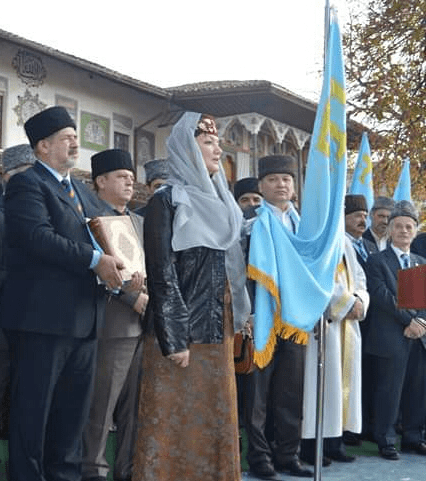
My mother, Rozalye, was born in Akyar (Sevastopol) on May 7, 1941, and my father was born in Bahçesaray, Crimea, on February 23, 1931. My mother was three years old when they were deported to the Mariyisk region in the Urals, and my father was thirteen when they were sent to Uzbekistan on May 18, 1944, along with all the other Crimean Tatars. On April 18, 1961, I was born in the Uzbek region of Tashkent, while living in exile.
On September 5, 1967, my parents returned to Crimea from exile, joining thousands of other Crimean Tatars who believed that their situation would change in light of the Soviet Government’s decision regarding the Crimean Tatars. However, it was later discovered that this was also a lie from Soviet Russia. Many of the returning Crimean Tatars were exiled once more by the Soviet government, which forbade them from settling in Crimea. The Crimean Tatars, who were prohibited from establishing themselves in Crimea, established themselves in neighbouring regions, either to the north of the peninsula or on the opposite shore of the Kerch Strait.
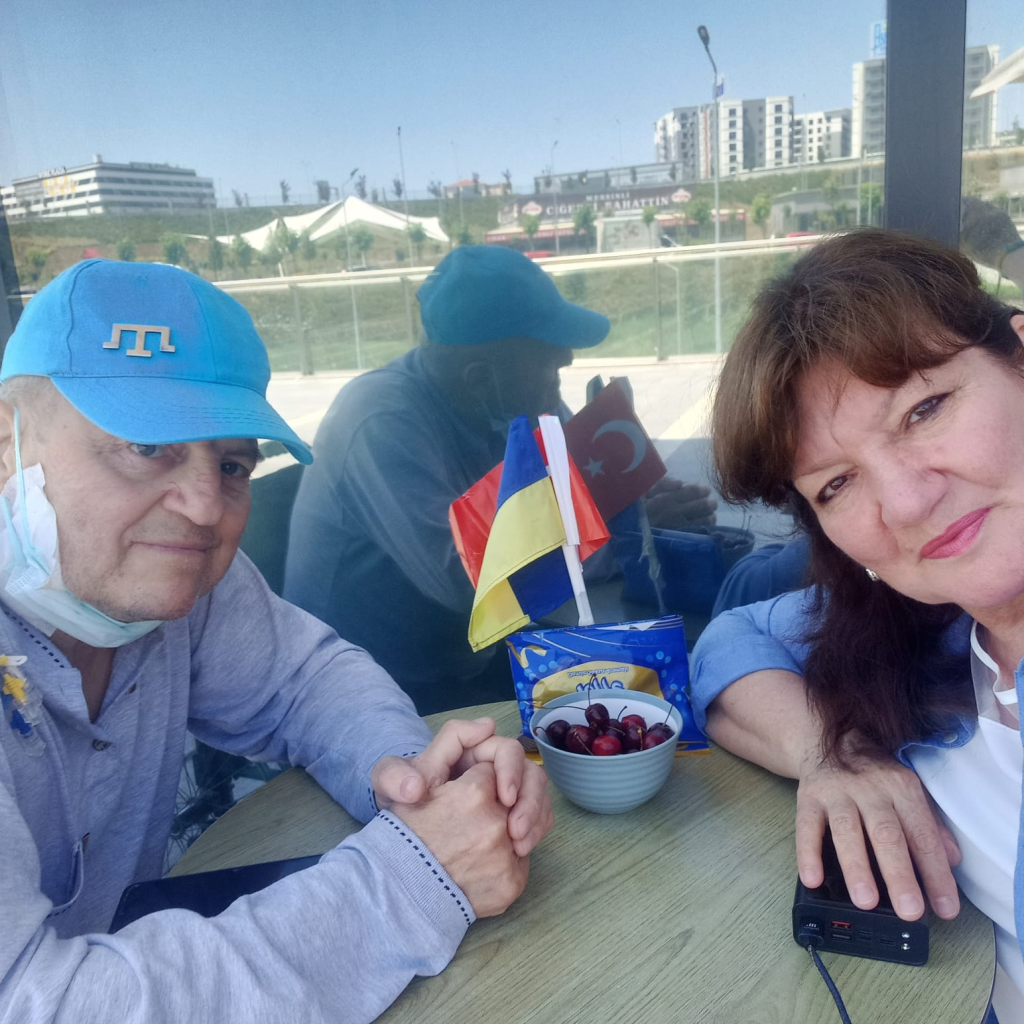
Outside the Crimean Peninsula, in the Genicesk region of Kherson Province, close to Chongar, my parents chose to establish their residence in Novooleksiyivka. My family and I were residents of this town. I am the mother of two daughters and am married. Born in 1961, my spouse, Edem Bekirov, is an agricultural engineer; however, he has been sick since 2000. My husband is a former political prisoner with a first-degree disability. On December 12, 2018, the occupying Russian administration placed him in captivity. He was detained for 257 days at the detention facility in Akmescit (Simferopol). As he continues his treatment in Turkey, I am currently in his company.
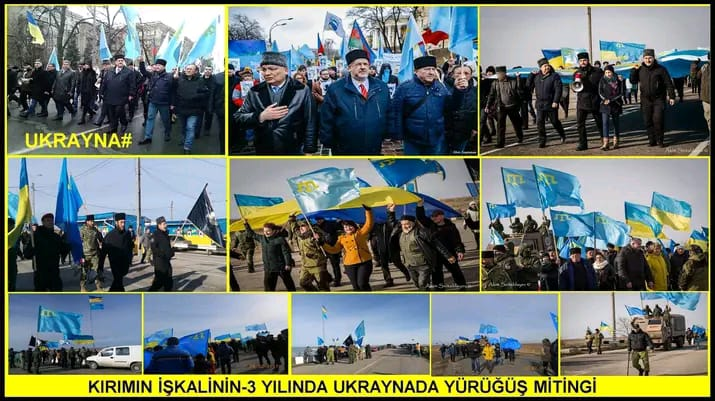
Despite the passage of a decade since the Russian occupation of Crimea, the date of that event, February 26, 2014, continues to resonate in my mind.
We travelled to Akmescit, Crimea, on February 26, at the request of the Crimean Tatar National Assembly, in support of the territorial integrity of Ukraine alongside activists and members of the Kherson Crimean Tatar Regional Assembly, all of whom were young people. During that period, I was an active participant in the Crimean Tatar National Assembly and attended to my hospital-bound first-degree disabled spouse, Edem Bekirov, while my daughters, who were university students, were living in Crimea with my mother.
It was subsequently disclosed that the number of thousands of people unfurling Crimean Tatar and Ukrainian flags in Akmescit Square was more than 10,000. In front of the Parliament of the Autonomous Republic of Crimea, they had gathered. The public truly supported this. We remained there until the very end, ensuring that the mission was completed and defending ourselves until we obtained a positive outcome. Unfortunately, on February 27, 2014, information reached us that the Autonomous Republic of Crimea’s Parliament building had been seized. ATR, a Crimean Tatar television channel that operated around the clock, was active during that period. We were actively monitoring the situation through ATR, while family members and friends informed us via telephone of the events they personally witnessed.
As Crimean Tatars residing in the Kherson region, our families were divided, so we followed all of these events with great concern. The majority of our children were either enrolled in universities or married and settled in Crimea. Subsequently, in 2014, we came to realise our own vulnerability and that the decisions rendered efficacious and transparent by the Crimean Tatar National Assembly (KTMM) were indeed correct. In October 2013, Refat Chubarov was elected president of KTMM alongside 33 other members. It was a renewed cadre, and four of them were women.
KTMM was the first organisation to make a declaration regarding the Russian army’s invasion of Crimea. Our Parliament was supported by our nation. As soon as lawlessness and unrest descended into Crimea, we recognised that safeguarding and protecting the populace should be our top priority.
Reşat Ametov, our first martyr, was abducted on March 3, 2014, subsequent to the occupation of Crimea. His tormented body was discovered on March 15, 2014, and he was buried on March 18. Ervin Ibragimov, a member of the Executive Board of the World Crimean Tatar Congress and the Bahçesaray Crimean Tatar Regional Council, was kidnapped by the invaders in front of his house in invaded Crimea on May 24, 2016, and his current location remains unknown. Pressure was applied to our people through arbitrary searches and detentions from the very first day of the occupation; consequently, KTMM convened frequently and rendered significant decisions. Our people applauded these decisions.
During the KTMM’s extraordinary meeting on March 1–2, 2014, the proposal to have women organise a protest was presented, and the corresponding resolution was subsequently approved. Action routes were determined by the decision of KTMM. Protesting along the designated route on March 3–4, women of various ages, the majority of whom were accompanied by their children, waved banners and Ukrainian and Crimean Tatar flags in an effort to denounce the invasion. On March 8, thousands of women protested the invasion of Crimea by Moscow and the resolution to hold a quasi-referendum, and called on Russia to pull out its soldiers.
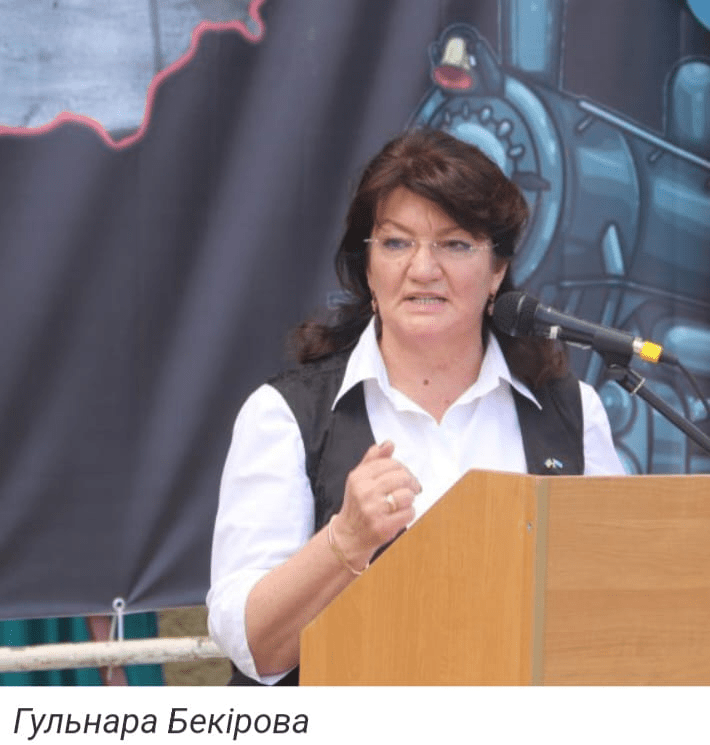
On March 8, 2014, we women marched to Çongar. Women from Melitopol, Kakhovka, and Kherson joined us as well. There were also Crimean Tatars and Ukrainians. Crimean Tatar women and Ukrainian women resisted, there were also men with us. The continued pursuit by the occupying Russian government is directed at individuals who were involved in the 2014 protests.
Presently, our nation is under pressure. Those Ukrainians and Crimean Tatars who oppose the occupying power and Kremlin aggression continue to be jailed by Russian authorities. Fathers of numerous children, individuals afflicted with severe illnesses, journalists, and human rights defenders are all examples of political detainees.
At present, the number of political prisoners illegally detained by the invading Russian management in Crimea is 204. Among them, 123 are Crimean Tatars. Over thirty of these political prisoners are fifty-five years of age or older. The invading Russian administration is putting pressure on people who speak out against the occupation and expose the real situation on the occupied peninsula to the world. 16 of the political prisoners are journalists. (Crimea Solidarity-Kırım Dayanışması)
228 of the 334 children in Crimea who are fatherless as a result of their fathers’ unjust detention by the invaders are minors. Of the minors, forty-one are preschoolers. (Crimea Childhood-Kırım Çocukluğu)
The Crimean Tatar National Assembly’s operations were outlawed by the Russian occupation administration. Crimean Tatars perceive this as an oppression and constraint on the rights of Crimea’s native people. It was forbidden for Mustafa A. Kirimoğlu, the head of the Crimean Tatar people, Refat Chubarov, the president of the KTMM, and numerous other Crimean Tatar activists to enter the occupied Crimean territories.
In the context of a fraudulent case, KTMM’s first vice president, Nariman Celal, received a 17-year prison sentence. Currently, 5,330 kilometres from Crimea, in the Minusinsk prison, he is being held in appalling conditions.
After Russia occupied Crimea in 2014, everything changed drastically. Our dream of relocating to Crimea, the motherland, never came true. We wanted our children, who live with our mother in Akmescit, to graduate from school, but we were unable to fulfil this dream due to my husband’s 24 years of illness.
Crimea was the scene of invader raids on homes, searches, kidnappings, political prisoners, and abandoned homes. From now on, life for us was a struggle for survival. We experienced a lot for the duration of this age, and we are very thankful to God for meeting us with many good people.
My spouse, Edem Bekirov, a Crimean Tatar activist and Novooleksiivka resident, was arrested by FSB agents on December 12, 2018, while he was travelling to see my mother in Crimea at a Russian checkpoint at the administrative border with Crimea.
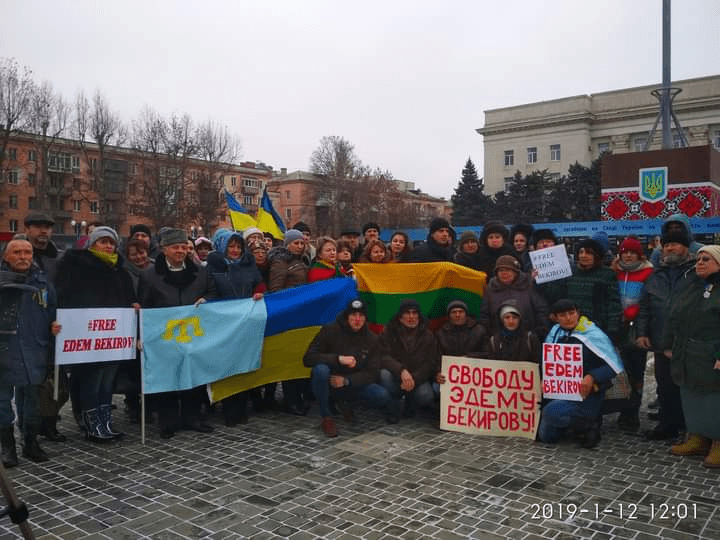
My spouse, Edem Bekirov, had very serious heart surgery in January 2018, and he had four shunts installed. His right leg has a detachable prosthesis on it. A charge of “illegal arms smuggling and illegal transfer, sale, storage, and transportation” was brought against him by the FSB. Russian judges have ruled that an individual with diabetes, a disability, or a host of other illnesses can be a terrorist and be detained pending trial. After being kept in the pre-trial detention centre until August 23, 2019, Edem was moved to Ukraine on September 7, 2019, as part of the prisoner exchange with Russia. He was given a seven-year prison sentence and a 200 thousand ruble fine during his trial.
The more I spoke with the families of political prisoners over the years, the more I grasped the troubles of our people. While my husband, Edem Bekirov, was imprisoned, everyone was there for him. I have respect for each and every one of them. My spouse, Edem, underwent extensive therapy and rehabilitation, which is still ongoing, after he got back home.
Beginning in February 2022, the war has caused pain to all of us living today because of what we have witnessed. When Russian military convoys passed through our location on February 24, 2022, along with the villages of Chonhar (Çongar), Novooleksiyivka, and Partyzany, as well as the Kherson region and the city of Henichesk, there were loud explosions, and at five in the morning, there was an enemy on our land.
In November 2021, my husband underwent seven surgeries in the Kiev hospital after entering the country as a prisoner exchange. Edem was in a critical condition when the war broke out; he was transported to the hospital basement in Kiev. Months were spent by numerous individuals and organisations attempting to save my husband’s life. Edem was ultimately transferred to Istanbul for medical treatment.
Upon the outbreak of war, I was residing in the village of Novooleksiivka, Henichesk district, Kherson region, which was under Russian occupation. As Deputy District Governor of Henichesk, Member of the Crimean Tatar National Assembly, and an active contributor in the Crimean Civil Blockade (2015), in the course of the war on March 6, 2022, I organized my first rally in support of the territorial integrity of Ukraine, and the Russian special services pursued me. They commenced their search for me. For nine days, I resided in the basement of a non-residential building. On March 15, 2022, I was able to leave the occupied city of Novoolekseyevka. Four days passed before I was able to reach the territory under the control of the Ukrainian state, owing to the assistance of my family, friends, and seasoned supporters. On this road, however, there were 32 checks, and I felt both fear and excitement as though my heart were about to stop 32 times.
On February 9, 2023, the intruders forcibly entered and settled in our forty-year-old home in Novooleksiivka, where it had been a residence since our arrival a year prior. They painted our car in the garden with a “Z” sign and utilise our house as their headquarters.
I was informed that invading forces in the Kherson region seized locals’ vehicles and mass-occupied their dwellings. While they typically inhabit abandoned dwellings, they also establish themselves in occupied homes. The Russian occupiers, in the Kherson and Zaporajyaa regions, arrested approximately 140 members of our people, not excluding Nusurulla Seydaliev, Rustem Gugurik, Appaz and Halil Kurtamet, and Oleksiy Kisilev, who were against the invasion of Crimea and the war initiated by Moscow against Ukraine. (Crimean Tatar Resource Center- Kırım Tatar Kaynak Merkezi)
In response to FSB pressure, my mother, daughters, and grandchild travelled with us from our residence in Crimea, our Garden of Eden, to the Kherson region. The eldest began working at a local school, where the oldest informed the students regarding the occupation of Crimea by Russia. My mother left our home ten months subsequent to my departure in March 2022. The invaders conducted three raids and searches of our home during this time. My mother and daughters were once again required to depart their residence with a bag. In Kiev, my younger daughter persisted in her employment.
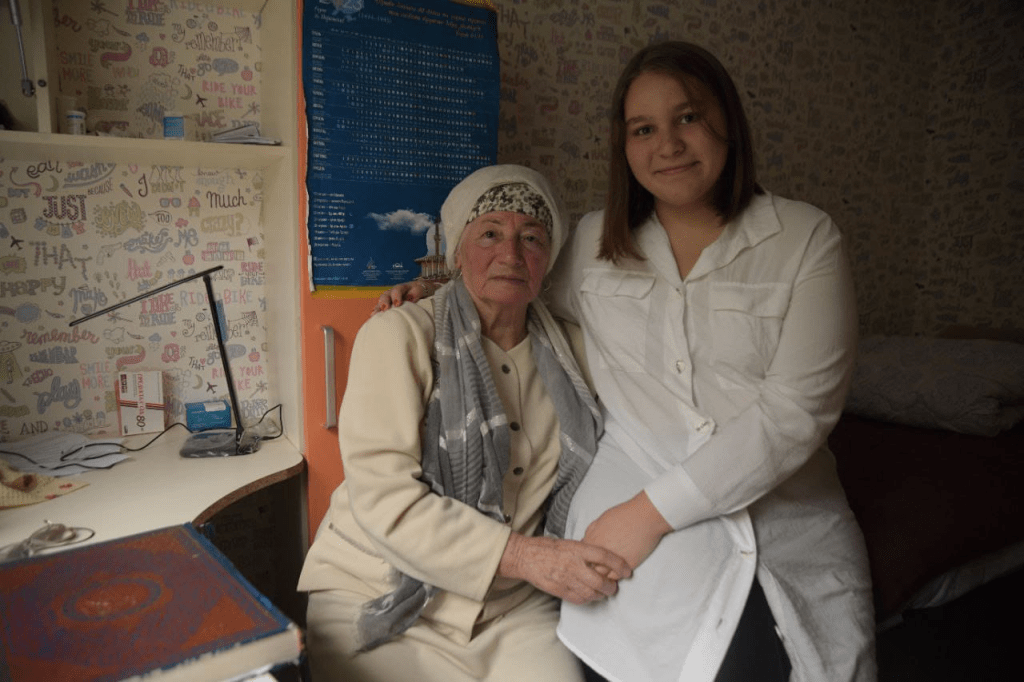
Currently, my eldest daughter is employed at the school. Additionally, she tells the children of the atrocities perpetrated by the invaders. We continue to be hospitalised in Istanbul as of today. I am now confident that the treatment will be successful at the hospital in Istanbul. Following five additional operations, Edem has undergone treatment for the past twenty-two months. The first ten months we spent in the hospital were the hardest. Presently, we are carrying on rehabilitation.
I hope that Edem will rejoin the ranks of those who oppose Russian aggression. Everyone on the planet needs to realise that if Russia’s invasion is not stopped, hell will break loose everywhere. Everything will be destroyed by an enemy. Everything will be destroyed by this enemy.
Despite the challenging times we have all experienced recently, we continue to fight for Ukraine, honour and dignity, the right to live in the Fatherland, and the protection of our land.
For every one of our defenders, we pray.
It has so happened that our family has experienced some really trying times lately.
Furthermore, the war made our lives even more brutal and challenging.
However, life continues on.
We need to muster the will to fight, survive, get back up, and continue on.
I am certain that I am invariably a joyful individual when I am in solitude with my thoughts. Each individual experiences happiness uniquely. My joy stems from the fact that we are fighting and that my mother, relatives, family, and children all yearn to return to our native land…
That is indeed happiness!
Everyone requires happiness, since existence is impossible without it.


 Weltschau
Leave a comment