
Two years have passed, and my heart and the hearts of many other Bakhmut residents still beat more often at the mention of Bakhmut—the city where every morning you could hear the incredible smell of local pastries, where every spring the charming red roses began to bloom, and where nearby, on the playgrounds, the children laughed, and the parents took care of them and made plans for the next day. But, unfortunately, all these plans were not allowed to come true…
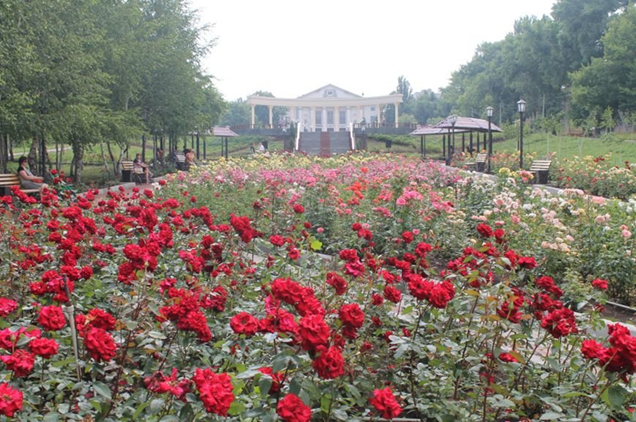
Alley of roses, Bakhmut, 2015
On February 24, 2022, I woke up at 6 a.m. as usual to go to school, but when I heard an explosion somewhere nearby, I knew something was wrong. My first thoughts and emotions were like a symbiosis of surprise and not understanding what exactly it could be—military training or something even worse. After reading a thousand messages from relatives and listening to the news on TV, I realized that this explosion is the first sign that notifies us of what awaits us later. In March–April, the city continued to function and live the life that the period allowed. These were the last months of Bakhmut’s life. People gradually began to leave the city; some of them already a few days after the start of the war packed their things and left, and some of them stayed until the last. Out of a population of 73,000, approximately 20,000 stayed for the period of May 2022. I left my home at the end of March because I had the opportunity to leave the country before the Russian army began the occupation of our city. Sitting in the back seat of the car, looking out the window, I tried to photograph with my eyes these streets of my hometown, these houses, coffee shops, and shops, although I thought that I was leaving the house only for a few weeks. These few weeks turned into two years. While I was abroad, I begged my parents almost every day to let us return home, because the understanding that you wouldn`t be able to not only see but even hear relatives on the phone and feel the smell of your native apartment ate me alive. Closer to June, when the hardest fighting was already going on in the city and people started posting at least some news from there, only then could I see what my city had turned into.
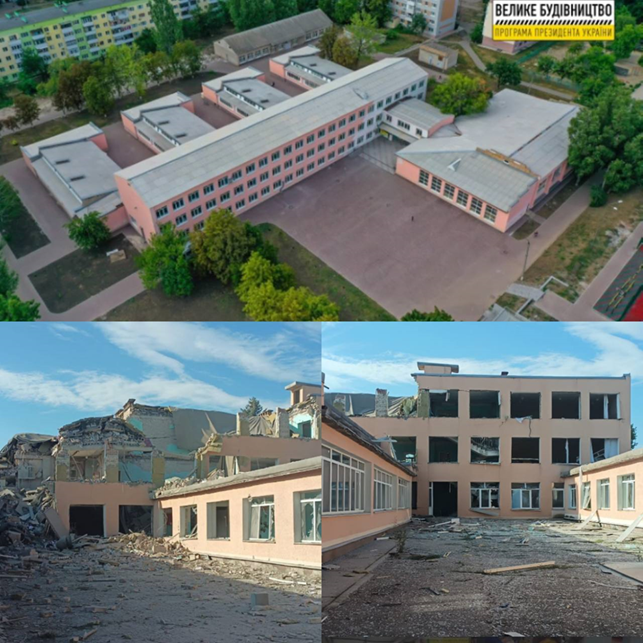
School #18, Bakhmut. The top photos 2021 and the photos below are the consequences of the Russian airstrike in summer 2022.
My 9 and 5 half school years were spent in the walls of school #18, which was located near my home. This institution gave me my first friends, and it was there that I fell in love for the first time. Within this school, I was able to feel the whole range of emotions, starting with anxiety over unfinished homework and ending with happiness over my victories in different Olympiads. In December 2021, renovations were completed at this school, and finally started functioning in a renewed way. And half a year did not pass when a Russian rocket destroyed all the work and, in general, all the memories.
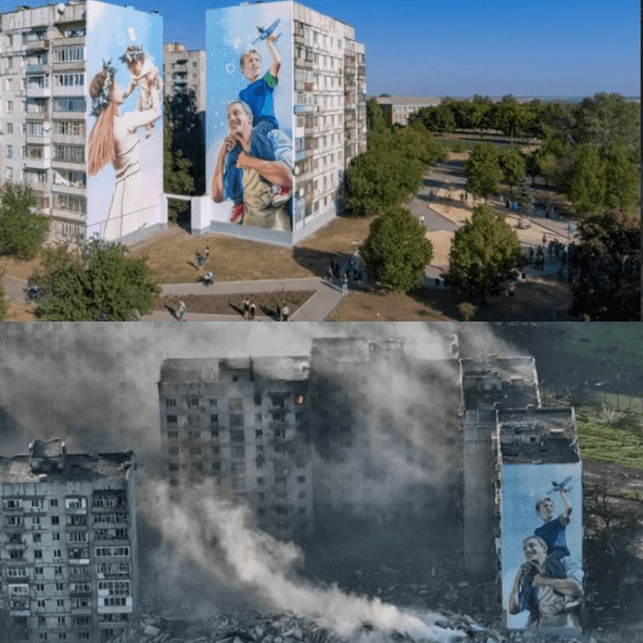
These houses with two murals were the sightmarks of the city. They symbolized unshakeable and unbreakable family coziness and unity. Unfortunately, the Russian army cannot understand this spiritual implication…
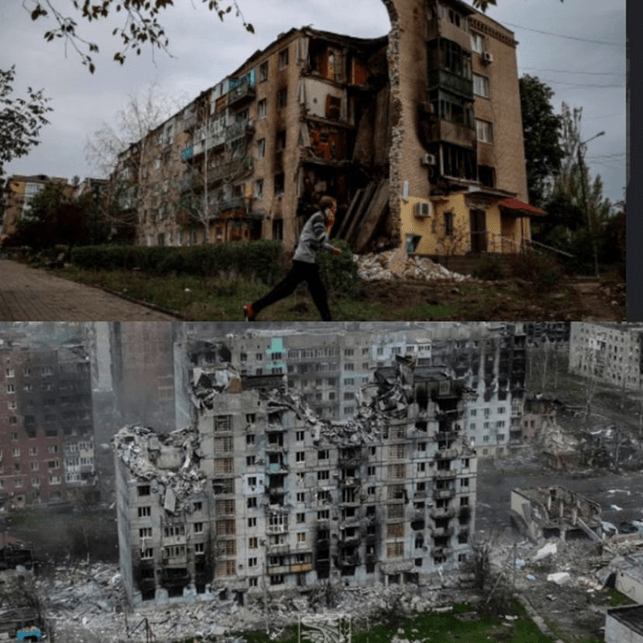
The people of Bakhmut lived with the hope of being able to return to their cozy corner and hug those who were next to them, which created this coziness, but at the moment it`s simply impossible. For me personally, this`s still an unhealed wound that will take more than one year to regenerate. Every destroyed or taken life shouldn`t remain unpunished; therefore, we must show the power of our voice and not remain silent, because the verbal front is also power.
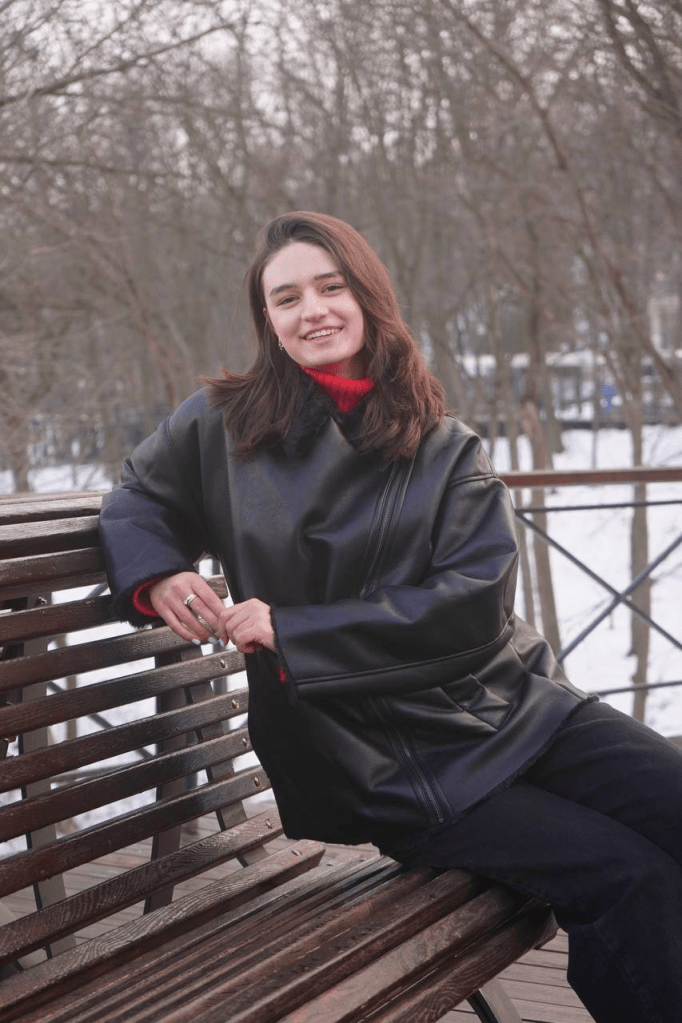
Kristina Machavariani
Kristina Machavariani is a first-year student at the Institute of Philology and Journalism of the V. I. Vernadskiy Taurida University. An experimental person, a future translator, and a writer. Her credo is: have warmth in your heart and give this warmth to others.


 Weltschau
Leave a comment