March 8 was a harbinger of spring for me—a mixture of sun, flowers, and a perfume scent from my childhood. March 8 was not a day celebrated as working women’s day, but a day celebrated in a different format by women, young girls, and even girls of all ages in the USSR. In fact, March 8 was an official holiday, so all celebrations took place on March 7. Our teachers were very stylish and beautifully dressed, and there were many bouquets of flowers on their tables, so there was a festive atmosphere scented with flowers and perfumes. We, as female students, used to receive small gifts from our male students in the class every year, usually a book. Once, the gift was a cute dark blue scarf. Gifts were placed on our desks in the classroom. The warm sun of Central Asia and the colorful flowers sold in every corner would complete the picture. All the women on the street were smiling. Every man passing by, whether he knew you or not, would definitely congratulate the ladies verbally. In the capital of Siberia, where I spent my university years, everything was almost the same, except for the weather conditions. When I say weather conditions, I am talking about the very cold winter months. The weather was -25, -15 degrees. The gifts we received here were usually a book and cloves. Flowers were brought to Siberia from Central Asia and Azerbaijan by planes. Cloves were preferred because they were the most durable. In addition to the gifts, cakes were cut and tea was drunk in the dormitory.

Then… 1991 came, and we witnessed great events. Who would have thought that the huge USSR would disintegrate so quickly. But it happened. Everyone is confused; some are happy, some are sad. The USSR meant stability, a fixed salary, a fixed life, and a fixed future. And suddenly, they disappeared. Young people, scientists, and those with a commercial mindset immediately set out for the West and America. But when the priority of our Crimean Tatars was the Homeland, we did not even think of plans to emigrate abroad. In fact, towards the end of the 1980s, the return to Crimea had already begun. And at this point, we all saw what a big role Crimean Tatar women played. They left their houses, gardens, goods, and property, which they had built from scratch with their spouses in their places of exile for years and which they had beautified by working day and night, and set out for the Homeland. Returning was not easy at all. No one welcomed them with open arms, and in addition, the so-called “local” people looked at them with hostility. Neither settlement permits nor decent job opportunities were given.
Our first citizens who came to the town of “Ismail Bey”, which was established from scratch in Kezlev (Yevpatoriya), stayed in tents for a long time. The wife and children tried to survive in incredibly difficult conditions and hold on to their homeland. There were frequent police (militsiya) raids. It was not even allowed to stay in tents. The lands belonged to the state and it was against the law for people like us to “settle” there. Despite these adverse conditions, members of our unhappy people, men and women, were bravely resisting and protesting, hand in hand. Our women were standing tall under these incredible conditions. Several families stayed together in tents, lit a fire in the open air, cooked food in huge cauldrons, and shared everything without saying “yours and mine.”
In 1991, Ukraine declared its independence. When I arrived in 1992, our people had officially obtained a 6-decare land permit and slowly started house construction. My early years were spent in a vremyanka (a slum-like building), a single tiny room with a stove. But compared to the previous year, this was considered a very comfortable environment. At first, there was neither electricity, water, nor gas. Over the decades in exile, after the beautiful, comfortable homes our parents had built tooth and nail in Central Asia, we found ourselves in these primitive environments: gas lamps, stoves, and water brought in by trucks. Buying a new house was nearly impossible because, while houses in Central Asia were selling for close to free, prices in Crimea were 30 times more expensive, roughly $30,000 versus $1,000. The dimensions of the economic crisis were so great that people had difficulty making ends meet. The Crimean Tatars were not given decent jobs. Men can only work in construction, etc. They were employed in heavy labor and as truck drivers. Women could only work as nurses if they received an education. In the city market, many people, such as teachers, engineers, and even a physics professor I knew, were selling the fruits and vegetables they grew in their gardens to make a living. The women around me who wanted to continue their careers were so much less likely to be counted on the fingers of one hand. For example, one of our neighbors found a job at the Social Security Institution (Sobes, sotsialnoe obespechenie), one or two people were working as accountants, and I was one of the lucky ones. In fact, I was the first Crimean Tatar to be recruited to the main staff to work full time at the State Hospital in Kezlev (Yevpatoriya). Crimean Tatars were not preferred in those years, and what gave me the green light was my degree in medicine obtained from Novosibirsk University in Siberia.
Our workplaces were in the center of the city, we had to get up at around 5 in the morning to get to work at 8.30 because a long pedestrian journey was waiting for us to reach work. The bus stop was well ahead of the town where we lived, a place where the asphalt road started and relatively “civilization” began. However, since the fuel problem was frequently on the agenda, buses did not depart most of the time, and sometimes this could last for months. I am talking about a period when there were no roads in the town of “Ismail Bey”. Especially during the rainy and snowy seasons, we had difficulty moving on mud-like soil, and we had to walk for kilometers like this. I say we, referring to those 3–4 working Crimean Tatar women. We would definitely have a spare pair of shoes with us, and when we reached the asphalt road, we would start to pull ourselves together. Visually, we had no difference from the other employees coming from their cozy homes, 5 minutes away from work, but ask us how much effort we put in.
As for March 8; as the legacy of the USSR, everything remained the same. Each man would bring a flower to the women of his house, there would be small celebrations at workplaces, and I would receive lots of flowers from my patients. We had many Crimean Tatar nurses in our hospital. Their common characteristics were that they were incredibly hardworking and resourceful. How proud! Our nurses, Indira and Venera, who worked with me, were just two of them. Moreover, I wanted to underline it because I know the difficult conditions they live in. Of course, it took time for our people to prove themselves. As I said, at first, we encountered very adverse reactions. But after a while, the “locals” began to favor us. One of the reasons for this was that we were both experienced and very polite and gentle, which was not a common trait in that region. If I recall a dialogue between patients investigating doctors in our hospital: “There is a Tatar lady there, she is very good; just go to her”. I wouldn’t believe it if I hadn’t heard it with my own ears. Praising and thank-you letters from my patients started to come to the local newspaper one after another, but they all happened over time. Then came those nightmare-filled days when I could not bring home any bread for long months, our salaries were not paid, and I would lie down in bed drinking heavy sleeping pills to forget about my hunger. And with my eyes left behind, I joined the migration caravan.
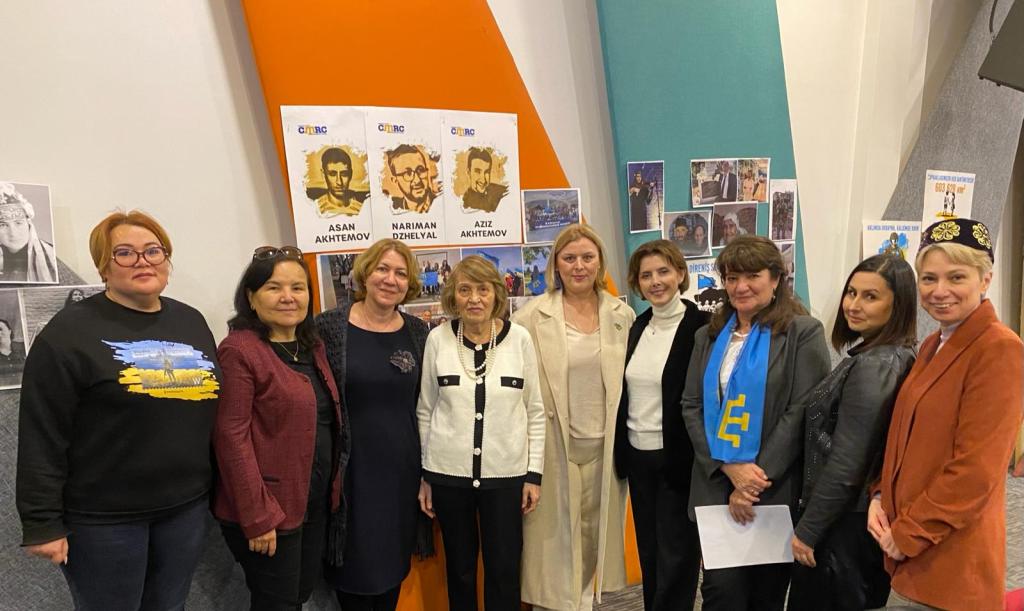
Since that time, I have lived most of my life in the most beautiful country in the world, Turkey, the friend of the fallen, and I am very lucky that I had the opportunity to meet very valuable and incredibly brave women here. Safinar Cemileva, the precious wife of the legendary leader of the Crimean Tatars, Mustafa Aga A. Kırımoğlu, and Gulnara Bekirova, a member of Mejlis, the Crimean Tatar National Assembly, and the deputy mayor of the city of Genicesk in the Kherson region. These two magnificent women are very striking examples for us with their own energy, their efforts to explain the facts of the occupation of Crimea and the vile and treacherous war that Russia waged against Ukraine, and the countless organizations and conferences they attended. Moreover, if we consider that Ms. Gulnara stayed with her esteemed husband, Edem Bey, who has been seriously ill for 20 years now, in a hospital in Turkey for the last two years, she is a real hero living among us.
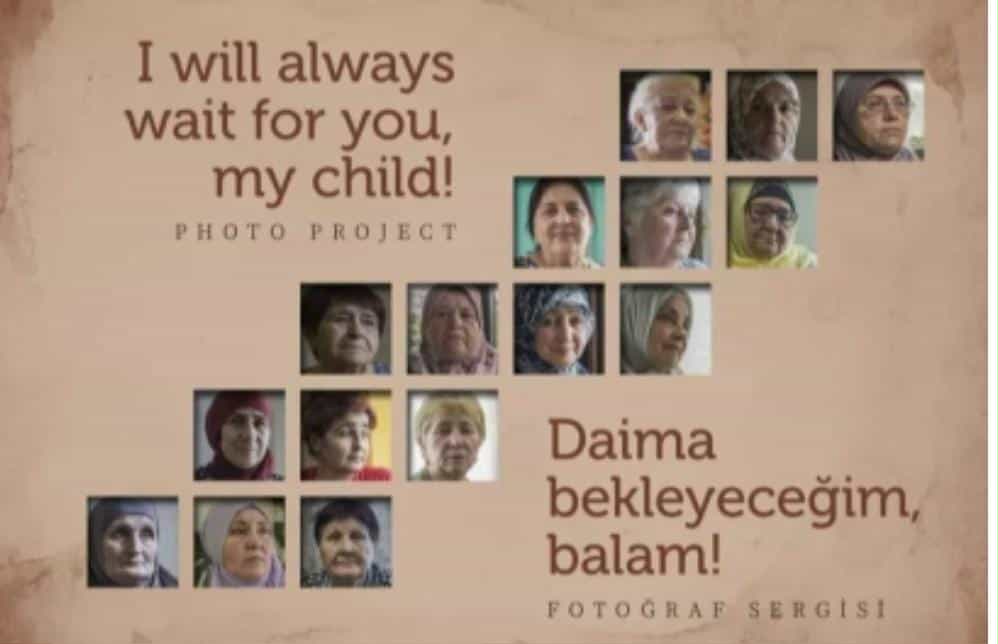
After the ill-fated invasion of Crimea in 2014, there were countless raids and searches on the homes of Crimean Tatar activists, and countless arrests were made. New ones have been added in the last two days. Behind our political prisoners are incredibly strong and brave female figures, such as their mothers, wives, and lawyers: Leviza Celalova, Lutfiye Zudiyeva, Mumine Saliyeva, Zodiye Saliyeva, etc. Many of them have young children. I look with admiration at these magnificent women, who continue to fight bravely without collapsing. I wish with all my heart that they will be reunited with their spouses and children as soon as possible!
And of course, war! The Russia-Ukraine war, which the whole world watched with astonishment, has passed its second year. We all witnessed the brave stance of the Ukrainian people, especially Ukrainian women, after the war started on February 24, 2022. We observed with amazement and envy how they crossed the border without panicking, kept their cool, handed over their children to their cognates in the safe zone, and then returned with dignity, even though it was not necessary. There were too many women who participated in the war of independence of their countries, some by fighting on the front, some by knitting camouflage nets behind the front, some by cooking for the soldiers and the defensors of the territory, some by sending the money they earned from concerts, and of course by volunteering and helping soldiers and civilians escaping from the line of fire in many ways, unseen angels…
Everyone and each person who came to the Istanbul protest rallies, starting from the first day of the war, almost every day, regardless of the rain and cold weather, and made their voices heard, is a hero in my eyes! I want the wars to end and all our soldiers in captivity and unjustly imprisoned brothers to be free and reunited with their families! May women always smile! Let March 8 only mean the smell of the sun, flowers, and perfume, just like in my childhood!


 Weltschau
Leave a comment