Back in May, over a decade ago, I encountered a family of Russians and a Belarusian at a scientific conference in Kyiv. All of us shared a background in philology and had come to the Ukrainian capital to exchange scholarly insights and experiences, to listen to colleagues’ presentations, and to delve into the world of words.
Liubov and Mikhail from Russia stayed in an adjacent room on one side, while young scientist Tatiana from Belarus resided in an adjacent room on the other side. A colleague from Ukraine occupied the room opposite mine. One afternoon, we had some free time and decided to explore the city together. The Belarusian and Ukrainian colleagues and I easily agreed to converse in our native languages. It turned out great. We reaffirmed our philological theory that our languages were similar and different at the same time. Although none of us had experienced such a situation in the past, we exchanged genuine smiles, when we understood a sentence or a word in another language. At one point, Tatiana said sadly, “At least with you, I can speak my native language.” She explained that in Belarus Russian predominated. The elderly generally did not know Belarusian, since they had forgotten their native language back in Soviet times, and young people who tried to revive it often were under the watchful eye of secret services. “If you speak mostly Belarusian, especially in the streets, people look askance at you. You are very likely to be an oppositionist, which is dangerous,” she explained.
“It’s wonderful here in the south, so warm and tranquil. Perhaps cherry trees will soon bear fruit,” Liubov remarked dreamily, admiring the blooming Kyiv chestnuts, which were just beginning to have their tall white “candles”.
“In the south? I live in the south, in Odesa. Kyiv is in the north,” I said, not fully comprehending. Unlike with Tatiana, we switched to Russian when we talked to the Russian colleagues, as they understood neither Ukrainian, nor Belarusian.
“Well, I mean, it’s south from Moscow,” clarified Liubov confidently.
I remained silent, but I thought, “Why refer to Moscow?” Why use the Russian frame of reference, not the Ukrainian one, to describe the location of Ukraine’s capital? Kyiv is not in the south, but in the north of Ukraine.”
“It’s lovely here, but I don’t understand why almost all signs are in Ukrainian. I bought wet wipes, and everything is in Ukrainian. It’s frustrating; I can’t understand a thing,” Mikhail, a candidate of philological sciences, chimed in.
“What language should we use then?” asked my Ukrainian colleague politely.
“Well, I don’t know; perhaps use at least both languages, your own and Russian,” suggested Mikhail amicably.
Nobody wanted to argue. It was 2008, Russia’s war against Georgia was yet to start, the attack on Ukraine was six years away, and all three of us, two Ukrainians and a Belarusian, tried to use Russian words for Liubov and Mikhail to understand us, and were as polite as possible. In the evening, however, being polite became increasingly challenging.
We decided to rehearse our presentations before the conference the next day. Tatiana could not decide what to do. She had prepared her report in Russian, because she did not expect the Ukrainians would be so good at understanding Belarusian. She regretted it now, since she had no time to rewrite it. We discussed it and advised her to incorporate sentences in Belarusian every once in a while to liven up and add zest to her presentation. It was then my turn to rehearse. My report centred on twentieth-century verse novels, a topic I was researching at the time. After I finished, Tatiana asked me to tell more about the Executed Renaissance, the generation of Ukrainian artists persecuted by the Soviet regime in the 1930s. Liubov was quiet for a while and then asked, “How did you manage to learn Ukrainian so quickly?” At this, all three of us, including the Belarusian colleague, stared at her incredulously. “What do you mean? I didn’t learn it at all,” replied I. “How come?” did not give up Liubov. “Well, of course, we learn our native language at school, I mean, rules, spelling, where to put commas, etc.,” I added, thinking she meant a school subject. Liubov, however, meant something entirely different.
“It’s just that your Ukrainian is so fluent, one might think, you’ve been speaking it your whole life,” she continued.
“But I’ve been speaking Ukrainian my whole life,” I was still confused.
“What do you mean by your whole life? You were born before 1991, weren’t you?”
“Yes, but why does that matter?” I started to get her point finally.
Then, just in case, I tried to explain that Ukrainian was not only my native language but also the native language of all my ancestors, that my grandparents, and great-grandparents, and their parents spoke Ukrainian, and it was always like that.
“No way! There was no Ukrainian language before 1991,” Liubov dismissed my explanation. Mikhail shared her sentiment. We tried to remind them of the philological scholars whose work they were supposed to study at their universities, just as we did. One may agree or disagree with them, but Shakhmatova, Gamkrelidze, and Ivanova never doubted that the Ukrainian language existed for many centuries and appeared no later or even much earlier than Russian. Even in the 19th century, when Ukraine was under Russian Imperial rule, philologists recognized Ukrainian as a distinct language. Yet, among individuals presumed to have received the same classical education as myself, I encountered, for the first time in my life, a steadfast belief that my language was made up in 1991, despite all the books they had read.
I was too tired to try to persuade Liubov and Mikhail. They smiled amicably, and we left to get some sleep before the conference the next day.
Years later, amid Russia’s aggression against Ukraine, I encountered a typical Russian once more, around 2016 or 2017. She was also nice and even disdained Russia’s president, V. Putin. I was much older and had learnt and understood a lot since that encounter in Kyiv, but when I heard that she was against Putin, I felt a spark of hope.
“I’m totally against wars. There’s no need to fight. We used to have such a good life together,” sighed she.
“We never had a good life together. Over three centuries ago, we entered into a temporary military alliance with you, only to have our territories occupied and our armed forces destroyed. That was wrong,” I retorted without even trying to be polite, as in 2008.
She stared at me in astonishment for a moment.
Well, I can’t say. I’m not a hhistorian, andI don’t know anything about that. But we used to live peacefully together. That I know for sure. We used to visit you. It’s so wonderful and warm here. I want to have it all back,” she reiterated stubbornly.
“And cherries are sweet?” I asked ironically, suddenly recalling how Liubov admired our cherries.
“And cherries! Your cherries are to die for!” she exclaimed naively.
I had no desire to argue. I saw it clear as day. In the minds of Russians, whether supportive or critical of Putin, Ukraine is part of their realm, offering sweet cherries, delicious borscht, and cheese dumplings. They always were welcomed in Ukraine. We served them delectable meals, took them to the countryside and the warm sea, washed their dishes, and made their beds, as Russian relatives never considered it necessary to do this on their own. They got used to just coming to our home and taking whatever they like, without permission and apologies. They always viewed us as their little brother, despite our longer history and older language. The little brother expected to give everything to the big one, just because the latter wants it.
This encapsulates Russian domestic colonialism, the wellspring from which Putin’s regime draws its strength. For, regardless of whether they support or disdain this regime, nearly every Russian, with rare exceptions, maintains that Ukraine is a colony to be reclaimed so that they can have access to the warm sea and luscious cherries again. And this is exactly what they do now. Having bombed and ravaged our cities in the east and south of Ukraine, they now begin to populate these areas with their families. Their bulldozers wipe out our shattered homes, along with the bones of the Ukrainians they killed, and they build cheap houses on top and sell them to their fellow citizens. The buyers eagerly relocate to the occupied Ukrainian lands, despite our ongoing anti-colonial war. Do you know what they report in their news? That, for example, an ordinary Russian family of teachers has recently bought a house on the Sea of Azov. Now they have access to the warm sea and a cherry orchard that fortunately survived. They all understand perfectly well that the house once belonged to the Ukrainians they have killed. Yet, this does not stop them from relishing sweet cherries and swimming in the sea. They are murderers who show no remorse. They recognise only one law, the law of force, and only this law they obey.
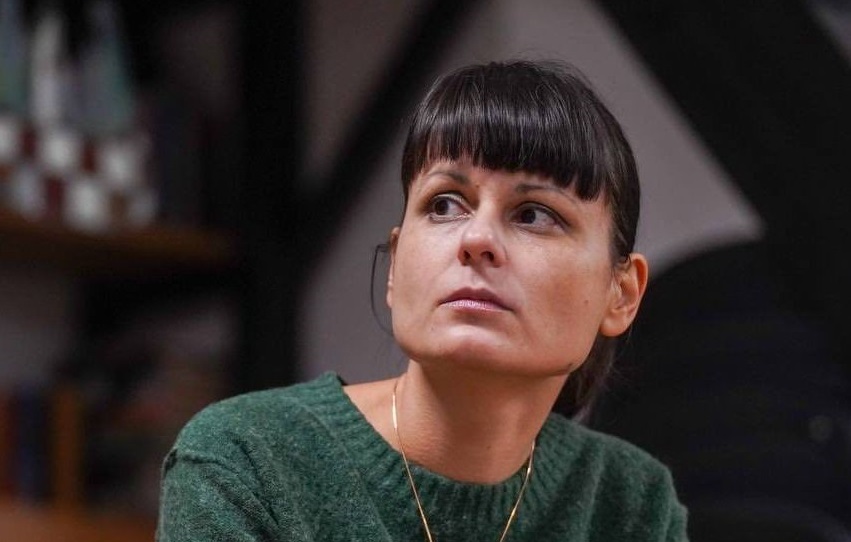
Yevhenia Henova, an Odesa-based journalist, Odesa-Ukraine


 Weltschau
Leave a comment