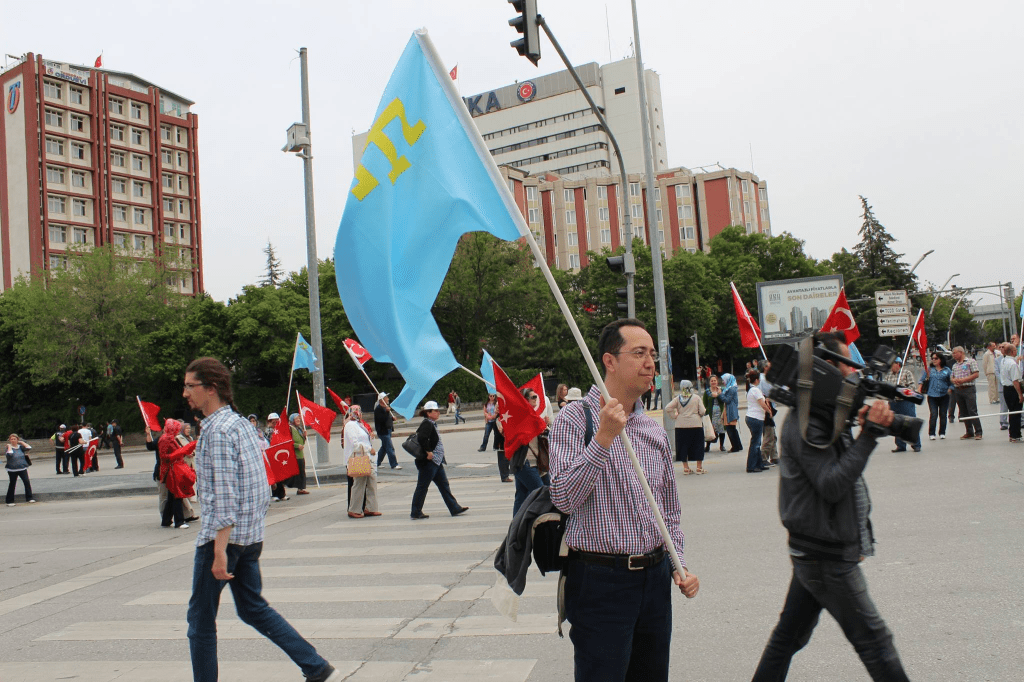
The third year of Russia’s war against Ukraine almost comes to an end. This war is not just a regional conflict, but also an event with significant consequences for the European security architecture and international relations. Crimea and the eastern Ukrainian territories are still under occupation. While the bloody war continues, the search for peace continues also.
French President Emmanuel Macron visited Moscow and Kyiv in early February 2022, following Russia’s increasing military activity on the Ukrainian border. During this trip, he mentioned the option of Finlandizing Ukraine to the journalists accompanying him.[1] This idea received backlash from Ukraine and even from Finland, which had bitter experiences with it.
Long before Macron, following the occupation of Crimea and Donbas in 2014, Finlandization was put on the agenda as a solution model to protect the remaining territories of Ukraine. Zbigniew Brzezinski[2] and Henry Kissinger,[3] two not-so-favorably remembered but very influential figures who played an important role in the formation of US foreign policy, also made statements deeming Ukraine worthy of this model.
Among those who think that a peace treaty should be made between Ukraine and Russia, there are those who directly or indirectly bring up the Finlandization of Ukraine today.
Finlandization describes the policies of political neutrality and staying away from military alliances that Finland followed in its relations with the Soviet Union during the Cold War. This model allowed Finland to satisfy the Soviets’ “security concerns” by preserving its own independence, but it also imposed significant foreign policy restrictions.
After fighting two wars against the Soviet Union (the Winter War and the Continuation War), Finland was forced to abandon some of its territory and sign the Treaty of Friendship, Cooperation and Mutual Assistance with the USSR in 1948. This treaty obliged Finland to resist attacks on the Soviet Union through its territory and formed the basis of the Finlandization process. According to this treaty:
• Finland could not join western military alliances such as NATO and did not support anti-Soviet policies.
• The Soviets did not directly intervene in Finland’s internal affairs, but they had a serious impact on its foreign policy.
• Finland maintained its relative economic and cultural independence, but in foreign policy, it avoided strategic relations, especially with the West.
This model allowed Finland to maintain its geopolitical existence under Soviet threat, but it also cast a shadow over its independence. For this reason, the Finnish people find this Cold War-era policy of necessity shameful.
Finlandization has had significant costs for Finland. It has led to self-censorship in the media,[4] restrictions on democratic processes, and restrictions on Finland’s foreign policy choices.
A Flawed Analogy
Those who advocate the Finlandization of Ukraine argue that this could provide a path to peace with Russia. They argue that by adopting neutrality and fulfilling some of Russia’s demands, Ukraine could avoid further conflict and destruction.
However, Finnish experts, drawing on their own historical experience, strongly oppose this approach.[5] They emphasize that Finlandization is a product of specific historical conditions and geopolitical realities that do not apply to Ukraine.
Finland’s experience of Finlandization shows that it comes at a significant cost to the country’s democracy and autonomy. Applying similar restrictions to Ukraine would be detrimental. Ukraine has been trying to get out of Russia’s orbit since the day it declared its independence. Especially during the reign of Viktor Yanukovych, Ukraine was reduced to the level of a satellite of Russia. The Orange Revolution of 2004 was also a result of this conflict. “Neutrality” provided no protection against Russian aggression. Despite Ukraine’s official neutrality during Yanukovych’s presidency from 2010 to 2014, Russia launched a military invasion in 2014, nominally annexing Crimea and staging a conflict in the Donbas region, seizing much of the region.
The geopolitical context also differs significantly. Finland’s neutrality during the Cold War was made possible by the neutrality of its Scandinavian neighbors, Sweden and Norway. Ukraine has no similar regional security arrangement that would encourage Russia to respect its neutrality.[6]
Fundamental Differences Between Finland and Ukraine
Finland’s Finlandization was based on a strategic calculation to preserve its independence in the face of wars with the Soviet Union and a direct threat. Ukraine’s situation is that it is facing a Russian invasion that aims to weaken its sovereignty and erase its identity.
Finland’s historical and cultural ties to Russia are different from Ukraine’s. Finland, albeit influenced by Russia, has a different cultural identity, while Ukraine has deeper historical and cultural ties to Russia, which Russia has used to legitimize its aggression.
Finland’s Finlandization was possible because the Soviet Union at the time accepted Finland as a compliant but independent buffer state. Russia’s current goal in Ukraine is much more expansionist, aiming for territorial seizure and the disintegration of the Ukrainian state.
Lessons from Finland’s Post-Cold War Experience
Finland’s decision to join the European Union after the Cold War and its decision to join NATO after Russia’s attack on Ukraine offers a more suitable, tried and appealing example for Ukraine. Finland’s integration with the West shows that geopolitical conditions can change and that countries can freely choose their alliances.
Finland’s post-Cold War experience shows that, contrary to popular belief, geography does not always determine destiny. Ukraine, like Finland, has the right to choose its own path and seek security guarantees through alliances.
In conclusion, while historical analogies can be useful for understanding complex geopolitical situations, applying the Finlandization model to Ukraine is misguided and potentially dangerous. Finland’s own experience clearly demonstrates the limits and costs of such a strategy. Instead of trying to replicate a Cold War compromise, policymakers should focus on supporting Ukraine’s right to self-determination and its desire to integrate with the West.
[1] Isabelle Lasserre, “Crisis in Ukraine: Emmanuel Macron on the front line facing Vladimir Putin”, Le Figaro, 07.02.2022.
[2] Zbigniew Brzezinski (1928-2017) is Polish-American political scientist, strategist and statesman; known for his work “The Grand Chessboard”; US National Security Advisor during the Jimmy Carter era (1977-1981). For the aforementioned view, see Terry Atlas, “Brzezinski Sees Finlandization of Ukraine as Deal Maker,” Bloomberg, 12.04.2014.
[3] Henry A. Kissinger (1923-2023) was the US Secretary of State from 1973 to 1977. He is one of the architects of the Cold War. He was the foreign policy mentor of American presidents. In his article titled “How the Ukraine Crisis Ends?” published in the Washington Post on March 5, 2014, he says, “Ukraine should adopt a stance similar to Finland’s in the international arena.” But lately he said that he abandoned this idea after the invasion in February 2022. https://www.henryakissinger.com/articles/how-the-ukraine-crisis-ends/
[4] For example, the facts about the Winter War between Finland and the Soviet Union and the Soviet Russian aggression at the beginning of World War II were censored in order not to conflict with the official Soviet historical narrative. So much so that many of the recollections and memoirs of Finnish soldiers and civilians who took part in the Winter War were published only after the collapse of the Soviet Union.
[5] Minna Ålander, “Why Finland thinks Finlandization is a bad idea for Ukraine?” https://www.atlanticcouncil.org/blogs/ukrainealert/why-finland-thinks-finlandization-is-a-bad-idea-for-ukraine/
[6] Ibid.


 Weltschau
Leave a comment