
Bülent Tanatar, who penned “An Early Example of Resistance in Crimea Against Upcoming Collectivization: ‘Alakat Rebellion’ ” (2019), “File: Reactions from Around the World to the Occupation of Crimea” (2014), and “The General Scenery in Crimea on the Turn of the Third Anniversary of the Occupation and the Tasks Awaiting Us” (2016), provided insight about the Russian attack on Dnipro, the meeting between US President Donald Trump and Russian leader Putin in Alaska, the sanctions against Russia, and the importance of Crimea.
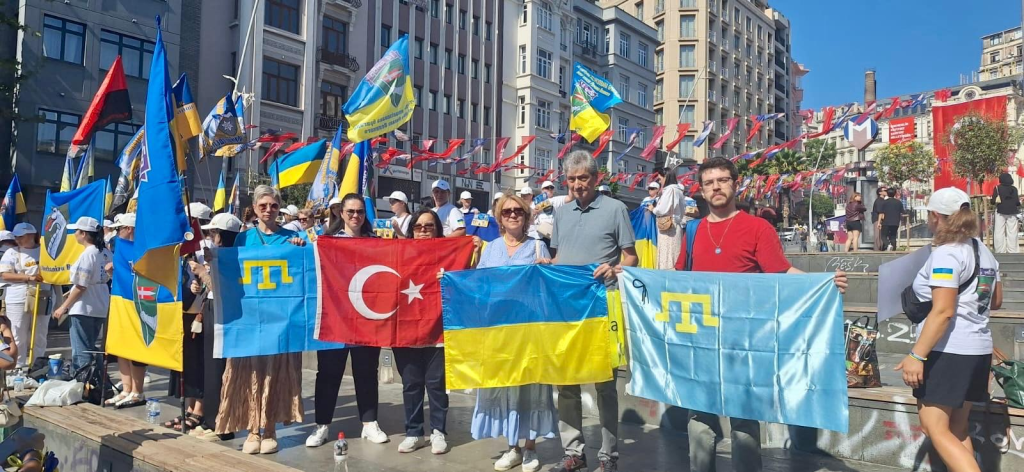
ÖZELGÜN: Why do you think the city of Dnipro is important for Ukraine, and what consequences could the loss of Dnipro have?
TANATAR: Recently, we have observed Russian military forces bombing civilian settlements from a distance, claiming to target the infrastructure of Ukrainian cities, a tactic that has become common. Simultaneously, they launched a surprise entry into the city of Dnipro, which could potentially expand the war front. I am uncertain of the outcome, although Ukrainian Defence Forces have so far thwarted this attempt. While I don’t think the Russians have a chance of success in Dnipro in the short term, if the defences were breached there, it would be very demoralizing for Ukraine, even if not to the point of lowering its bayonet. The territorial gains achieved in the initial phase of Russia’s full-scale invasion operation against Ukraine in February 2022 were subsequently halted, and there has been no significant change in the front lines for nearly three years. Despite the fact that the sides have worn each other down, the stalemate has been more or less maintained. Dnipro is a region that Russia has not yet claimed. Despite its industrial significance, it is not critically strategic enough to necessitate urgency.
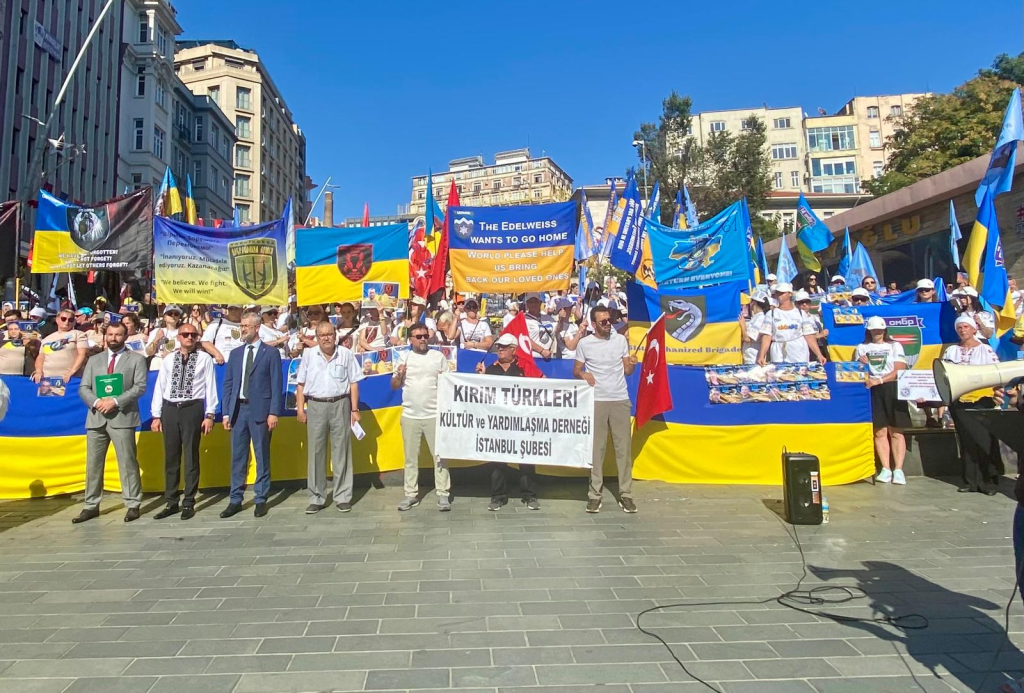
Why do you think nothing came out of the meeting between US President Donald Trump and Russian leader Putin in Alaska?
Trump dramatically understated the Russia-Ukraine conflict. He momentarily perplexed global public opinion while chasing a childish dream: by proposing that both sides were exhausted and threatening to cut off aid to Ukraine, sweet-talking Russia with hints that sanctions might be lifted, and with just sufficient flattery, both Zelensky and Putin would hasten to the negotiating table—and I’d become the foremost candidate for the Nobel Peace Prize. However, the reality quickly became apparent: it is certain that Ukraine will not concede any territory, and Russia has no plans to relinquish the territories it has occupied. In my opinion, if the parties had been challenged on this issue and the focus had been on a ceasefire rather than a hasty path to peace that is unlikely to succeed, the world would have had some breathing room, at least temporarily.
What do you think about the Trump administration’s exclusion of European states and Ukraine in reaching a solution?
Trump is not a person who is disposed to work collectively. He attempts to rule a huge country, a superpower, as he manages a family business. We will see how far the establishment in America will tolerate this approach. Per contra, Trump, who was re-elected president in a noteworthy comeback with the promise that he would solve the long-term death throes of American hegemony, appears poised to dissatisfy at least some of the diverse coalition that brought him to power. So far, Trump, who has been like a bull in a china shop, may discover that China, which he has identified as his primary target, is much further than where he thinks it is until he turns his face to it. Seeing the European Union as an adversary instead of a friend and hoping for support from its weakening could do more harm than beneficial. It’s only for fools or the malicious to accuse wounded Ukraine, which is defending Europe, of continuing the war to rob the West while trying to pull Russia, the war criminal and aggressor, out of the swamp it’s in as it becomes a pariah.
In what ways are the sanctions against Russia inadequate? How can they be improved and developed?
Thanks to its massive propaganda machine, Moscow has regrettably been able to hide this fierce entity, endangering both long-term and short-term losses and costs in the war it has declared against its neighbour, all while using made-up excuses till it is totally eradicated. But Putin and his cronies must not be aware that Russia’s sources are limited, as they realise no harm in imperilling the security and well-being of the peoples of Russia, particularly ethnic Russians, for the sake of a selfish, vain fantasy. In this struggle of who will give up first, the Western world, hindered by a deficiency of foresight, has given a negative test so far. Avoiding the expense you are reluctant to incur in the present day might deplete your entire capital in the future. In summary, we must persist in supporting Ukraine with all kinds of help.
Last but not least, why is Crimea vital to Ukraine? What do you think of Trump’s message that “taking back Crimea is out of the question”?
In the Black Sea, Crimea is the most dominant location. Apart from its natural beauty and reputation as a holiday destination, it is significant not only for Ukraine, which would have experienced considerable restrictions on its access to the sea if it were to lose control, but also for all coastal countries, particularly Turkey. Russia’s domination of Crimea means that it will transform the Black Sea into a Russian lake. It is exceedingly challenging to comprehend the indifference of the American geopolitical perspective on this issue. On the other hand, Crimea is the only homeland of the Crimean Tatars. This truth remains unchanged, in spite of the fact that they are presently a minority on the peninsula as a result of the brutal Russian colonialism. It is disheartening to state, but the war has made Ukrainians aware of the vital significance of Crimean Tatars. They are now making legal preparations to pave the way for their future autonomy. We can only hope that this unfortunate green island will one-day flourish with colourful flowers under the care of its rightful owners.



 Weltschau
Leave a comment