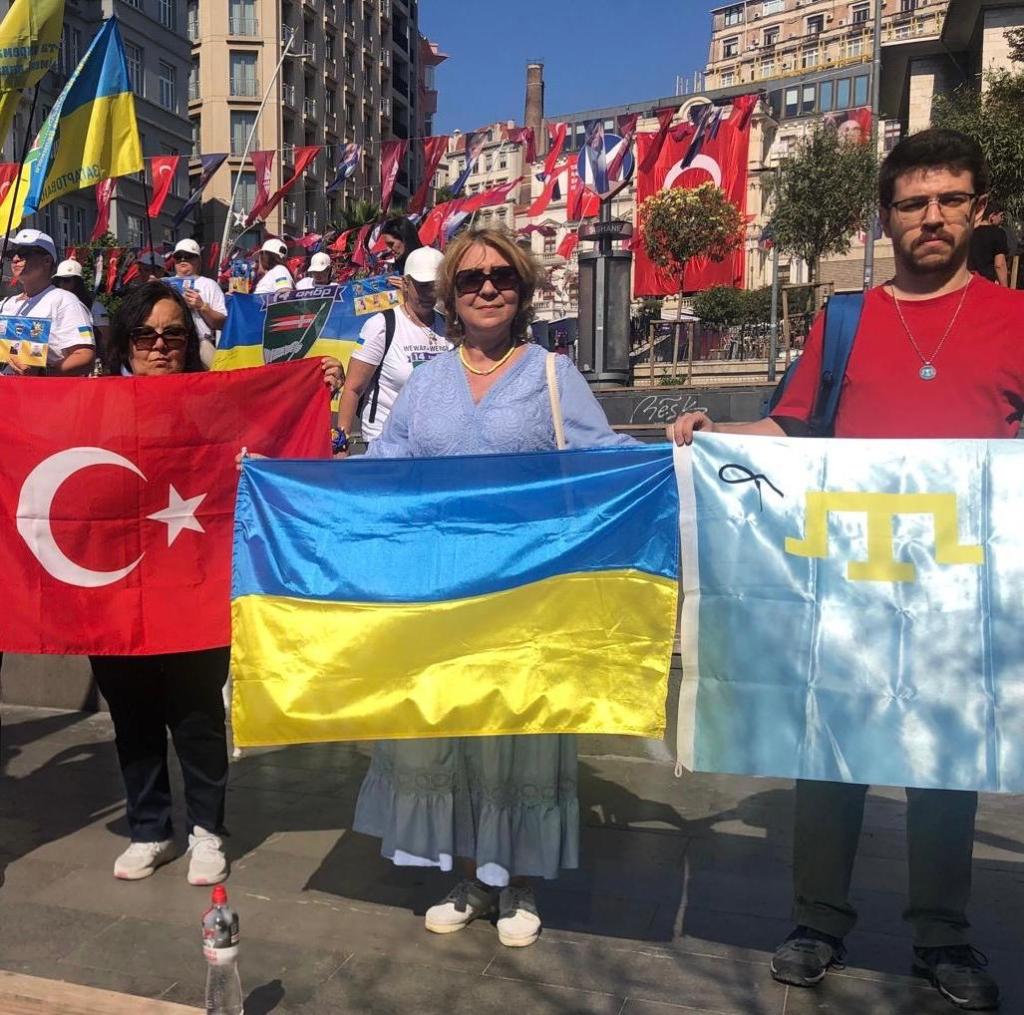
Ukraine, with its east and west, and even Crimea included, is a very colorful and diverse country. Unfortunately, I discovered the mainland part of Ukraine not as a traveler or tourist, but as someone who rejected the Russian occupation of my homeland, Crimea, and embraced the mainland part of Ukraine. I’ve been to the eastern regions of Ukraine several times at different times, and I’ve stayed in Kherson twice. It was then that some of its characteristics caught my eye. I loved Kherson; it’s large, quiet, and very green. The Dnipro River, which runs through the city, adds another layer of beauty to the city. It was a charming place with magnificent historical buildings, in need of some maintenance, and still retaining a touch of the USSR.

When my homeland, Crimea, was occupied by Russia in 2014, I was forced to handle all my bureaucratic affairs on the mainland of Ukraine. In 2016, we stayed in Novooleksiivka, a town in the Kherson region, where my compatriots live extensively. This is one of the places where the famous Kherson watermelons grow. This region, with its fertile lands, is famous for its wheat, watermelons, fruits, and vegetables. Look left and right and you’ll see endless fields. The people are hardworking, cheerful, and hospitable (except for some Russified bureaucrats). You won’t see the flamboyant, heavily made-up women you often see on Crimean streets here. On the contrary, there are women with minimal or no makeup, dressed simply, cleanly, and modestly. The elderly, though not wealthy, are immaculately dressed. Here, people paint their small, modest houses, even with lime. Kherson is a Russian-speaking region, but Ukrainian flags, colors, and symbols are everywhere. The people we met on the streets condemned the Russian occupation. Despite speaking Russian, they were Ukrainian nationalists and patriots. Even on public transport, they were nice people who spoke respectfully to each other, gave their seats to the elderly, treated strangers with kindness, and were ready to help. I don’t even want to remember public transport in Crimea. Those we encountered were the children and grandchildren of low-quality, ignorant people who constantly shouted, elbowed, were intolerant of their neighbors, shot harsh glances, and called themselves “locals,” but most of them were brought to Crimea from various remote parts of Russia after the 1944 Crimean Tatar deportation and were herded into our ancestral homes. After such a picture, the land side of Ukraine felt like paradise to us. Was everything smooth sailing? Of course not. The ugly incidents we witnessed and experienced at the Foreigners’ Office are a separate matter.
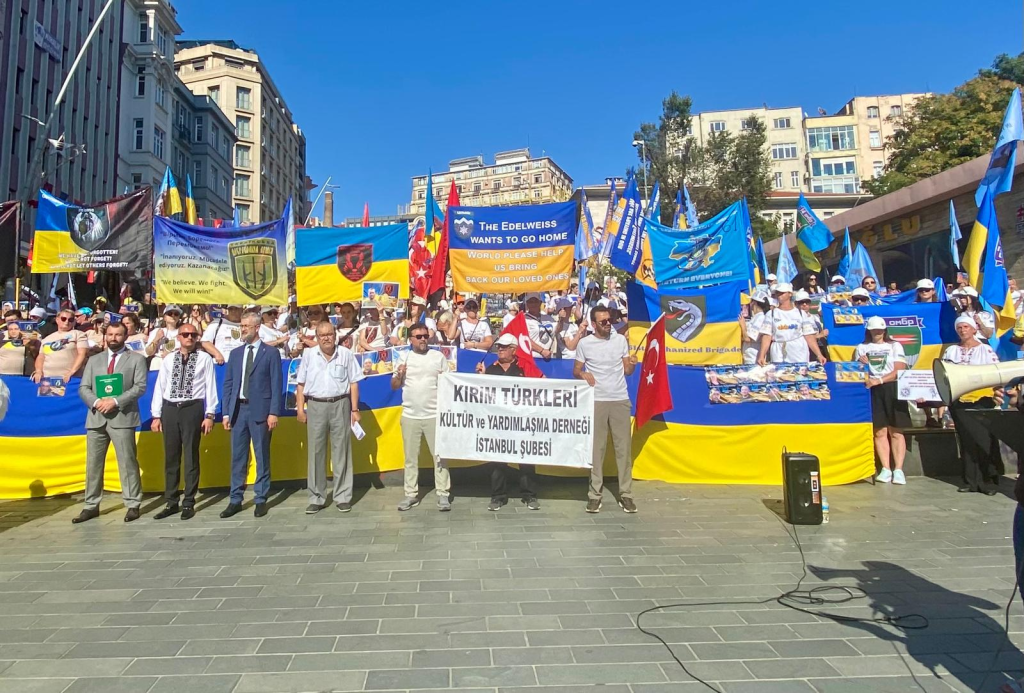
Most of the bureaucrats we encountered at the Foreigners’ Office were traitors working for the Russians, under the Ukrainian flag. Back then, we were unaware of this situation and were seeking our rights. This became apparent in February 2022, with the start of Russia’s all-out war against Ukraine. But as I said, the people we encountered on the streets, of all nationalities, were people who loved Ukraine; that’s the impression they left. Khalil Kurtamet, the owner of a small and medium-sized business I met in Novooleksiivka, which I mentioned earlier, is currently being held in a cell by Russian occupiers, subjected to constant violence and torture, despite having committed no crime. Sadly, Khalil’s 23-year-old son, Appaz, shares his father’s tragic fate. This completely innocent young man has been held captive in Russian prisons for over three years. When the Russian army began to seize Kherson, many people left their homes and took to the streets. This led to a massive wave of migration from the east to western Ukraine.
Anyway, let’s go back to 2016. As I was traveling by train from Eastern Ukraine to the west, I noticed some very interesting changes. It was as if I were watching a different movie through the train window. As we approached west, the visuals changed. We were now seeing a region that had risen economically. Fields of grain, mostly wheat, buckwheat, corn, and sunflowers followed one another. The fields were flawless, the straw bales arranged so beautifully symmetrically that they looked like they had stepped out of a famous artist’s painting, and the villages and towns looked like figurines. It was autumn, and every garden we saw was in bloom, with colorful flowers and apple trees overflowing with apples. In short, they were very well-maintained and fertile. The houses and gardens in front of them were also very well-kept; they all looked like trinkets. The people of the region took great care not only of their homes but also of their own clothes. It’s safe to say that we didn’t encounter a single neglected elderly person, even in the villages and towns. The old grandfathers wore clean shirts, pressed trousers, and polished shoes, while the elderly women selling fruit, vegetables, and milk from their own gardens at the market were also spotlessly clean. Their headscarves were clean, their aprons spotless. Frankly, I was astonished and impressed. I’d like to add another observation at this juncture: the people on the west side were more religious than those on the east. As we approached west, numerous churches, both large and small, caught our eye. The influence of the USSR seemed more pronounced on the east side, and Europe on the west.
When the train arrived in Lviv, from the moment I stepped into the station, I felt like I was in a truly European country. Everything was so different and modern. It was a beautiful city, tranquil and peaceful, with stunning historical monuments, cathedrals, architecture, charming cafés, and restaurants. As I said, it was no different from any other European country. Since I hadn’t spoken much Ukrainian at the time, I was hesitant to speak Russian, wondering if I’d be offended. Still, I memorized a few basic Ukrainian words and used them sparingly. But as soon as I opened my mouth, it was naturally obvious that I wasn’t a native, and middle-aged or older people would immediately start speaking to me in Russian. Let me explain: the younger generation used only Ukrainian and other foreign, European languages. Those with a history of the USSR, on the other hand, used Russian, though less frequently. I never experienced any linguistic discrimination back then. Moreover, when I said I was Crimean Tatar, I received an even more friendly reaction.
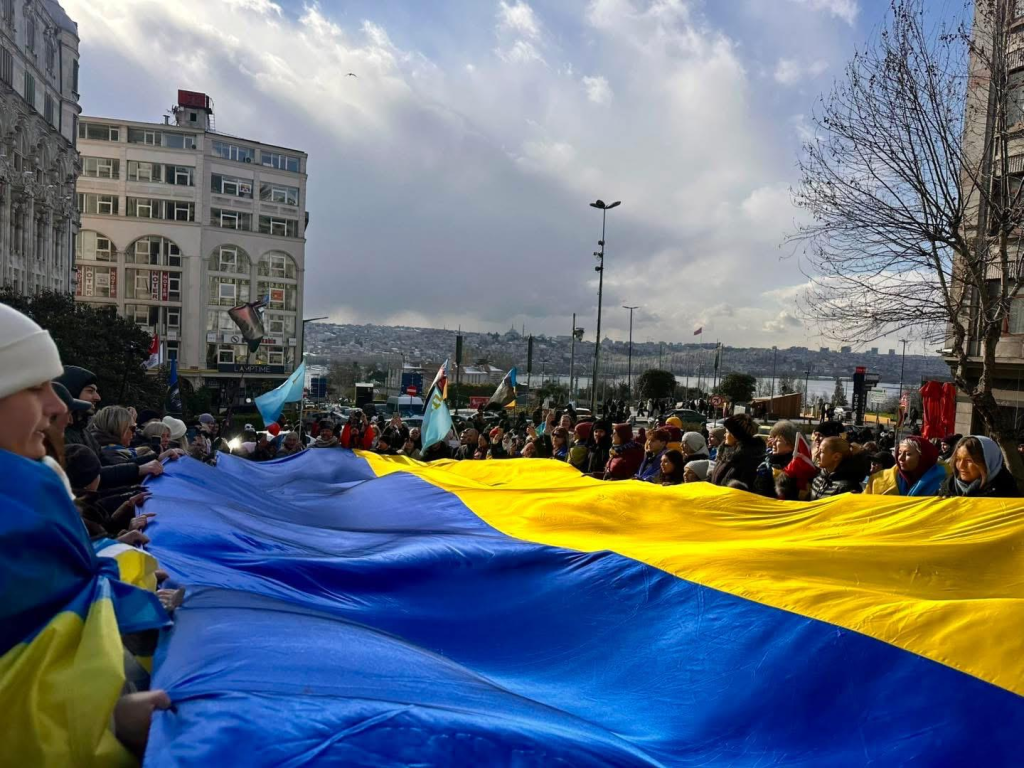
This bloody and brutal war, which began in February 2022, devastated this beautiful country. It led to massive migration. As soon as the war began, many women crossed the borders and sought refuge in European countries to save their children. Those who could afford it found better conditions, while those who couldn’t were left in refugee camps and under extremely difficult conditions. Some of them, unable to bear these unbearable conditions any longer, returned after a while. This, of course, applies to those whose homes were not damaged. Unfortunately, some people, without being victims of the war, crossed to Europe from regions previously untouched by the war and benefited from aid programs. In fact, this war has exposed the different faces of people: on the one hand, the true patriots, the victims, and on the other, those who turned the war into opportunism. Let that be left to their conscience!
Many people who lost their homes in the eastern part of Ukraine simply moved to safer areas and continued their lives without leaving their country. In other words, the eastern population of Ukraine has largely migrated to western Ukraine. This has inevitably brought the language problem to the forefront. This is the reason for the most friction. Naturally, Russia’s aggression has made Russian the enemy language, and Ukrainians, who have suffered so much and been constantly bombed, are taking a clear stance on this issue. Many people, even though their native Russian language, reactively choose to use Ukrainian, while those who don’t speak it strive to learn and develop it. While the elderly may struggle, I believe this process must be managed in a healthy manner, without pressure. Massive migrations also lead to major demographic crises, which in turn create many new problems. How many people will return after the war ends, and how many young people will be among them? The outlook doesn’t look bright for now. Ukraine, which faced significant problems during the war, will likely face other serious problems once it ends. I hope the courage, solidarity, self-sacrifice, diligence, and steadfastness displayed by the Ukrainian people during the war will continue in peacetime. The beautiful people of this beautiful country deserve the best. When the war ends, Ukraine will be a true pearl of Europe, a shining example of democracy, a country to be admired and envied. And of course, my beloved homeland, Crimea, will add to this beauty as a part of Ukraine!
30 August 2025


 Weltschau
Leave a comment