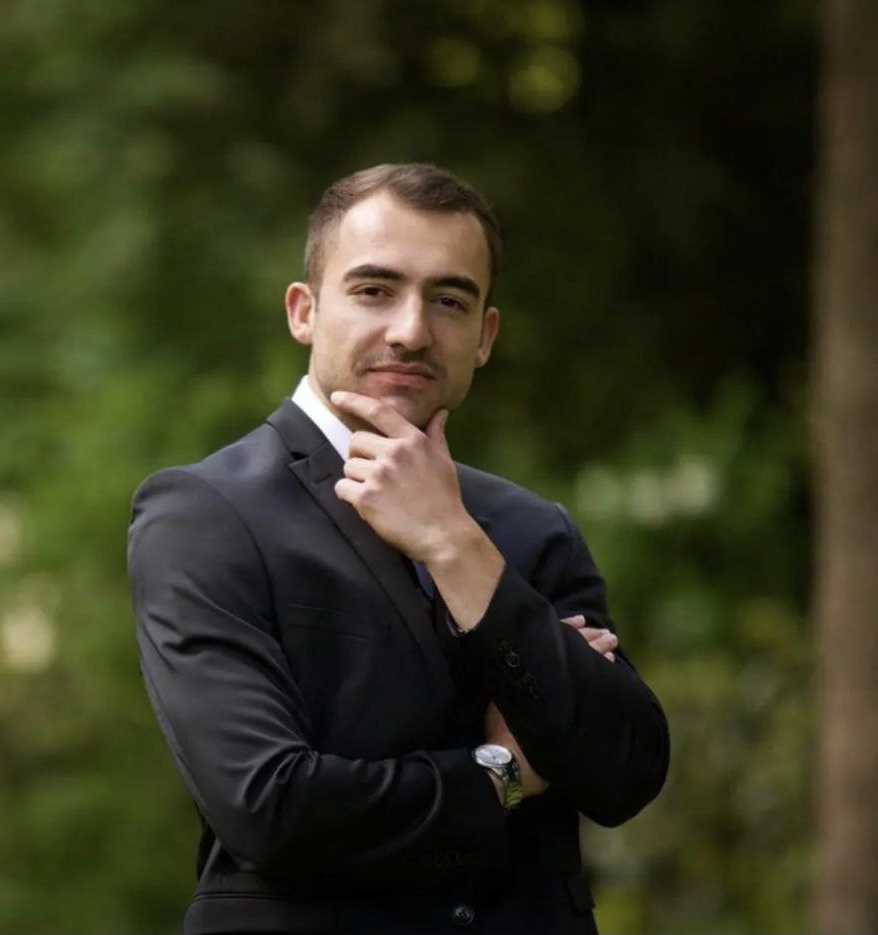
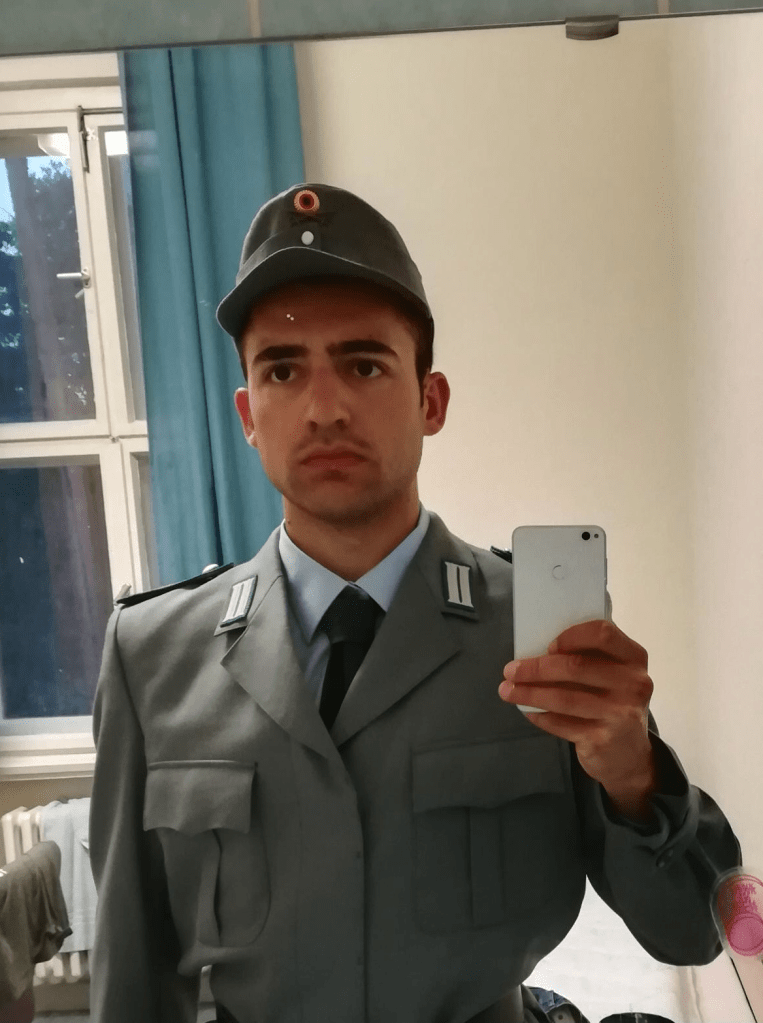
He enlisted in the military as an information technology (IT) soldier and signed a four-year contract to see what opportunities the German Army would offer him. He thought that the army’s IT sector would give him some insight and show him another direction. And after nine months of service in this position in Würzburg, Germany, he faced a lot of problems because, at first, there was not a lot to do in the daily service. He did not get any interesting tasks. “You come to work, and you do nothing. And I know this is probably because of my position, but other people were doing something” he says. Roman Wenner, who had both German and Russian citizenship, decided to become a conscientious objector when military service became unbearable for him, and he deserted the German army and went to Russia, where he lived for two years. But then, as punishment, he spent the entire month of August 2023 in prison for deserting from the German army. Wenner, who is now a part of the Competence Centre for Peace Initiative and who did his military service between June 2018 and July 2019, answered my questions about the motives that prompted Russians to become soldiers in the Ukrainian-Russian war and the current socio-political situation in Putin’s Russia. Excerpts.
ÖZELGÜN: You are a part of Competence Centre for Peace Initiative. How did you become a part of it and what does it mean to you?
WENNER: I believe the core of the violence is just one person using another. It’s like I use you; you can work for me, and this is the violence. However, it makes them slaves. In terms of society, slavery is based on resources; those resources are privatized by the people, and that’s because we have violence. Therefore, I pondered on ways to achieve peace. I made a Europe tour, and I tried to find asylum opportunities. Because I thought that in Finland, for example, they could give me protection from the German army. So the German army cannot punish me for my beliefs. I met silent diplomat, sculptor and photographer Andreu Ginestet on the plane back to Germany from Finland and Andreu invited me to his house. So I guess he decided to establish a Competence Center for Peace Initiative that aims to resolve conflicts and provide peaceful solutions between corporations or governments. I found this idea very interesting. Moreover, I have my own way of dealing with violence and have actually solved a lot of troubles in my life and conflicts between people. So I see myself as a peacemaker because my techniques and methods of conflict solving are, for me, primal skills that I could offer to humanity.
ÖZELGÜN: As a conscientious objector who has been to Russia, how did you find the socio-political atmosphere there?
WENNER: After serving in the German Army between June 2018 and July 2019, I left immediately to Russia. It was 2019, and the atmosphere there was influenced by the autocratic regime of Putin. The old generation wants to influence the younger Russian generations. They wanted to start this encapsulation because they started to create external enemies. I observed that they have already prepared some information for the next generation. I’m talking about information that is frequently reiterated and widely circulated. If you repeat the information over and over, it will be the actual information. But in terms of objective reality, this is disinformation.Sometimes the actual information plays the role of the disinformation, and that is how it acts in Russia right now.It also has to do with the psychological ambience because, if you examine the schools and universities, they already created school programs and university lecture programs where you have to learn about the history.So in 2019, I believe a lot of knowledge programmes were already influenced by the disinformation histories of Russia and also of Ukraine and Belarus. I believe that the actions of the Russian government resemble those of Germany in 1939. Russia wants to commit genocide and wants to kill Ukrainians. The last time I was in Moscow was in September 2022. The presence of extremism in Russian media has altered the narrative. Extremism in Russian media channels employs a different method of disseminating information. It becomes “true” when they repeat it. They are operating on history. They know the history, but they’re basically writing the history day by day right now with the press releases. When Russian President V. Putin states something, his secretary will publish it. I’m not kidding you. There is no history at all. They want to create a new narrative, and somehow it works, but not for a long time, I guess. A lot of Russians migrated to Russian-speaking countries like Kazakhstan after the official military mobilization signed by Putin.
ÖZELGÜN: As a conscientious objector, how do you think an ordinary Russian soldier occupying Ukraine feels?
WENNER: Last time I was in Russia, I met my school friend. He is Russian, and he has served in the Russian army since, I guess, 2019 or 2020. During our conversation, I inquired about his emotions and future plans, considering he had narrowly escaped death in the war. I also asked him why he was fighting. Because I, as a conscientious objector, I cannot imagine myself killing people. So he says that you get a lot of money as a Russian soldier right now. The motivation is the money. I met with one of my siblings, whom I only knew through my mother. He was also a soldier in the Russian Army. He lost his right arm. He is a veteran right now. But he got a house, he got a lot of money, and he’s happy. But you don’t have a second arm. And as I said, as a conscientious objector, I cannot see myself killing people for the money. But I know the motivation right now. There are currently few well-paying positions available in Russia. If you want a highly paid job, this is probably in the information technology sector or in the military.



Leave a Reply