After it became clear that Putin, who during his rule spanning a long period of history, established a regime defined in various ways in Western academic circles as “kleptocratic authoritarianism”, “crony capitalism”, etc. would be a candidate for the second round of presidential elections, those who were dissatisfied with the course of Russia, albeit for very different reasons, took to the streets once again, reactivating the protest movements that had been on and off since 2005. Between 2011 and 2013, the most prominent among the emerging anti-Putin leaders who led the masses during the demonstrations, known as the Bolotnaya protests, in which hundreds of thousands of people participated and spread to other major cities, was perhaps Alexei Navalny, who rose to fame with his anti-corruption campaigns. Afterwards, many others, such as Russian politician B. Nemtsov, were pushed out of the game one by one, either by being killed or sentenced to long sentences. Among them, Navalny, who has the most followers among the Russian public, was taken off the convoy at the last stop of this caravan going to hell before the upcoming presidential elections.
Navalny died abruptly on February 16, 2024, in the IK-3 penal colony located in the Yamalo-Nenets autonomous okrug –an administrative division- in the Arctic circle, 1,900 km away from Moscow, in a way that requires explanation, as happened to all other regime opponents before. Although the authorities of V. Putin’s Russia, who were frightened to death of popular movements as a Soviet legacy, made great efforts not to hand over the body, in the end the stubborn mother obtained permission to bury her son. Tens of thousands of people attending his funeral bid farewell the only and last post-Soviet alternative, not counting the Communist Party of the Russian Federation (CPRF), with slogans reflecting Navalny’s brave stance on Russia (“Putin is a killer”, “Russia without Putin”, “Russia will be free”) but his timid stance on Ukraine (“no to war”, “bring the soldiers home”, “Ukrainians are good people”, “glory to the heroes”). Navalny, who in time successfully suppressed his fascistic genes of the early 2000s and plunged headlong into the field of democratic politics, owed the favor he gained in the eyes of the masses as much to the art of oratory that he successfully uses, as well as to his mastery of demagogy renouncing not the poor consolation, the Great Russian chauvinism, which is the biggest weakness of the Russian people, and the hollow arrogance of grandeur that even attribute a “Russian” adjective to the nature (russkoe polye, russkaya beryoza).
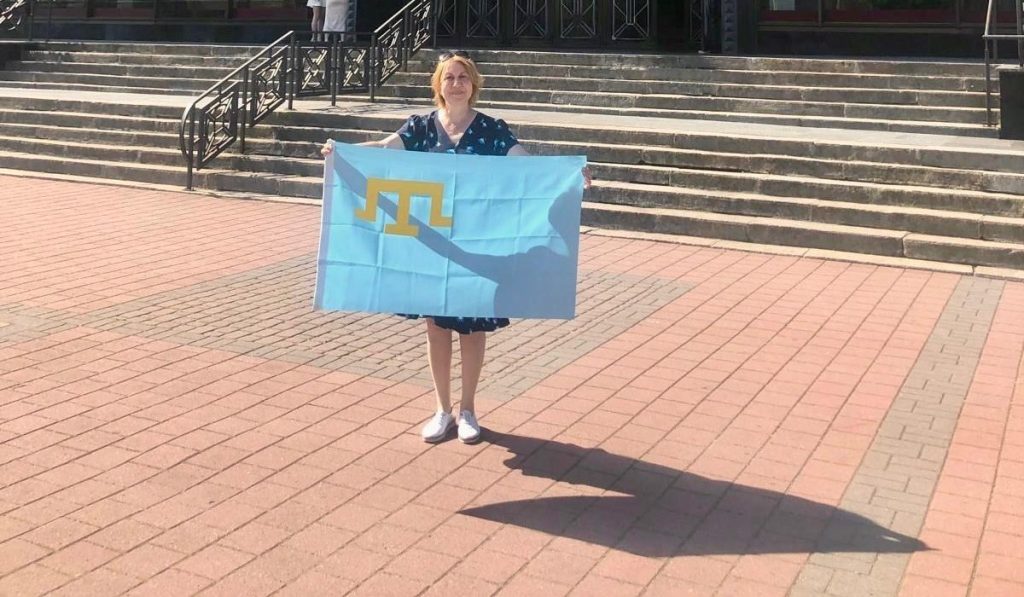
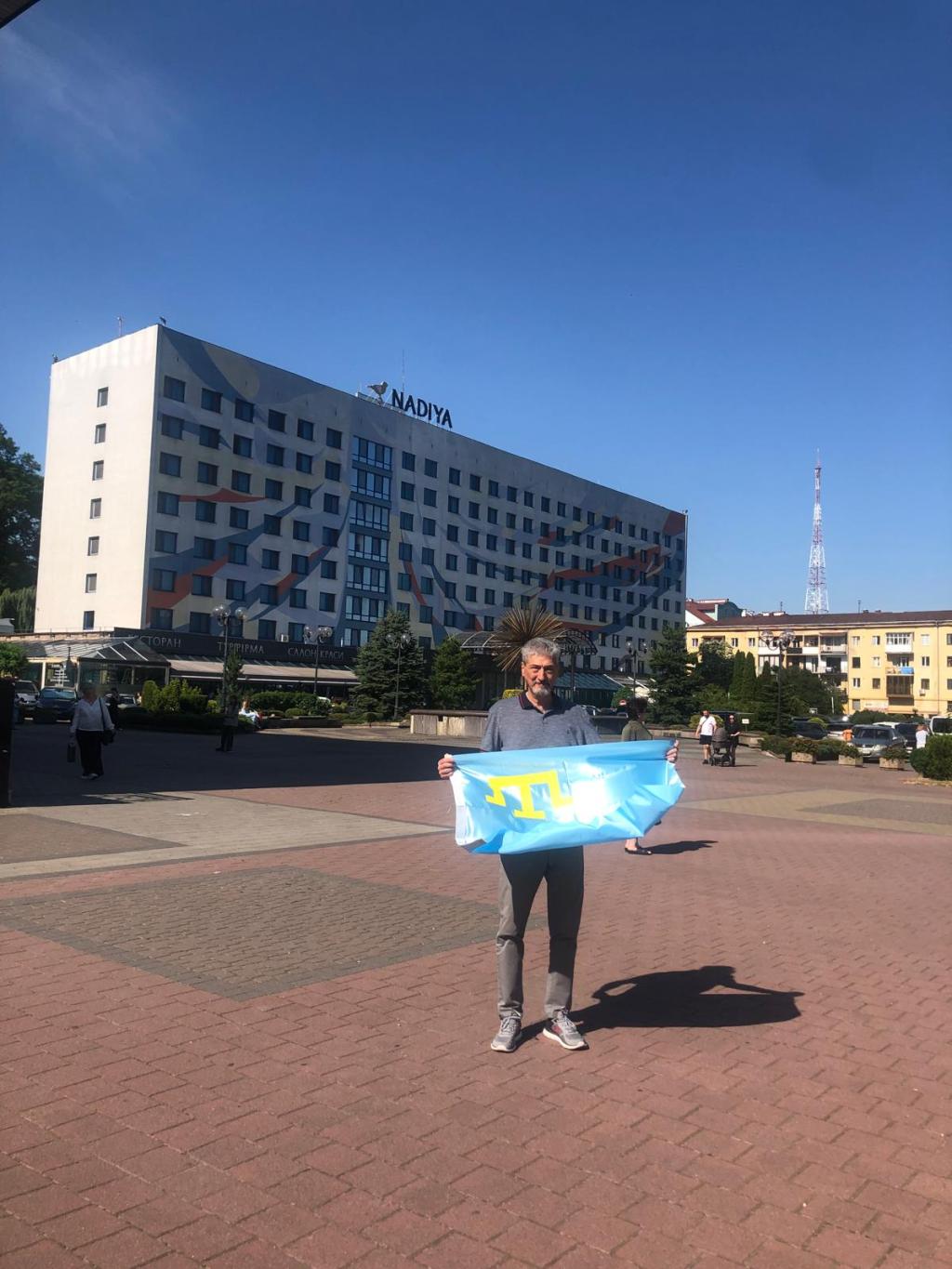
Today, as we experience the most critical turning point of Russia’s war against Ukraine, there is only one litmus test for true peace and justice in Russia, as in the rest of the world: Whose Crimea is? Navalny will always be remembered with that unfortunate cynical “sandwich” analogy regarding Crimea, which was stolen by Russian irregular forces with the help of military like brazen thieves in 2014. But except for a few lightweights such as Russian chess grandmaster Garri Kasparov and Russian-Ukrainian politician and entrepreneur Ilya Ponomaryov, who have the courage to take a pro-Ukrainian stance on the Crimea issue without hesitation, the number of Russian politicians has not increased much despite all the disgraceful things experienced in Crimea and Ukraine in large over the past decade. Heavyweights like Soviet and Russian politician M. Gorbachev, Nemtsov, Russian politician G. Yavlinskiy went through a shameful test.
The prolongation of the war is not only exhausting for Ukraine and the West that supports it. Russia, which spreads over vast and rich lands with one foot in Europe and the other in Asia, has itself become a pariah state, is exhausted and is desperately looking for a way out. Putin’s Russia, which has no positive ideology that will benefit neither itself nor the world, has only the endless patience of the oppressed Russian people, whom it has condemned to poverty, and the skillful experience of jammer technology in disrupting the game of its enemies. In this last issue, purchasing of weak people in high positions, transferring free or cheap food to poor countries, especially in the African continent, on the condition that they vote in their favor or participating in propaganda, creating discord within countries and institutions organized as loose unions or confederations, using destructive rather than constructive options, such as simultaneously supporting anyone who is marginal from the far right to the left of the political spectrum were always their most important trump card. The autonomous middle class, which is the only class that will save Russia from being isolated from the world and from being a pariah state (that is, outside those who share in the guided state capitalism organized by the Putinist clan), is voting with their feet, doing what their fellows in the West would do in the same situation. The only realistic option that will solve this impasse and emancipate Russia is the absolute victory of Ukraine. In this respect, it is very important that Russia be defeated in the war, and it is essential that a policy similar to the one applied to post-Nazi Germany be applied to Russia in the post-armistice peace phase. In other words, the rejection of the justification that instills the self-confidence allowing Russia to always sit at the table with an endless appetite, the basis of legitimacy that it has the spoiled right to share the world with as the winner of the Second World War.
Avoiding the alleged demonization of Russia and Russians will serve no purpose other than reproducing in them Great Russian chauvinism, which is prone to engage in militarist adventures whenever it gets the chance. Nobody holds Russian poet A. Pushkin, Russian writer L. Tolstoy, Russian Russian playwright A. Chekhov, Russian composer P. I. Tchaikovsky, Russian composer S. Rachmaninoff responsible for yesterday’s Russian colonialism and today’s aggressive, expansionist ethno-fascism. What is cursed is the shabby nostalgia of the Russian filmmaker Nikita Mikhalkovs, Russian far-right political philosopher Aleksandr Dugins, Russian writer and politician Eduard Limonovs and Russian writer Zakhar Prilepins, who sneakily hide among the cultural elements under the guise of patriotism and feed the war-oriented Russian arrogance that produces xenophobia whenever the opportunity arises.
All reforms and revolutionary changes in Russia occurred after defeats such as the Crimean War (1853-56) and the Russo-Japanese War. Let’s not forget that holding a mirror to the Russians so that they can get rid of this scourge called the mystical “Russian soul”, which keeps causing trouble for themselves, their neighbors and the world, is one of the essential pillars of lasting peace.
Bülent Tanatar
Turkish citizen of Crimean Tatar origin. He studied economics. Retired from the private sector. One of the editors of Emel magazine.


Leave a Reply